
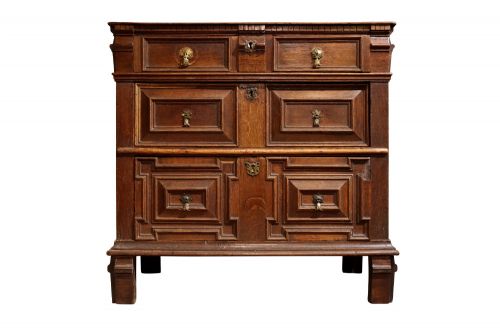
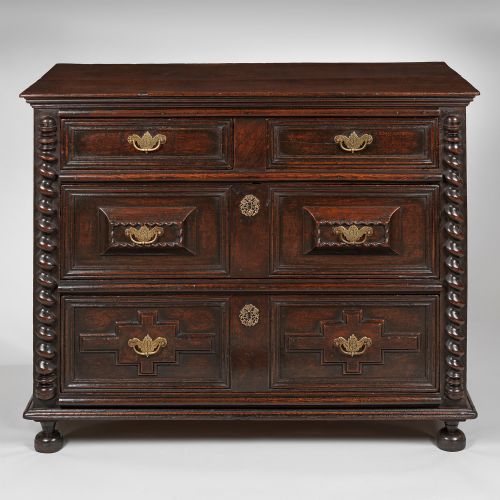


Charles II Oak Drawers
These charles ii oak drawers bring genuine seventeenth-century character to an interior through robust joinery and rich timber figure.
Charles II Oak Drawers
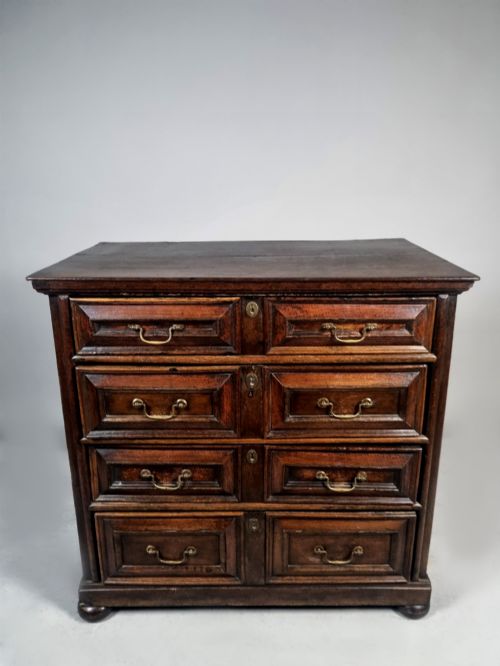
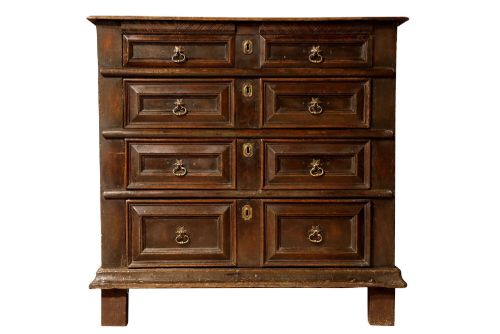
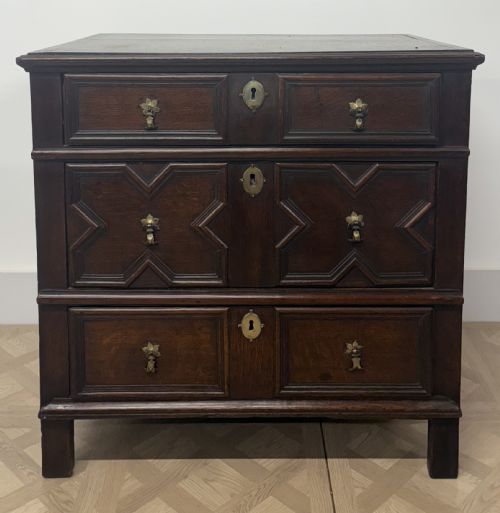
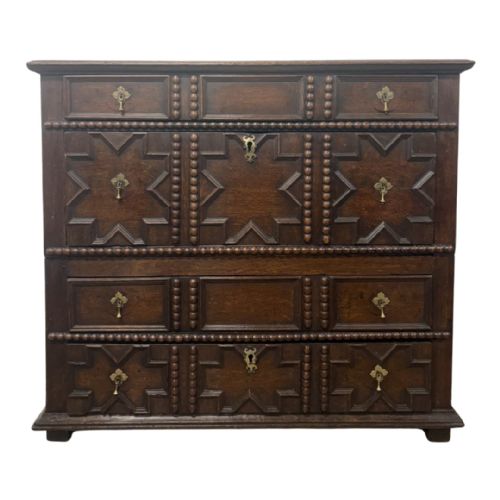
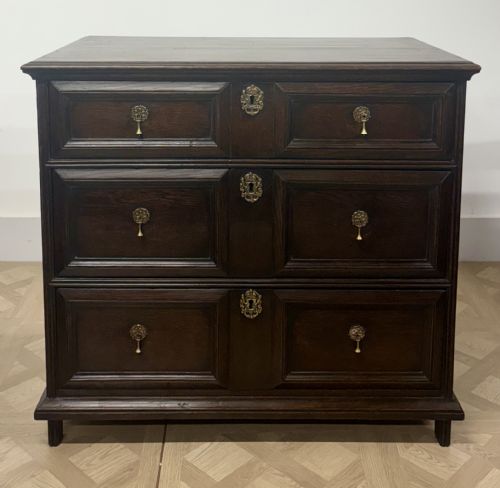
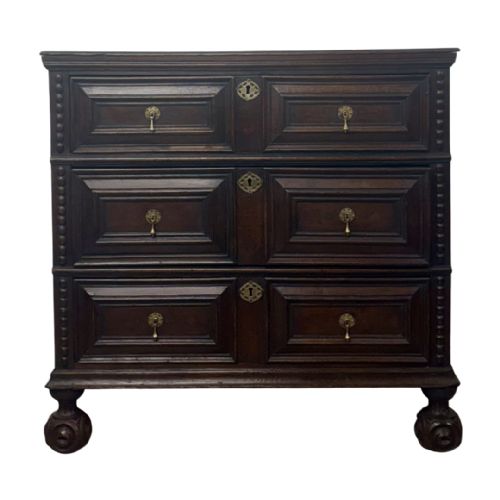
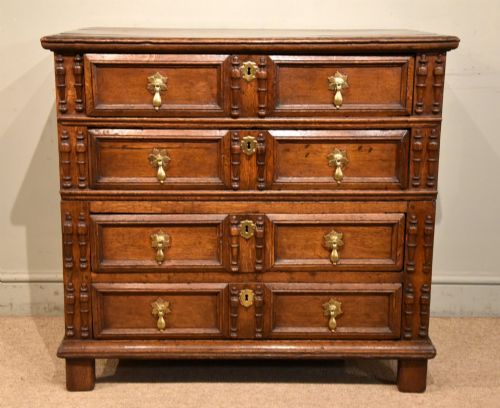
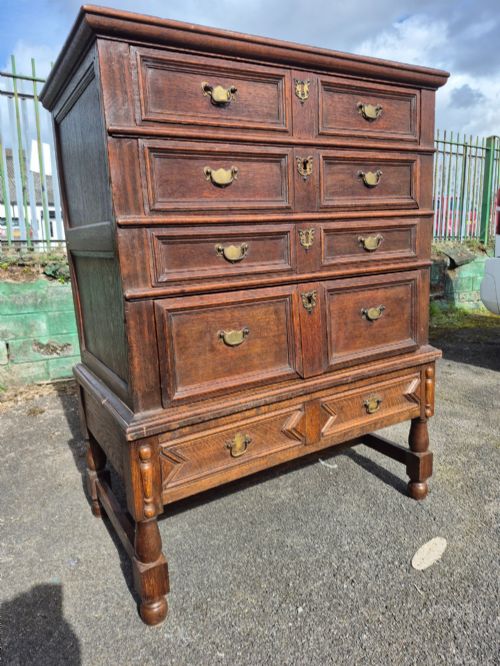
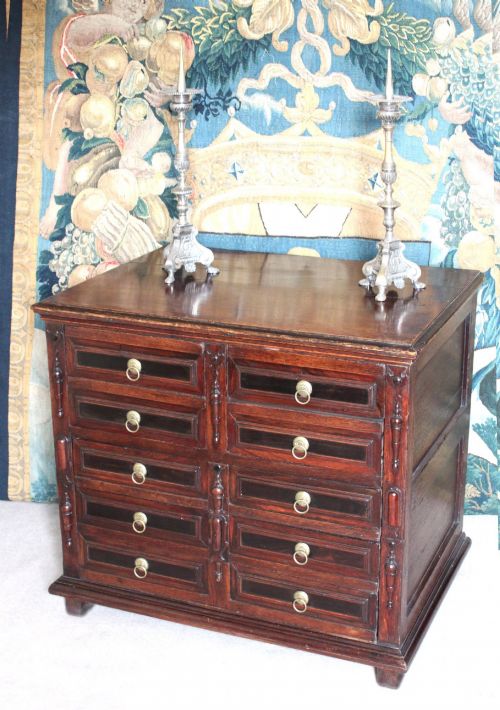
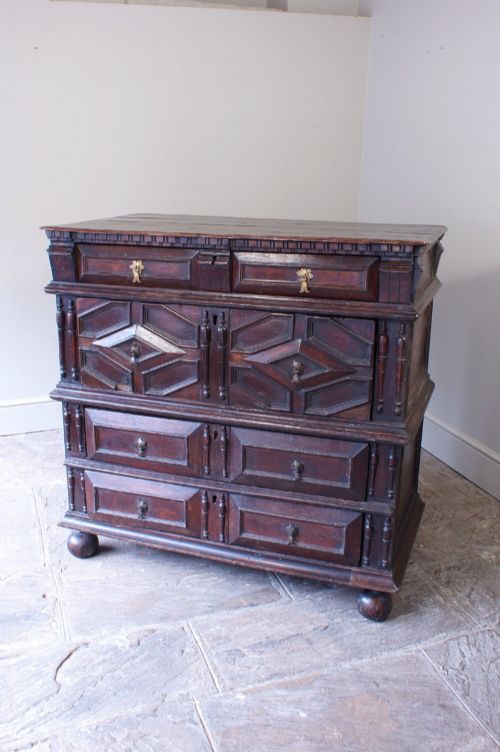
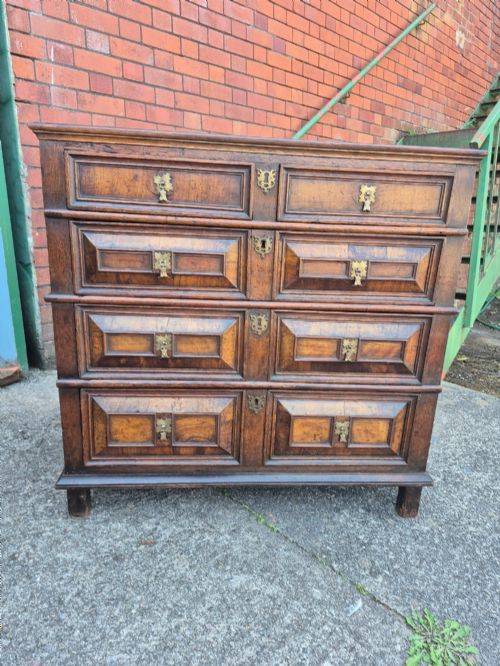
When you search for charles ii oak drawers, you encounter pieces originating primarily from the seventeenth century, spanning the Restoration period and the decades around sixteen-eighty. The majority of pieces on this page take the form of chests of drawers, often constructed as two-part modules or displaying geometric mouldings upon the drawer fronts.
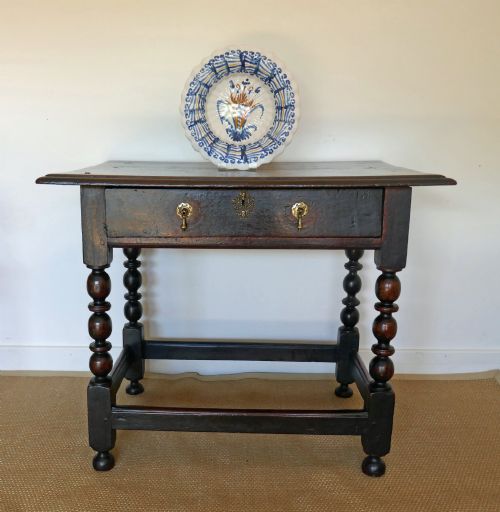
Alongside chests, the selection incorporates related forms from the same period, including side tables, chests on stands, and enclosed cabinets. These items reflect the domestic furniture production of seventeenth-century England, predominantly utilising native timber alongside applied walnut or fruitwood details.
Materials and Construction
Cabinetmakers of the period built these pieces predominantly using solid oak, often combining it with walnut and fruitwood for decorative geometric veneers and mouldings. Structural elements frequently employed iron fixings and brass for handles and escutcheons where original hardware survives.
Joinery techniques relied on pegged frames, panelled construction, and substantial board thicknesses to ensure stability. Drawer fronts often display mitred mouldings arranged in geometric patterns, creating depth and shadow across the facade.
The listings on this site combine seventeenth-century oak, walnut, and fruitwood to showcase chests of drawers and side tables.
Assessing Quality and Proportion
Quality in these pieces depends heavily on the integrity of the timber surfaces and the complexity of the mouldings. Examples with crisp geometric patterns and minimal replacement to the drawer linings hold greater integrity than heavily restored pieces.
Proportion and scale also dictate the standing of a piece, with smaller chests and side tables of bold proportions commanding particular attention from collectors. The survival of original handles and untouched surface patination separates standard examples from the finest specimens.
The Charles II Oak Drawers Glossary
- Geometric mouldings
- Applied wooden beadings arranged in repeating geometric patterns on drawer fronts. This technique defined much of the cabinet work during the latter half of the seventeenth century.
- Two-part chest
- A chest of drawers constructed in two separate stacking sections. This method facilitated transport and movement within seventeenth-century houses.
- Carolean
- Pertaining to the reign of King Charles II. The style spans the Restoration period and reflects distinct stylistic developments in English furniture.
- Chest on stand
- An upper chest section raised upon a separate support frame with legs. This form lifts the storage capacity off the floor.
- Side table
- A low table designed to stand against a wall. Seventeenth-century examples feature robust legs and stretcher rails.
Charles II Oak Drawers: Frequently Asked Questions
How do I identify a seventeenth-century piece?
Look for traditional construction methods such as hand-cut dovetails, pegged joints, and timber shrinkage that indicates considerable age. The presence of native oak, walnut veneers, and period-appropriate geometric mouldings further supports the dating.
Examine the backboards and interior drawer construction for tool marks and material consistency. Original surfaces display a dry, warm patination developed over centuries of handling.
Were these chests used in bedrooms?
In seventeenth-century households, storage furniture served multiple rooms rather than being confined solely to sleeping quarters. Chests held valuable textiles, household linen, and personal documents.
Their robust construction made them suitable for placement in hallways, parlours, and chambers alike. The two-part design allowed households to move heavy storage units between rooms or properties.
How should I care for old oak?
Maintain stable environmental conditions away from direct heat sources and strong sunlight to prevent the timber from splitting. Apply traditional beeswax sparingly to nourish the wood surface without building up sticky residues.
Avoid modern liquid polishes, which can penetrate open-grain oak and alter the natural patination. Gentle dusting with a dry cloth keeps the surface clean and preserves the historic finish.