

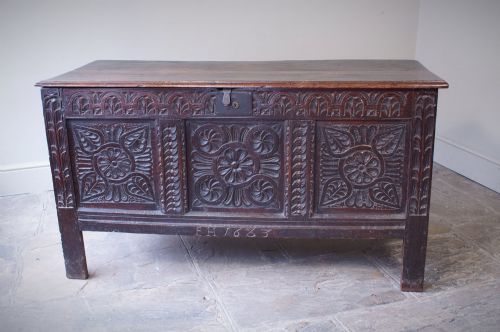


Charles II Carved Coffer
These charles ii carved coffer examples bring seventeenth-century joinery into domestic spaces, offering sturdy storage with centuries of character.
Charles II Carved Coffer
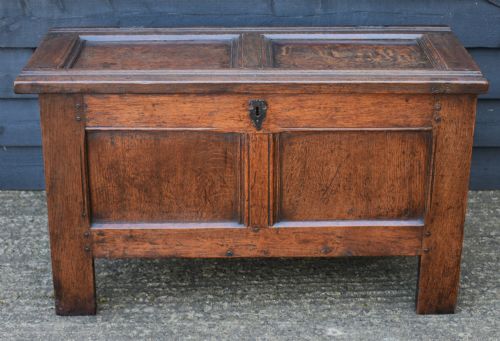
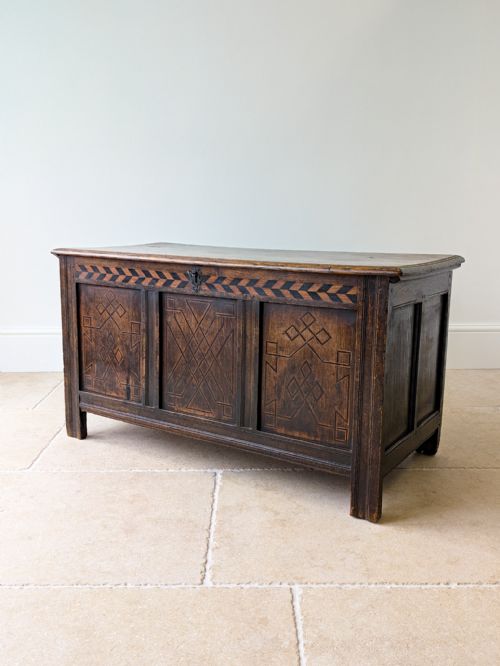
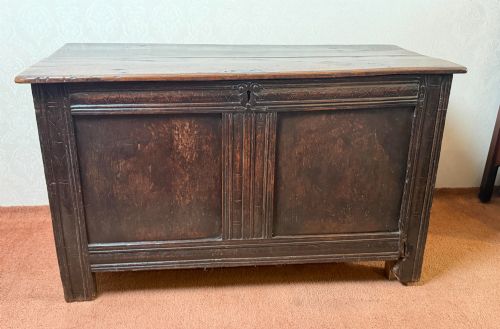
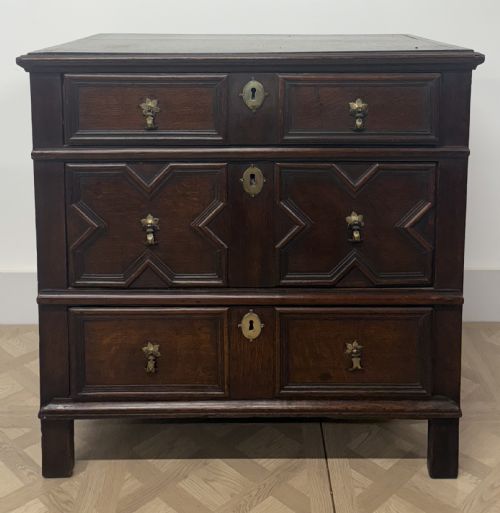
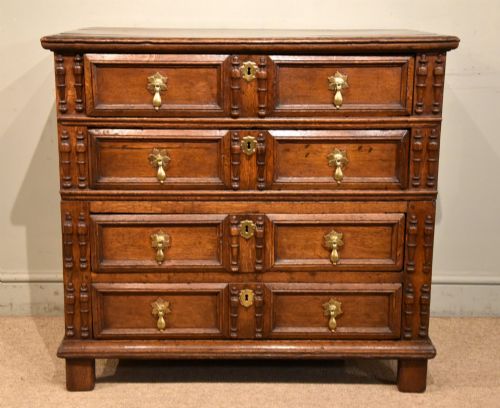
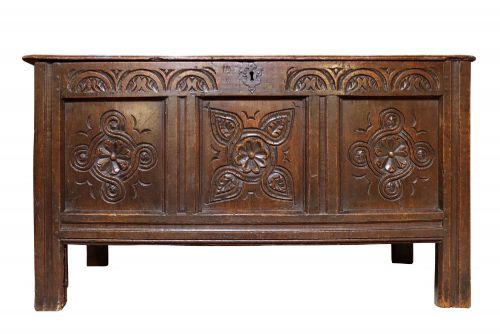
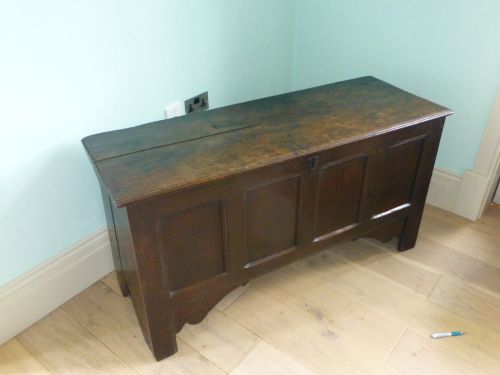
A charles ii carved coffer is a heavy wooden storage chest built primarily in the seventeenth century, frequently featuring panelled construction and intricate surface decoration. Buyers encounter various regional forms on this page, including small proportions, triple-panel fronts, and mule chests fitted with lower drawers.
Most pieces originate from English workshops spanning the seventeenth century, with specific examples identified from regional centres like the West Country, Yorkshire, Somerset, and Lancashire. The core design functions as a blanket box, trunk, or general storage chest, often demonstrating scratch carving or geometric mouldings typical of the period.
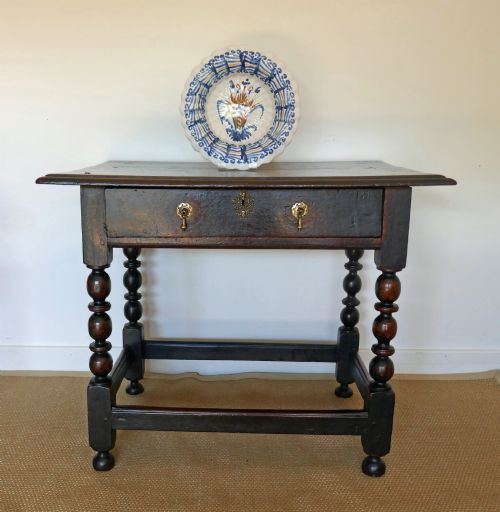
Alongside standard coffers, the selection includes related forms such as bible boxes, side tables, and multi-drawer chests in oak and walnut. These objects share the robust timber construction and stylistic traits of Charles II and Jacobean design.
Materials and Construction
Makers built these pieces predominantly using solid oak, supplemented occasionally by walnut, cedar, and wood inlay for contrasting details. Iron and brass hardware, such as hinges and locks, secure the lids and compartments.
Joinery relied on traditional pegged frames and solid plank lids rather than modern fasteners. Carvers applied surface decoration directly to the wood using hand chisels and scratch stocks, creating low-relief panels, geometric patterns, and serpent motifs.
Charles II Carved Coffer Retail Price Guide 2026
Typical asking prices for charles ii carved coffer among the pieces listed under this phrase on Sellingantiques today, from the lower quarter to the upper quarter. They describe what is for sale here now, not the wider market.
Several chests still carry centuries-old scratch carvings and serpent motifs chipped by seventeenth-century hands.
Quality and Proportion
Quality rests in the crispness of the original carving and the integrity of the timber frame. Pieces retaining their original plank lids, unreplaced ironwork, and untouched surfaces command greater interest from collectors.
Proportion and scale also define the hierarchy among these chests. Smaller dimensions and balanced regional carving styles distinguish exceptional items from utilitarian storage boxes of the same era.
The Charles II Carved Coffer Glossary
- Coffer
- A heavy wooden chest used for storage, typically hinged at the top and raised on stiles. These pieces formed essential furniture in seventeenth-century homes.
- Mule chest
- A coffer featuring one or more drawers built into the base beneath the main compartment. This form bridged the transition between traditional chests and chest of drawers.
- Bible box
- A small, sloped-lid wooden box designed to hold sacred texts and writing materials. They share the carved ornamentation of larger contemporary coffers.
- Scratch carving
- A linear decoration scraped into the surface of the wood using a profiled metal cutter. This technique provided economical ornamentation on seventeenth-century panels.
- Stile
- The vertical member of a frame in panelled construction. Stiles often extend downward to form the feet supporting the coffer.
Charles II Carved Coffer: Frequently Asked Questions
What was a coffer used for originally?
Seventeenth-century households utilised these sturdy chests primarily to store valuable textiles, blankets, clothing, and household documents. Their robust construction and lockable lids protected contents from dampness and theft.
Over time, they served multiple domestic functions, including impromptu seating or tables within the main hall before specialised furniture became common.
How do I care for seventeenth century oak?
Maintain stable indoor humidity and temperature to prevent the historic oak timber from splitting or warping. Avoid placing the chest near direct heat sources or in strong sunlight.
Apply a traditional beeswax polish occasionally to nourish the dry wood and preserve the surface finish without sealing it under modern varnishes.
Are these chests all original?
Survival over three centuries often involves minor repairs, replaced hinges, or renewed feet, given the utilitarian history of these objects. Examining the interior framework and timber oxidation helps determine the extent of historical intervention.
Many examples retain their primary carved panels and board lids, showing consistent wear patterns appropriate for pieces dating back to the sixteen-eighties.
How can I tell regional styles apart?
Regional variations appear in the specific carving motifs and construction methods employed by local joiners. West Country and northern workshops developed distinct geometric layouts and panel arrangements.
Comparing the framing techniques and secondary timbers helps assign pieces to broader geographic traditions within seventeenth-century England.