

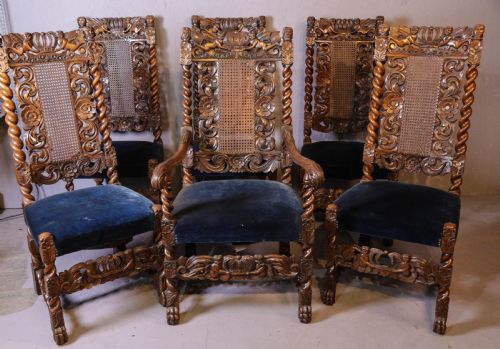


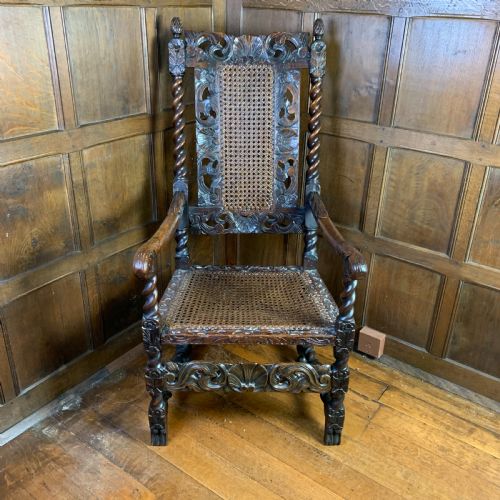


Charles II Cane Chair
These charles ii cane chair examples bring seventeenth-century seating into modern interiors through intricate woodwork and woven panels.
Charles II Cane Chair
A charles ii cane chair is a high-backed seating form originating in the seventeenth century, typically featuring an open weave seat and back panel flanked by turned uprights. These pieces include armchairs and side chairs designed for dining and formal reception rooms.
Buyers frequently encounter two distinct chronological groups within this category: original seventeenth-century examples and nineteenth-century revivals produced during the Victorian era. The later pieces often adopt Carolean and Jacobean styles while maintaining the characteristic pierced carving and scrolled details.
Original pieces sit alongside nineteenth-century interpretations that emulate the earlier craftsmanship using walnut, oak, and beech. Sets appear alongside single armchairs, offering varied scale for domestic placement.
Materials and construction
Walnut and oak provide the primary structural framework for these chairs, shaped through extensive hand carving. Beech also appears in specific seventeenth-century frames, supporting elaborate pierced cresting rails and scrollwork.
Cane panels are woven directly into the wooden frames of the seat and back, creating a resilient yet flexible surface. Joinery relies on traditional turned stretchers and mortise-and-tenon construction to stabilise the tall uprights.
The listings span seventeenth-century origins through to Victorian revivals, constructed in walnut, oak, and beech with cane and velvet.
Distinctions in craftsmanship
Depth and crispness of the carved ornamentation separate standard examples from superior pieces, particularly in the rendering of scrolls, foliage, and crests. The complexity of the pierced woodwork dictates the visual impact of the frame.
The precision of the woodturning on the legs and stretchers indicates the maker's skill level. Timber selection also plays a role, with richly grained walnut commanding greater visual presence than plainer secondary woods.
The Charles II Cane Chair Glossary
- Carolean
- The art and style associated with the reign of King Charles II. This aesthetic defines the ornate, scroll-heavy woodwork seen on seventeenth-century seating.
- Cane
- Plant material woven into an open mesh pattern for chair seats and backs. This technique allowed for lighter, more breathable upholstery than solid panels.
- Restoration
- A historical period beginning in sixteen sixty corresponding to the return of the monarchy. Furniture from this era displays celebratory, lavish carving.
- Stretcher
- A horizontal wooden rod connecting the legs of a chair for added stability. These components are frequently turned or shaped in matching profiles.
Charles II Cane Chair: Frequently Asked Questions
How do I spot a Victorian copy?
Victorian revival pieces often utilise machine-turned elements or heavier timber scantlings compared to their seventeenth-century prototypes. Tool marks and timber shrinkage patterns also help distinguish nineteenth-century interpretations from original period items.
Examining the underside of the frame and the wear patterns on the feet reveals the true age of the construction. Nineteenth-century makers frequently reinterpreted Carolean styles with denser carving and different secondary woods.
Are these chairs comfortable for daily use?
The upright backs and woven cane panels provide firm, supportive seating rather than deep lounging comfort. Cushions are frequently added to the seat base for extended sitting.
Original frames require mindful placement to protect the woven cane and intricate joinery from excessive strain. They function well as occasional seating in studies, hallways, or formal dining settings.
How should I care for old cane?
Maintain cane panels by keeping them away from direct heat sources and sudden humidity changes that cause the plant fibres to become brittle. Regular dusting with a soft brush prevents debris accumulation in the weave.
Light moisture applied occasionally to the underside can help preserve flexibility in older material. Avoid placing heavy loads on panels that show signs of slackening.
What is the difference between side chairs and armchairs?
Armchairs feature extended wooden supports framing the seat, designed for the head of a table or formal placement. Side chairs omit arms to allow tighter grouping around dining tables.
Both forms share the characteristic tall back and carved crest rail typical of the period. Sets generally comprise side chairs accompanied by matching armchairs.