





Carolean High Back Chair
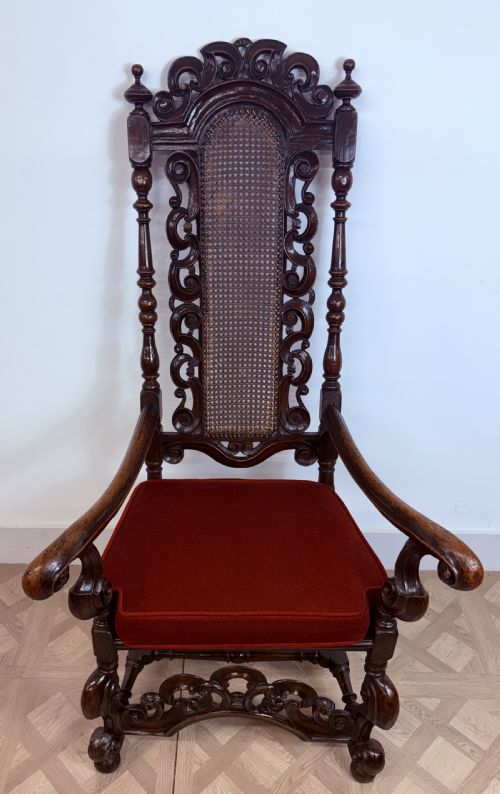
Carolean high back chair pieces combine soaring pierced crests with intricate scrollwork, bringing commanding seventeenth-century presence to any interior.
Carolean High Back Chair
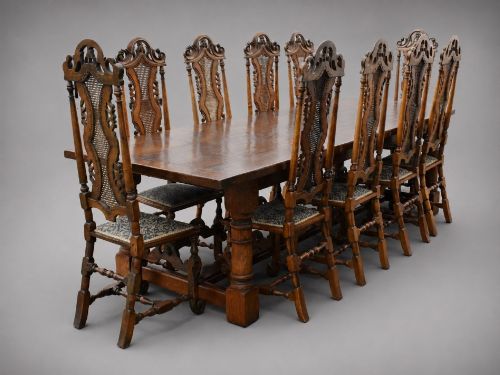
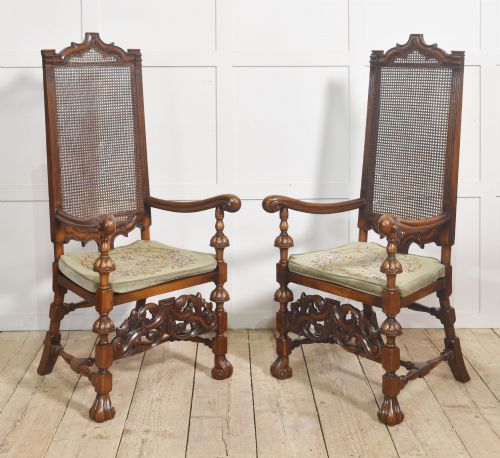
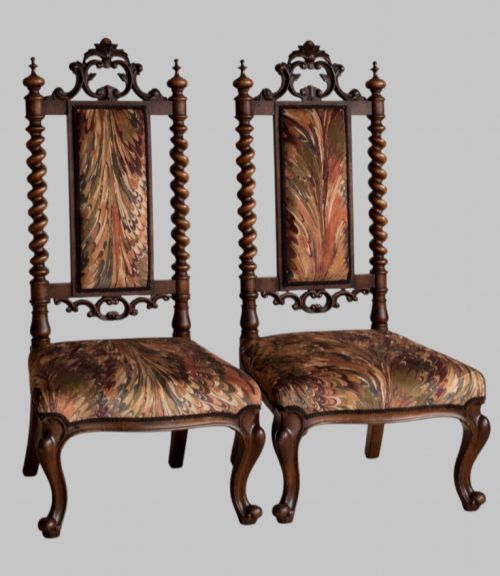
A carolean high back chair stands out through its exaggerated vertical proportions, often featuring richly carved wooden frames designed to project status during the late seventeenth century. Surviving examples span authentic late seventeenth-century originals alongside nineteenth- and early twentieth-century revivals created during the Victorian and Edwardian eras.
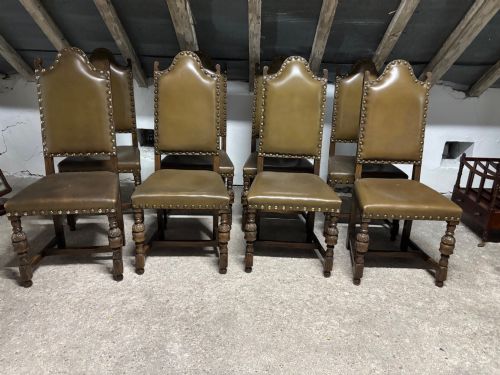
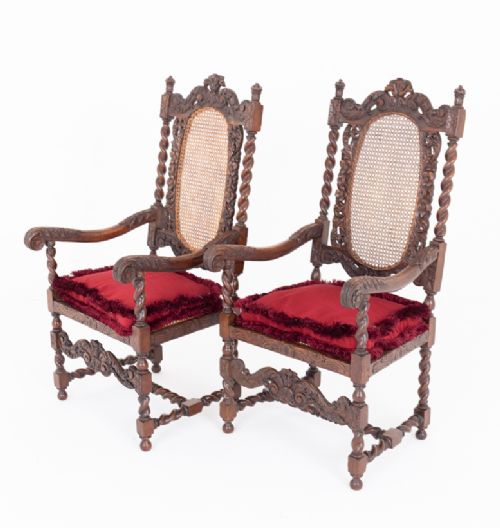
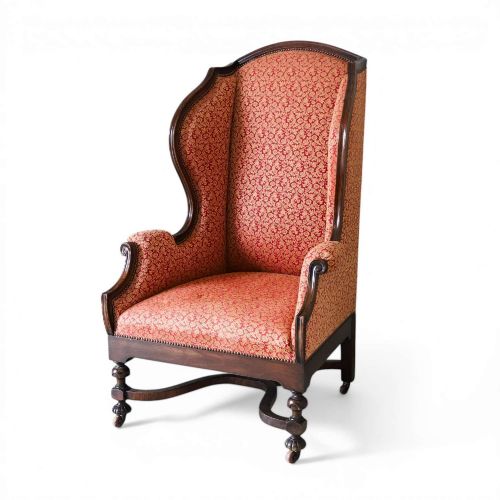
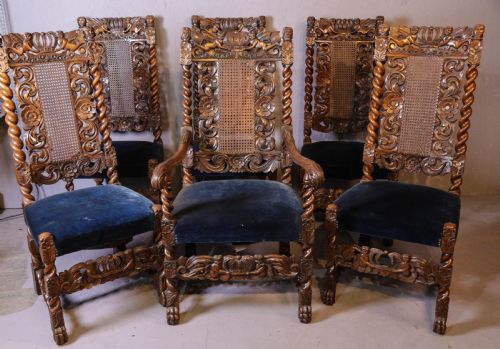
Buyers encounter various seating formats ranging from single armchairs and throne chairs to matching dining sets and side chairs. While authentic seventeenth-century pieces appear in walnut and oak, revival iterations frequently utilise walnut, oak, and beech across nineteenth-century and early twentieth-century periods.
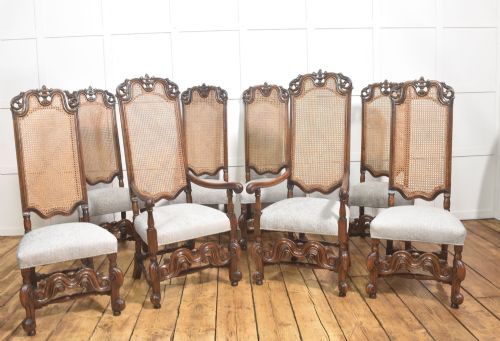
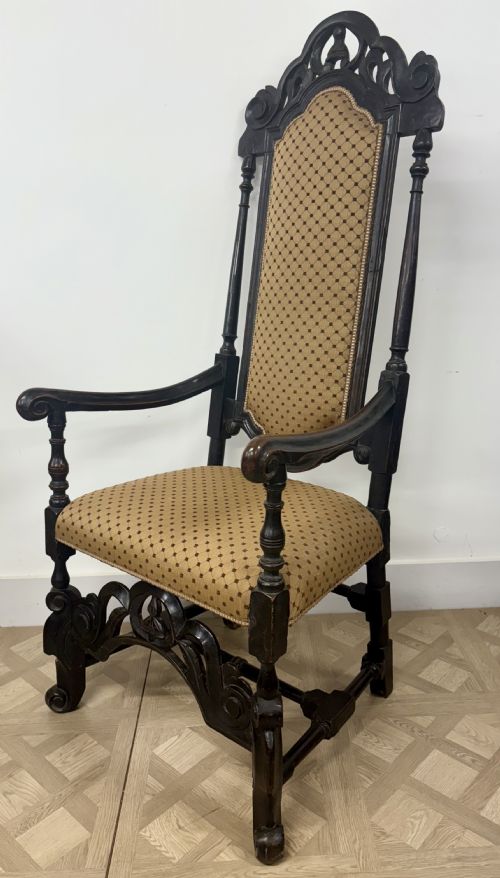
The dominant forms on this page include single armchairs, side chairs, and sets intended for dining rooms or libraries. These pieces employ high upright backs flanked by scroll arms, upright stiles, and ornate stretcher rails.
Materials and Construction
Craftsmen built these frames using native hardwoods, primarily selecting walnut and oak for their structural strength and capacity for deep relief carving. Walnut allowed for sharper detailing on scrolls and crowns, while sturdy oak provided robust framing for country iterations and heavy dining sets.
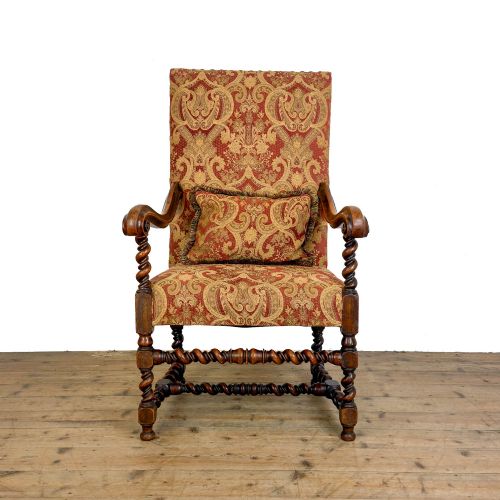
Cane panels frequently form the backs and seats, woven tightly into wooden rebates to offer resilient support alongside decorative transparency. Upholstered variants incorporate traditional textile, velvet, and fabric coverings secured over internal padding.
Joinery relied on pegged mortise and tenon joints, complemented by turned supports such as barley twist or spool-moulded legs. Pierced cresting rails and carved front stretchers were shaped using hand chisels and gouges before assembly.
Carved wooden cherubs peek out from the pierced crests of these towering chairs, keeping a silent watch over centuries of dining rooms.
Quality Variations
The depth and crispness of the carving distinguish finer examples from simpler provincial work. Superior pieces display deeply undercut foliage, cherubs, and royal crowns without soft edges or shallow impressions.
Timber selection and grain continuity influence the overall integrity of the frame. High-grade items utilise well-figured walnut or quarter-sawn oak with minimal splitting, whereas lesser examples show plain timber or extensive replacement sections in the uprights.
The survival of original canework or early upholstery affects historical authenticity. Integrated framing construction where stretchers and legs remain tight indicates superior original assembly.
The Carolean High Back Chair Glossary
- Carolean
- The period spanning the reign of King Charles II, characterised by lavish Baroque influence and elaborate woodwork. This era birthed the distinct high-back seating form.
- Cane
- Split rattan woven into patterned meshes for chair backs and seats. It provides lightweight flexibility and distinctive visual texture.
- Barley twist
- A turned wooden furniture leg or stretcher carved in a helical screw formation. It became exceptionally popular during the late seventeenth century and subsequent Victorian revivals.
- Stretcher
- A horizontal wooden rail connecting the legs of a chair to provide structural stability. Carolean examples often feature elaborately carved front stretchers mirroring the top crest.
- Cresting
- The decorative carved wooden topper surmounting the top of a high chair back. These often depict crowns, putti, and floral scrolls.
Carolean High Back Chair: Frequently Asked Questions
How do I identify an original seventeenth-century chair?
Original pieces display hand-cut joinery marks, distinct timber oxidation, and construction methods appropriate for the seventeen-hundreds. Examining the pegging and wear patterns helps distinguish period items from later nineteenth-century revivals.
Revival pieces often utilise machine-cut elements or show uniform ageing that differs from centuries of natural handling. Comparing the carving depth and wood species against documented examples confirms the date.
Are these chairs comfortable for daily dining use?
High back chairs provide firm upright posture support due to their tall vertical frames. Caned or upholstered backrests offer slight give, though they were originally designed for formal reception rooms rather than lounging.
Dining sets from the revival periods function well around standard tables when paired with appropriate seat heights. Adding custom squab cushions can increase comfort without altering the antique frame.
How should I care for cane panels?
Cane requires moderate humidity to prevent the natural rattan fibres from becoming brittle and snapping. Light dusting with a soft brush keeps the weave clean without damaging the material.
Applying a damp cloth occasionally helps maintain moisture in historic cane. Avoid placing these chairs near direct heat sources or radiators.
What is the difference between Carolean and Jacobean styles?
Jacobean furniture generally exhibits heavier, more rectilinear proportions with geometric mouldings and restrained ornamentation. The subsequent Carolean style introduces exuberant Baroque curves, pierced scrollwork, and lighter vertical emphasis.
Many nineteenth-century revival pieces blend these vocabulary elements, leading to overlapping stylistic descriptions in older inventories.