
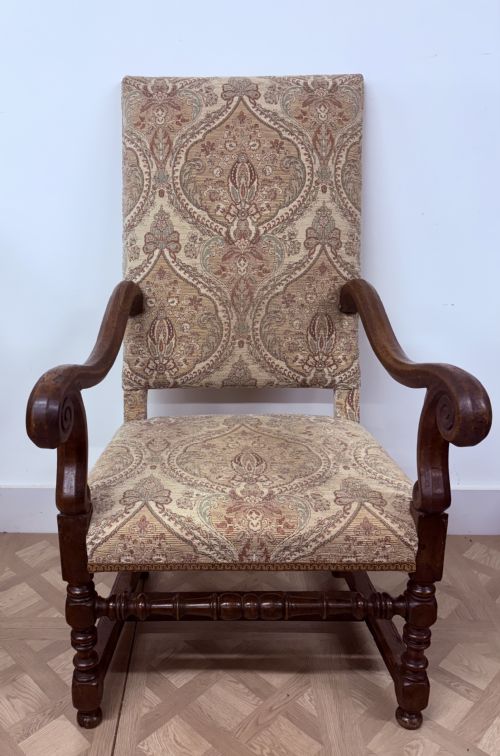
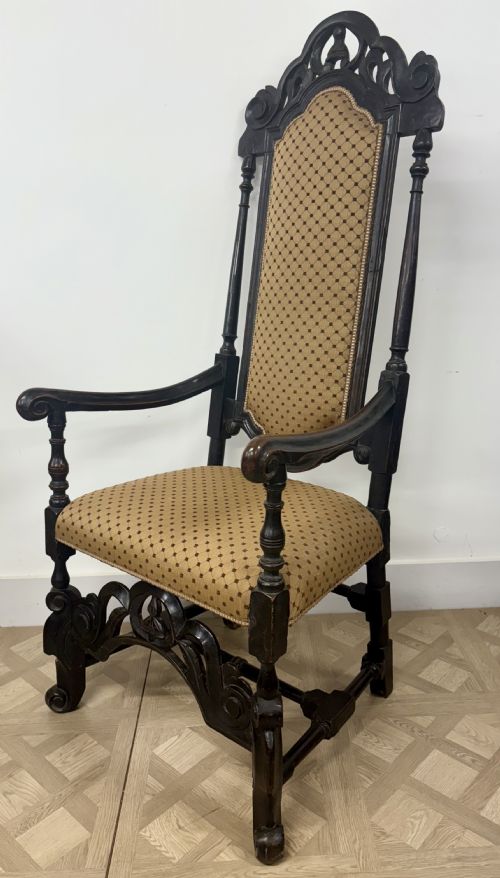
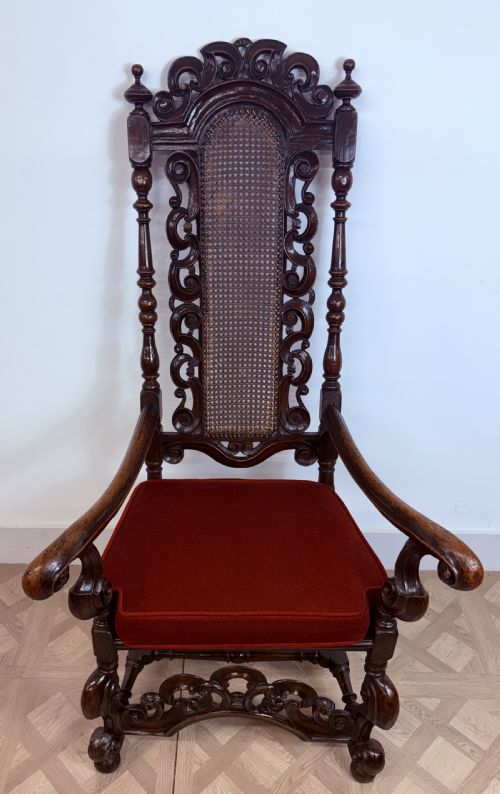


Late 17th Century Chair
A late 17th century chair brings tangible history into a room through carved timber and time-worn joinery.
Late 17th Century Chair
A late 17th century chair spans robust regional seating such as oak wainscot and panelled box seat armchairs, alongside refined walnut side chairs and high-back dining seats. These pieces emerge from English, Welsh, Spanish, French, and Italian workshops, reflecting diverse domestic interiors of the period.
Buyers most frequently encounter sturdy oak side chairs and armchairs, often featuring carved details or spindle backs, as well as walnut frames designed with caned panels. Sets of dining chairs and benches also appear, offering robust utility combined with period character.
Materials and Construction
Craftsmen built these chairs primarily using native timber, relying heavily on durable oak and rich walnut, occasionally incorporating beech, laburnum, or parcel-gilt wood. Joinery depended on traditional pegged mortise and tenon construction to ensure structural stability over centuries of use.
Surface treatments included intricate hand carving, bobbin turning, and painted or gilded finishes, while seating surfaces frequently utilised woven cane, upholstery fabric, or solid timber panels.
Listings feature oak, walnut, cane, and parcel-gilt wood across side chairs, armchairs, and benches from the late 17th century.
Defining Characteristics of Quality
The standard of a late 17th century chair rests on the crispness of its hand carving and the integrity of its original timber frame. Pieces that retain their structural framing without excessive replacement of components command greater appreciation among collectors.
Subtleties in proportion, the rhythm of turned spindles, and the survival of early surface finishes distinguish exceptional examples from simpler domestic seating of the same era.
Daniel Marot
The Late 17th Century Chair Glossary
- Wainscot chair
- A heavy wooden armchair constructed with panelled backboards and solid arms, typical of early domestic interiors. These sturdy seats represent some of the most substantial surviving domestic furniture.
- Side chair
- A chair built without arms, originally designed for dining or placement against room walls. They offer compact forms while displaying the period stylistic details.
- Caned
- A seating method using woven rattan plant material inserted into chair frames. This technique created light, resilient panels for backs and seats.
- Parcel-gilt
- Wood surfaces partially decorated with applied gold leaf to highlight carved details. This treatment added subtle brilliance to high-status walnut dining chairs.
Late 17th Century Chair: Frequently Asked Questions
How do I identify a genuine late 17th century chair?
Examine the timber for traditional tool marks, patination, and the construction methods used in the joints. Hand-pegged mortise and tenon joints typically indicate period assembly.
Compare the style and decorative motifs, such as bobbin turning or panel carving, against documented examples from the same era to confirm authenticity.
Can I use an antique oak chair daily?
Most sturdy oak side chairs and armchairs remain structurally sound for regular sitting if handled with reasonable care. Solid joinery allows them to function reliably in modern settings.
Place delicate caned or highly carved walnut examples in low-traffic areas to preserve fragile materials and historic surfaces.
What rooms suit a panelled box seat armchair?
These substantial armchairs anchor hallways, studies, or living rooms as statement seating pieces. Their enclosed lower sections provide a commanding visual presence.
Pair them against plain walls to highlight the deep relief carving and timber grain of the back panel.
How should I care for caned walnut seating?
Maintain a stable indoor humidity level to prevent the natural cane from drying out and becoming brittle. Avoid placing the chair near direct heat sources or strong sunlight.
Clean the wooden frame gently with a dry cloth and avoid harsh chemical polishes that might damage historic finishes.