







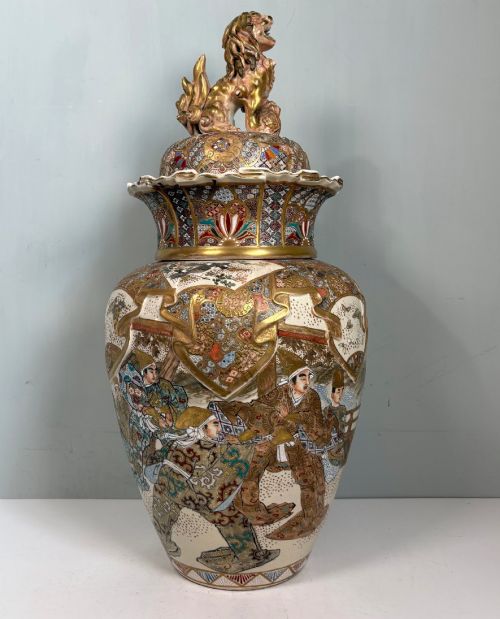

Ceramic Urn with Lid
These ceramic urn with lid pieces bring classical form and decorative presence into a room, offering both practical storage and striking visual weight.
Ceramic Urn with Lid
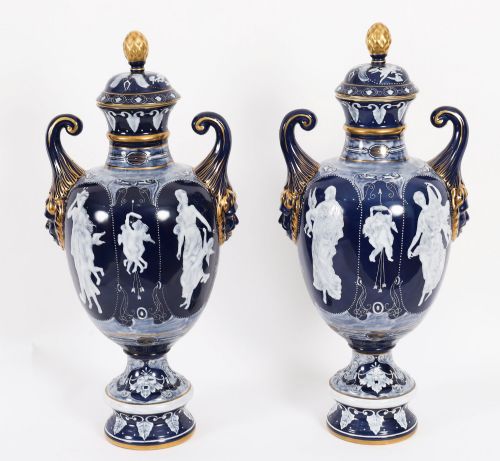
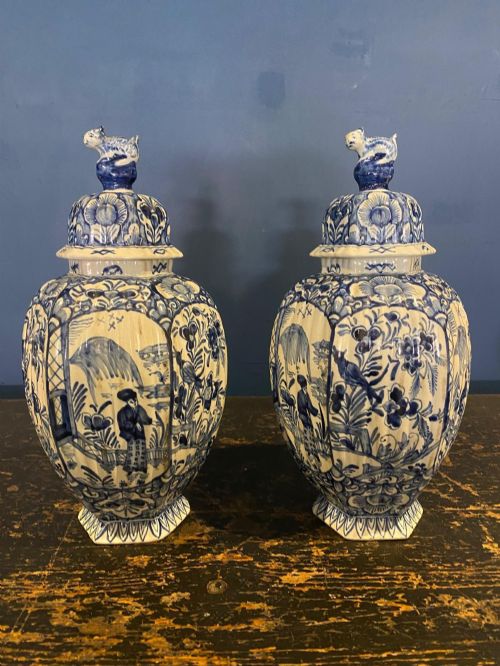
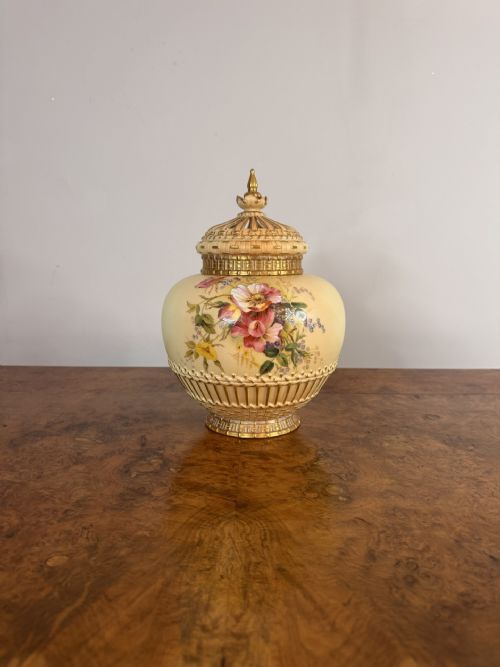
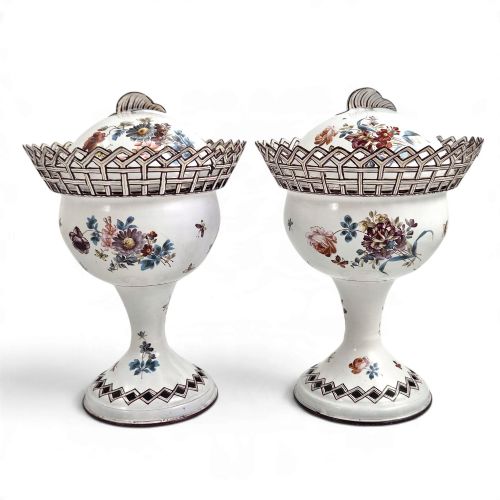
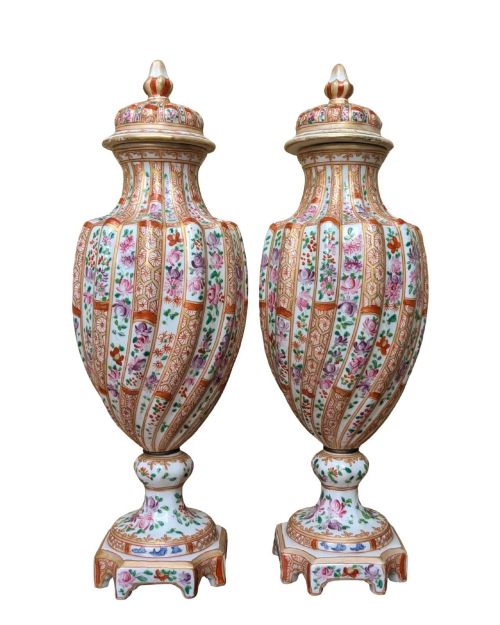
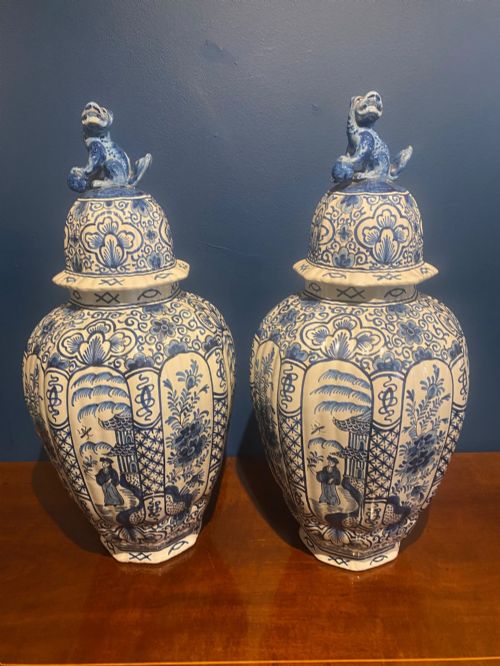
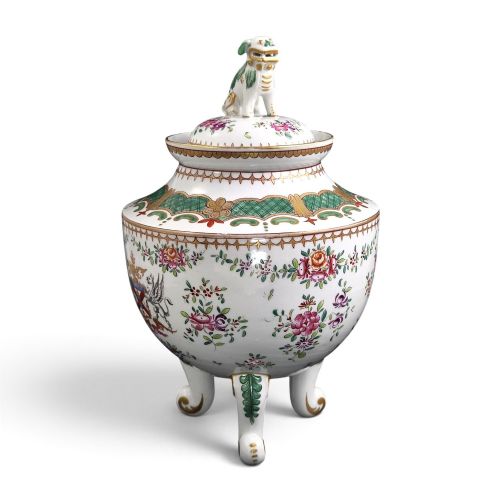
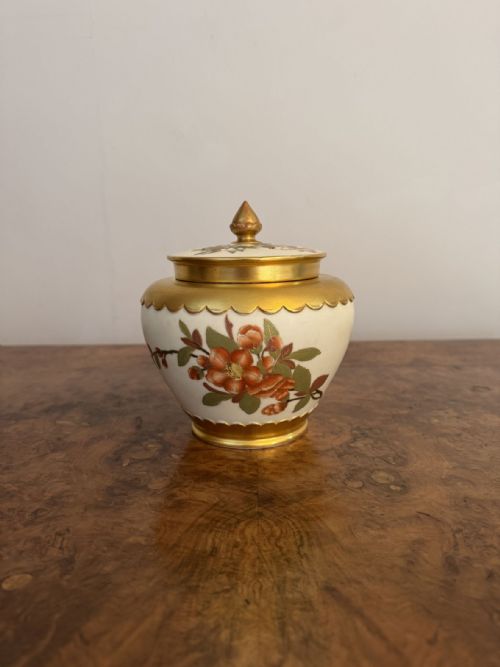
A ceramic urn with lid combines vessel and cover in various configurations, ranging from eighteenth-century Delft examples to nineteenth-century continental majolica and Worcester porcelain. These objects appear in forms such as lidded vases, pedestal vessels, and temple jars, spanning periods from the eighteenth century through the Edwardian era.
The pieces often feature handles, decorative scenes, and specific regional styles including Dutch Baroque, Victorian Chinoiserie, and Japanese Imari. Buyers find both individual items and balanced pairs suitable for display on mantelpieces, occasional tables, and pedestals.
Materials and construction techniques
Makers utilised earthenware, porcelain, terracotta, and tin-glazed earthenware as the primary base materials for shaping these lidded vessels. Surface decoration frequently incorporates enamel, gold leaf, and traditional gilding techniques applied over the ceramic body.
Many items display hand-painted detailing, ranging from Watteau scenes and floral motifs to Edo manner designs and Chinese dragon imagery. The integration of fitted lids requires precise firing to ensure correct proportion and alignment with the vessel body.
Ceramic Urn with Lid Retail Price Guide 2026
Typical asking prices for ceramic urn with lid among the pieces listed under this phrase on Sellingantiques today, from the lower quarter to the upper quarter. They describe what is for sale here now, not the wider market.
Listings feature works from the eighteenth, nineteenth, and early twentieth centuries, spanning earthenware, porcelain, and terracotta materials.
Assessing quality in lidded urns
Quality rests upon the crispness of the modelled form and the precision of the hand-painted decoration, where superior examples exhibit detailed brushwork and harmonious colour application. The integration between the lid and the main body demonstrates the maker's technical skill.
Pieces bearing identifiable factory marks, such as those from Worcester, Dresden, or Sevres, command attention through documented provenance and refined finishing. The condition of delicate surface elements, including gilding and enamel work, determines the overall integrity of the piece.
Chamberlain Worcester·Helena Wolfsohn Dresden·Royal Winton·Hadley's Worcester·Royal Worcester·Royal Crown Derby
The Ceramic Urn with Lid Glossary
- Majolica
- A type of tin-glazed earthenware featuring colourful opaque glazes, popular in nineteenth-century interpretations of Renaissance styles.
- Imari
- A style of Japanese porcelain decorated in underglaze blue and iron red, with supplementary gold, often copied by European factories.
- Pedestal vase
- A vessel form raised on a distinct foot or column, frequently utilised for decorative display on furniture surfaces.
- Tin-glazed earthenware
- Pottery covered with a white tin-oxide glaze that provides an opaque surface for painted decoration, seen in Delftware.
Ceramic Urn with Lid: Frequently Asked Questions
How do I date a ceramic urn?
Dating relies on identifying the material base, glaze characteristics, and stylistic markers such as Regency neo-classicism or Edwardian ornamentation. Factory marks and painter signatures provide definitive chronological reference points.
Comparison with documented examples from periods like the eighteenth century or the late nineteenth century helps establish the correct era of production.
Were lidded urns used for storage?
Many forms originated as decorative display pieces rather than functional containers, though some temple jars and covered vessels could hold dry goods or potpourri. The presence of a fitted lid completed the sculptural silhouette of the vase.
In domestic settings, they served primarily to adorn mantelpieces and large tables within formal reception rooms.
How should I display a pair?
Pairs of lidded urns look best balanced symmetrically on large pieces of furniture, such as sideboards, mantelpieces, or dedicated pedestals. Maintaining equal sightlines allows the painted scenes and handles to be viewed to maximum advantage.
Avoid placing them in areas of high foot traffic where the lids might be accidentally dislodged.
What is the difference between Faience and Delft?
Faience is a general term for tin-glazed earthenware produced in France and other continental regions, often featuring rich polychrome decoration. Delft specifically refers to tin-glazed pottery originating from the Netherlands, traditionally known for blue and white designs.
Both categories utilise similar firing methods but reflect distinct regional artistic traditions.