


Central Asian Tekke Rug
When you examine a central asian tekke rug, you hold a piece of nomadic tribal history woven from natural dyes and wool.
Central Asian Tekke Rug
A central asian tekke rug encompasses tribal textiles, wall hangings, and dowry pieces created by Turkmen weavers during the nineteenth and early twentieth centuries.
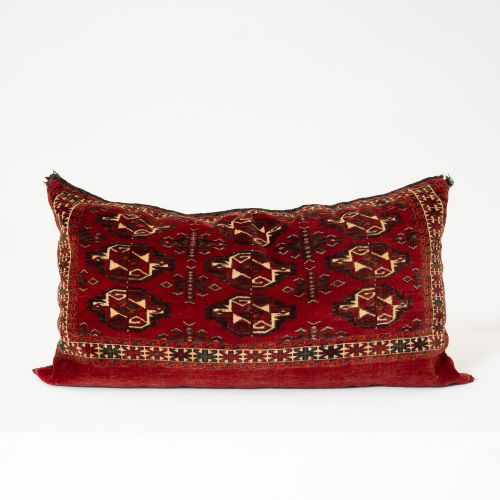
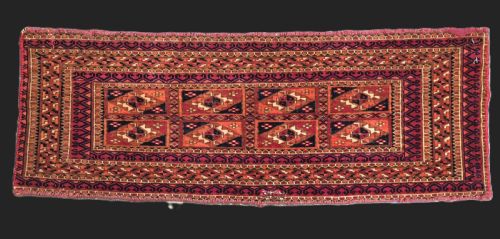
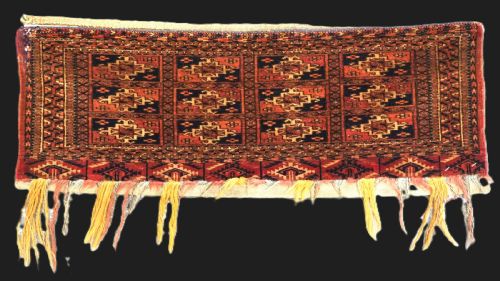
The pieces on this page appear as complete carpets, torbas, chuvals, and tent bands utilising traditional formats like the ensi and main carpet.
Most items date from the eighteen-fifties through to nineteen-twenty, reflecting nomadic and tribal traditions originating in Central Asia.
How They Were Made
Weavers constructed these textiles primarily from wool and cotton foundations, incorporating silk highlights and linen elements in specific dowry pieces.
Dyers employed natural dyes to achieve the deep colour palettes observed across the tribal designs and gul patterns.
The listings span from the mid-nineteenth century to nineteen-twenty, featuring wool, cotton, silk, and natural dyes across tribal textile forms.
What Varies in Quality
The fineness of the weave and the complexity of the gul arrangements distinguish finer examples from standard tribal production.
Clarity of drawing, preservation of original backs, and depth of natural colour saturation dictate the standing of individual pieces.
The Central Asian Tekke Rug Glossary
- Gul
- A repeating primary octagonal medallion motif used across Turkmen rugs and bag faces. These motifs often identify the specific tribal group or sub-tribe responsible for the weaving.
- Torba
- A small storage bag produced by nomadic weavers for tent use. They frequently display multiple guls and detailed elem panels.
- Chuval
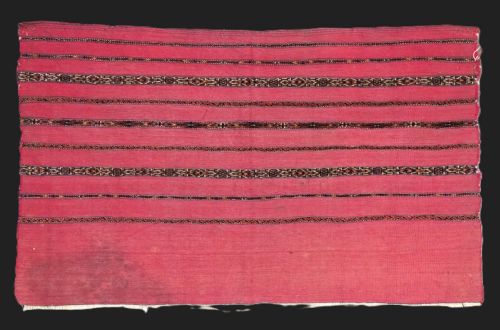
- A large tent storage bag designed for household belongings. Examples often survive as complete pieces with plain weave backs or as cut faces.
- Ensi
- A tribal door rug hung at the entrance of a yurt. These pieces typically feature a candelabra design divided into four quarters.
- Mafrash
- A rectangular storage bale or bag face used within the nomadic encampment. They share construction techniques with torbas and chuvals.
Central Asian Tekke Rug: Frequently Asked Questions
What is a central asian tekke rug?
A central asian tekke rug is a tribal textile woven by the Tekke Turkmen tribe in Central Asia during the nineteenth and early twentieth centuries. These pieces include floor carpets, door rugs, and various storage bags.
Weavers utilised wool, cotton, and natural dyes to create structured geometric patterns dominated by repeating gul medallions and rich colour palettes.
How were torbas and chuvals used?
Nomadic families utilised torbas and chuvals inside tents for storing household goods, bedding, and personal possessions. Their sizes ranged from small bags to large storage sacks.
Many examples survive today as complete pieces with their original plain weave backs, while others remain as decorative bag faces.
How do you date these antique rugs?
Dating relies on examining the materials, structural characteristics, natural dye usage, and stylistic evolution of the gul designs. Pieces generally span from the mid-nineteenth century up to the nineteen-twenties.
Earlier examples from the eighteen-fifties and sixties often display finer knotting and distinct secondary colours compared to later twentieth-century production.
What distinguishes an ensi?
An ensi functions as a tribal door hanging designed to cover the wooden doorway of a yurt. They display a characteristic cross-panel layout dividing the field into four sections.
This specific format separates them from main carpets, runners, and storage bag faces while maintaining the traditional Tekke colour schemes.