


Victorian Oriental Rug
A victorian oriental rug brings the heavy woven textures of nineteenth century Persia, the Caucasus and Anatolia straight onto a wooden floor.
Victorian Oriental Rug
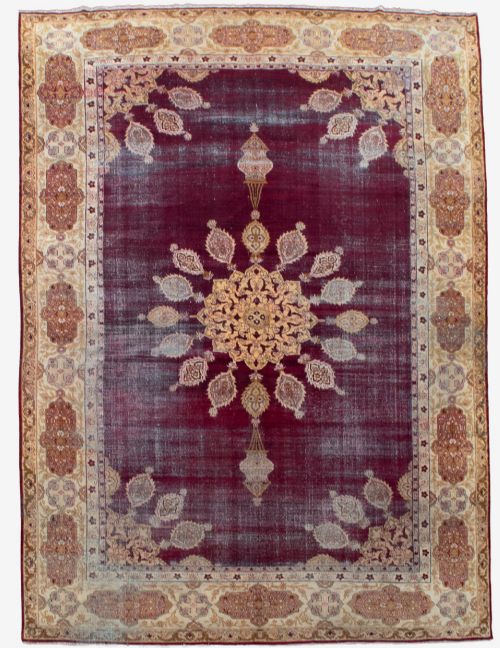
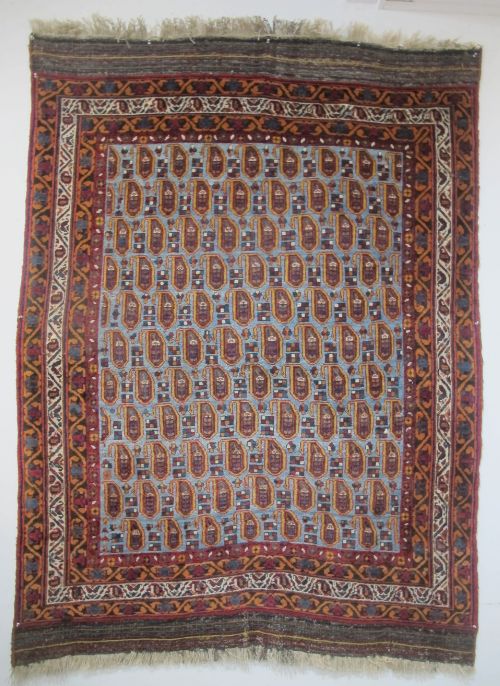
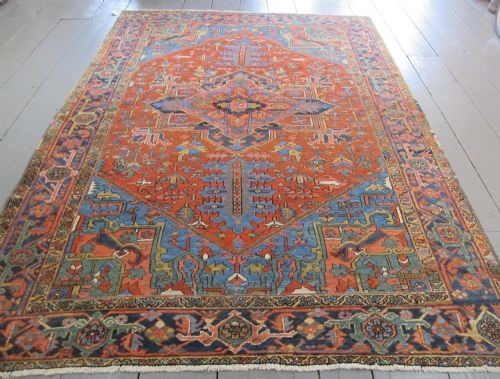
When you search for a victorian oriental rug, you encounter hand-knotted floor coverings produced across the Middle East and Central Asia during the nineteenth century. These items include large room-sized carpets from workshops in Sultanabad and Heriz alongside smaller tribal pieces woven by nomadic groups like the Baluch and Qashqai. Most examples span the period from eighteen-seventy to nineteen-hundred, matching the height of the Victorian era.
The selection ranges from grand country house carpets measuring several metres across down to narrow hallway runners and small prayer rugs. You will also find occasional upholstered items such as armchairs and chairs incorporating fragments of these historic carpets into their design. The geographical origins are diverse, covering Persian city workshops, Caucasian village looms and Turkmen tribal camps.
Materials and construction
These textiles rely primarily on wool foundations and piles, often combined with cotton warps and wefts to provide structural stability. Hand-spinning gave the wool yarn its characteristic irregularity, allowing it to absorb natural dyes unevenly and develop rich, nuanced colour variations across the surface. Certain specialist pieces also incorporate subsidiary materials like wood, brass and velvet, particularly when adapted into nineteenth-century furniture items.
Weavers tied intricate knots onto vertical looms using traditional Persian and Turkish techniques passed down through generations. Natural dye sources produced deep indigos, soft madders and ivory tones that mellow gently over decades of light exposure and wear. The density of the knotting varied depending on whether the piece came from a settled urban workshop or a nomadic encampment.
Some nineteenth-century furniture makers repurposed antique carpet fragments directly into comfortable club armchairs and seated footstools.
Assessing quality
The standard of a nineteenth-century woven textile depends largely on the crispness of the drawing and the saturation of its natural palette. Finer examples display precise geometric or curvilinear motifs with balanced borders, while simpler utility pieces show more rustic, asymmetrical execution. The condition of the wool pile relative to the foundation structure also dictates how well the rug retains its visual impact.
The Victorian Oriental Rug Glossary
- Warp
- The vertical threads stretched tightly on a loom before weaving begins. The fringes of a finished rug are usually formed by the exposed ends of these threads.
- Weft
- The horizontal strands passed alternately over and under the warp threads to hold the knots in place. They give the textile its structural firmness.
- Selvedge
- The reinforced edge running along the long sides of a rug that prevents the outside knots from unravelling. Traditional examples often feature multiple wrapped cords in matching wool.
- Prayer rug
- A small format textile featuring a niche or arch design at one end. Historically used to indicate the direction of prayer, these rugs were produced in towns across Anatolia and the Caucasus.
- Gul
- A repeating medallion or octagonal motif found frequently in Turkmen and Central Asian carpet design. Each tribal confederation used distinct variations to denote lineage and identity.
- Boteh
- A pear-shaped or almond-like motif with a curved upper end, heavily utilised in Persian and Caucasian weaving. It represents a stylized floral or cypress tree form.
Victorian Oriental Rug: Frequently Asked Questions
How do I clean an antique rug?
Gentle surface brushing and regular low-suction vacuuming without a rotating beater bar help remove embedded dirt from the wool pile. Professional specialist cleaning remains essential for deep washing to protect fragile nineteenth-century natural dyes.
Water should be applied sparingly, and harsh chemical detergents must be avoided entirely to prevent dye bleeding or fibre degradation. Natural wool lanolin benefits from gentle handling rather than aggressive scrubbing.
Can I place these carpets in high traffic areas?
Sturdier village and tribal carpets constructed with thick wool pile tolerate moderate hallway or living room foot traffic quite well. Placing a breathable underlay beneath the textile prevents slipping and reduces friction against hard wooden floors.
More delicate city carpets from centres like Fereghan or Kirman deserve more sheltered placement out of direct, continuous heavy footsteps. Protecting them from intense direct sunlight also preserves the original vibrancy of the vegetable dyes.
How do I identify a tribal rug from a city carpet?
Tribal rugs typically feature geometric patterns, coarser knot counts, and slightly uneven dimensions reflecting nomadic life on portable looms. Their designs rely on memory and traditional tribal symbolism rather than precise paper cartoons.
City carpets display highly refined curvilinear drawing, intricate floral sprays, and dense, symmetrical compositions woven in fixed urban workshops. The materials in city examples often include finely spun cotton foundations alongside exceptionally tight wool pile.
What is a prayer rug used for?
A prayer rug incorporates a distinct architectural arch or niche motif designed to point towards Mecca during daily devotions. Their compact size made them portable and personal items for individuals within various communities.
Today, these formats are appreciated primarily for their intense symbolic decoration and concentrated focal designs. Collectors prize the varied prayer arches found across Caucasian, Anatolian and Persian examples.