
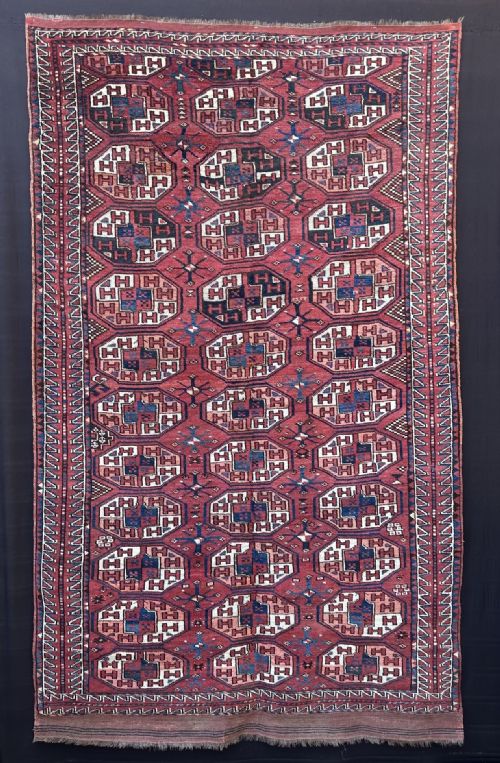


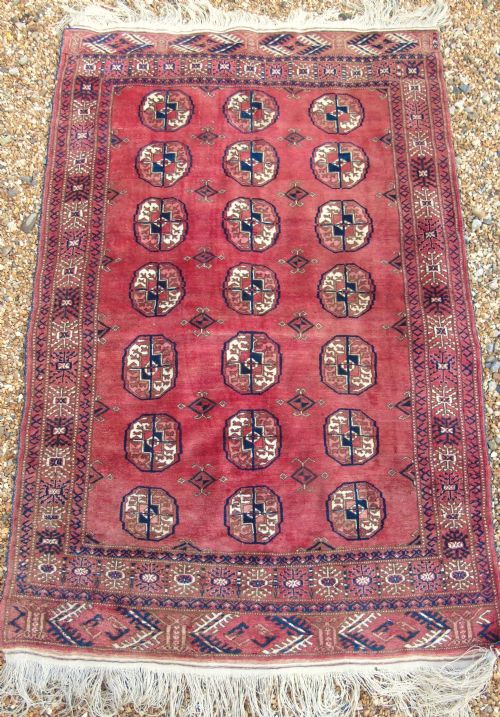


Central Asian Gul Runner
A central asian gul runner brings dense tribal geometry and rich wool into a hallway, offering centuries of nomadic heritage.
Central Asian Gul Runner
A central asian gul runner displays the repeated octagonal motifs characteristic of tribal weaving from the region. Buyers searching this phrase encounter long formats designed for corridors, alongside related carpets and smaller torba fragments.
The pieces on this page span the nineteenth and early twentieth centuries, reflecting traditional formats from groups including the Ersari, Tekke, Kizyl Ayak, and Karakalpak. These rugs carry the distinct design vocabulary of Turkmen and Baluch nomads.
Makers shaped these textiles for domestic use, utilising enduring formats like the long rug or runner. Each piece presents the traditional arrangement of major and minor guls across a dark field.
How They Were Made
Weavers constructed these textiles using hand-spun wool for both the foundation and the dense pile. Natural dyes provided the deep red, brown, and dark tones that define the palette.
The physical structure relies on tight knotting on a wool warp and weft, creating a durable surface suited to heavy foot traffic. Artisans bound the edges and finished the ends according to tribal custom.
Listings feature wool woven by Ersari, Tekke, Kizyl Ayak, and Baluch makers between the mid-nineteenth century and the 1930s.
What Varies in Quality
Quality rests in the precision of the knotting and the complexity of the gul drawing. Finer weaves show sharper definition in the geometric motifs and greater density across the pile.
The vibrancy and depth of the natural dyes separate standard examples from superior pieces. Hand-spun wool with subtle tonal variations provides a richer surface texture than flat, uniform colour.
The Central Asian Gul Runner Glossary
- Gul
- A medallion motif repeated across the field of a carpet, often taking an octagonal or geometric form. These shapes frequently identified specific tribes or clans.
- Torba
- A small storage bag face produced by Turkmen nomads, displaying decorative tribal patterns similar to larger carpets. These pieces were hung inside tents for household storage.
- Beshir
- A sub-group of Ersari tribal weaving known for distinctive large-scale designs and alternative palette choices. These rugs often depart from standard repetitive gul layouts.
- Warp
- The vertical foundation threads stretched tightly on the loom before knotting begins. The visible fringes at either end of the rug are extensions of these structural threads.
- Weft
- The horizontal threads passed back and forth between warp threads to secure each row of knots. This construction method locks the wool pile firmly in place.
Central Asian Gul Runner: Frequently Asked Questions
How are these runners cleaned?
Gentle surface brushing removes loose dust and debris from the dense wool pile safely.
Deep cleaning requires professional textile conservation to protect natural dyes and fragile foundations.
Can I put them in hallways?
The narrow format suits corridors and narrow entryways where traditional tribal geometry adds strong visual weight.
Underlay helps prevent slipping and reduces friction between the wool foundation and hard flooring.
What is natural dye?
Colour derived from plant, insect, or mineral sources provides the traditional hues seen in these nineteenth-century textiles.
These substances age gradually, developing subtle tonal shifts across the wool surface over decades of exposure.