
Central Asian Embroidered Textile
Central Asian embroidered textile works combine tribal heritage with vivid stitchery, offering tactile panels, hangings, and ceremonial covers that enrich contemporary interiors.
Central Asian Embroidered Textile
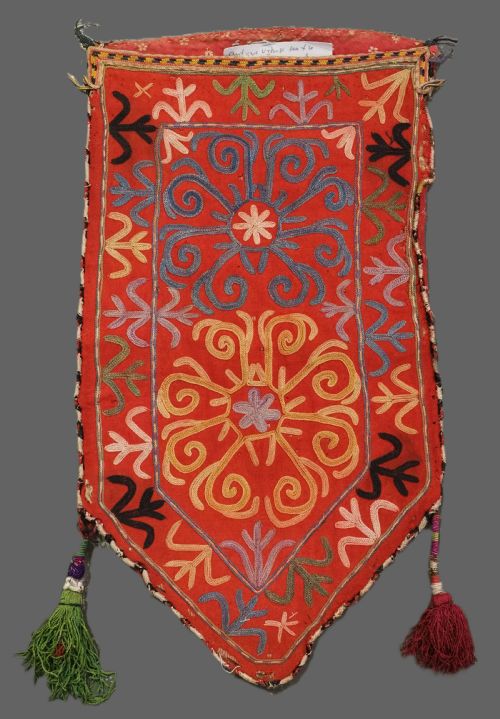
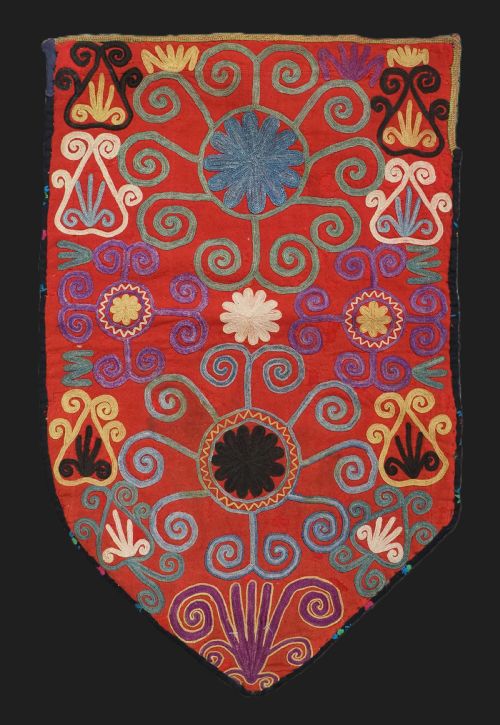
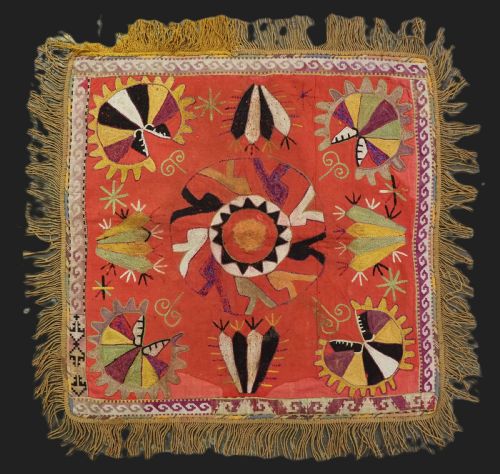
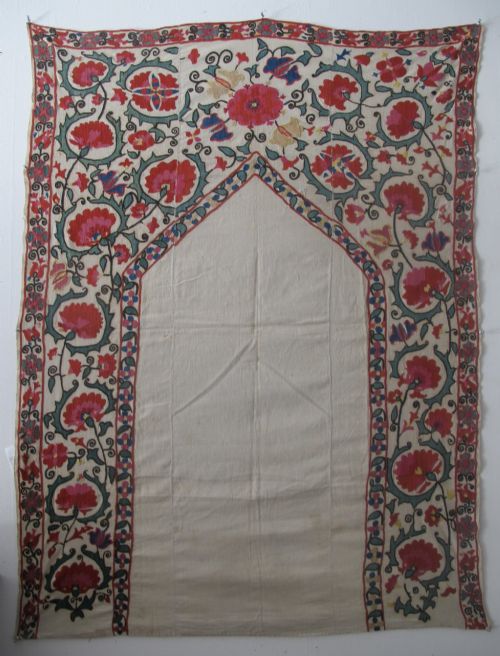
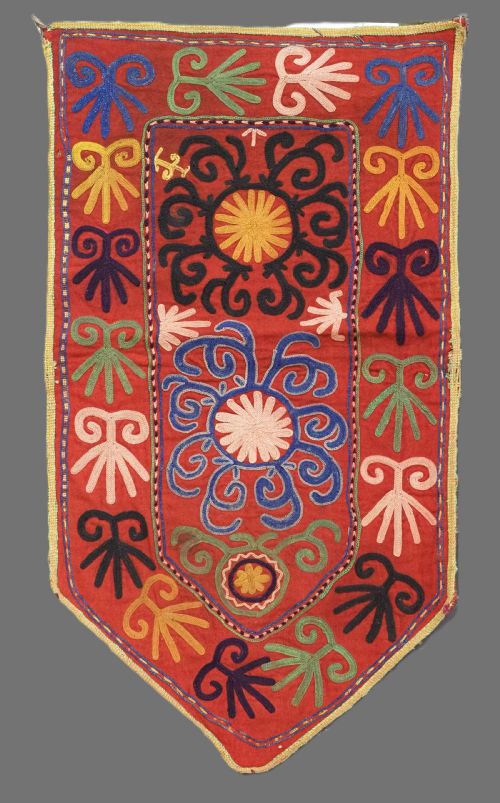
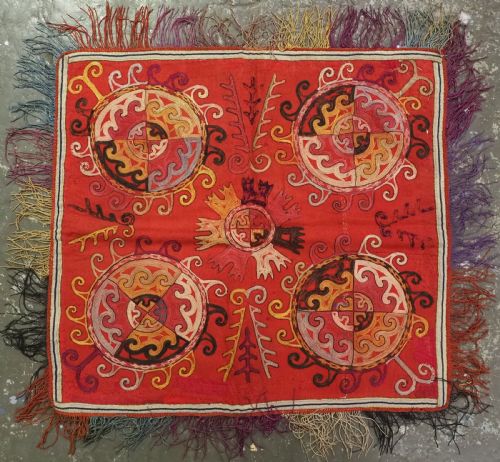
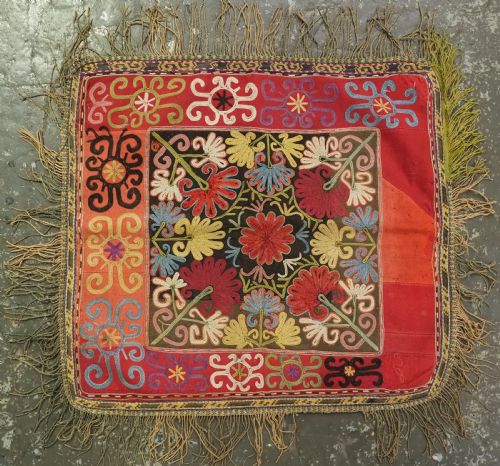
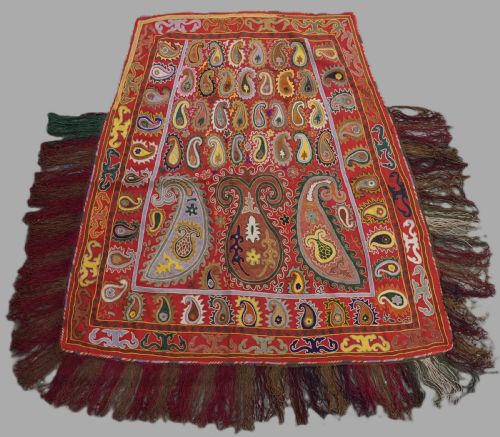
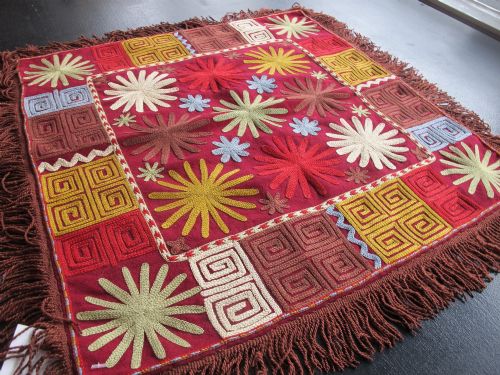
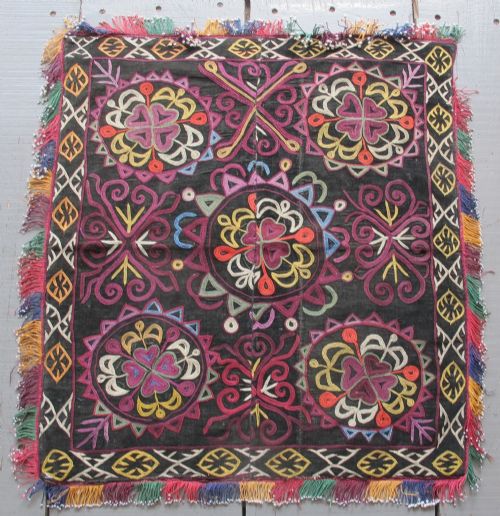
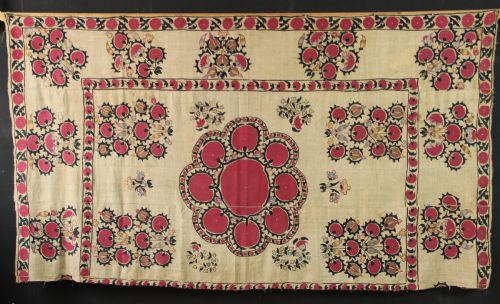
A central asian embroidered textile encompasses functional and decorative items created across the region, including wall hangings, dowry panels, mirror covers, and bed covers. The selection here leans heavily towards nineteenth and early twentieth-century examples originating from nomadic and settled groups.
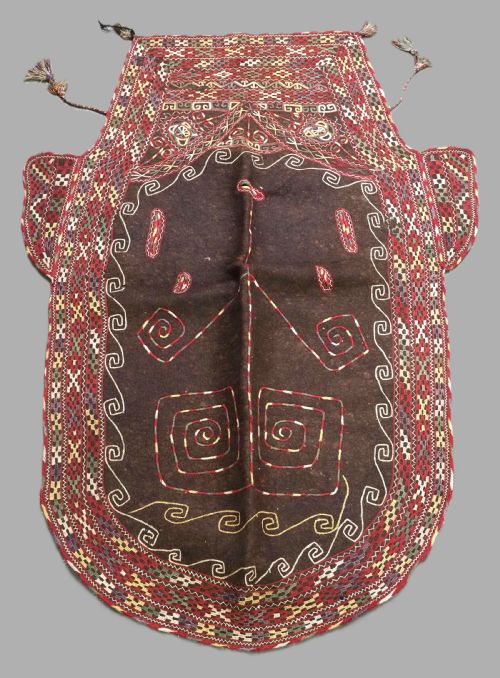
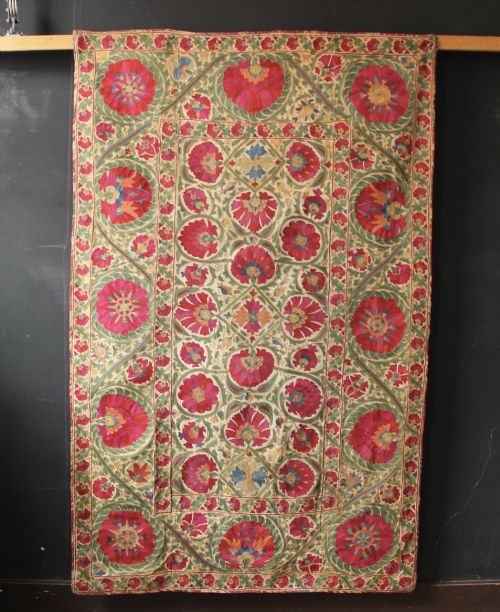
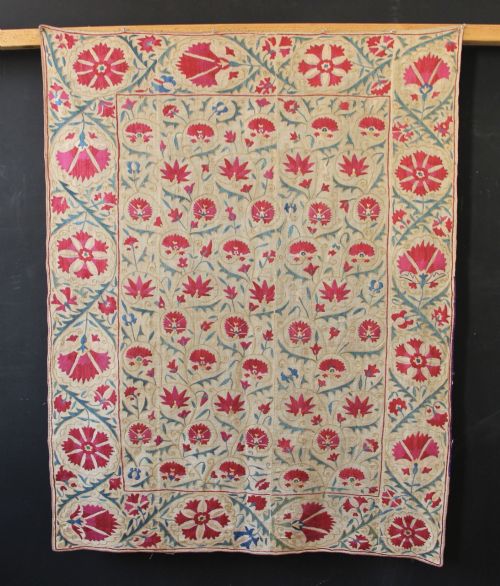
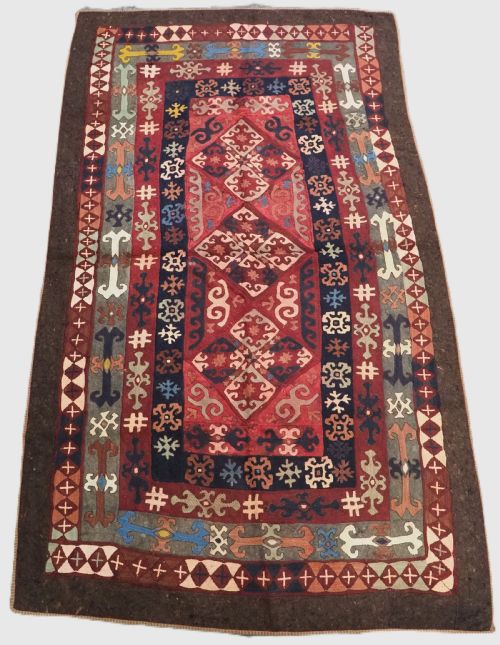
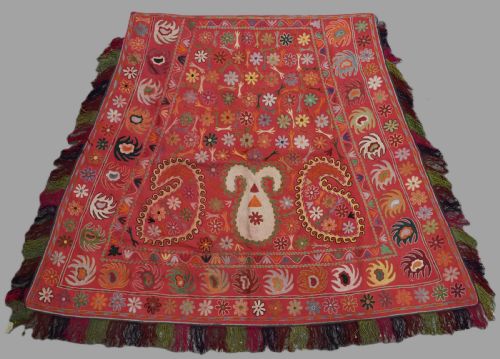
Common forms on this page include the suzani, a large embroidered panel typically used for weddings or home decoration, alongside specific tribal pieces such as the ilgich and uut kap made by the Lakai. Ceremonial horse covers and felt rugs also appear frequently, representing the material culture of Turkmen and Kirghiz makers.
Pieces frequently feature specific regional names like Bokhara, Nurata, and Ura Tube, pointing to distinct aesthetic traditions within Uzbekistan and wider Central Asia. The items reflect domestic artistry produced for significant life events, ceremonial use, or daily adornment.
Materials and construction methods
Makers utilised natural fibres, predominantly working with silk thread stitched onto cotton or wool grounds, occasionally incorporating velvet or felted wool for heavier panels. Glass beads and metal thread also surface as accents on specific tribal and ceremonial items.
Needlework techniques vary from fine silk-on-silk embroidery to bold geometric felt applique and couched metal threads. Ground fabrics range from hand-woven cotton and wool to rich red velvet and sturdy felted wool designed for practical durability.
Listings span periods from the mid-nineteenth century through to the 1930s, featuring silk, wool, cotton, velvet, and felted wool.
Determinants of quality
Quality rests upon the fineness of the stitchwork, the complexity of the design layout, and the preservation of the original ground material and threads. Pieces displaying meticulous execution and balanced colour palettes stand apart from simpler utility items.
The integrity of the textile structure, including the survival of delicate silk embroidery or applied fringe, influences the overall standing of an individual hanging or cover within its historical group.
The Central Asian Embroidered Textile Glossary
- Suzani
- A large embroidered wall hanging or decorative textile from Central Asia, traditionally worked in silk on a cotton or linen ground. These panels often display bold floral or medallion motifs.
- Ilgich
- A specific type of Central Asian embroidery, frequently associated with the Lakai tribe, used as dowry decoration or wall hanging. They are known for dynamic geometric and figurative elements.
- Uut Kap
- A storage bag or hanging panel traditionally used inside a yurt, often featuring elaborate embroidery or applique work produced by nomadic groups. They represent domestic textile artistry.
- Nim Suzani
- A smaller version of the standard suzani panel, scaled for domestic spaces or specific functional uses. These smaller textiles retain the intricate stitchwork of larger examples.
Central Asian Embroidered Textile: Frequently Asked Questions
What is a suzani?
A suzani is a large, hand-embroidered textile created in regions such as Uzbekistan, traditionally made as part of a bride's dowry.
These panels typically feature vibrant silk threads stitched onto cotton or wool foundations, displaying elaborate floral, medallion, or architectural motifs.
How were these textiles used?
Central Asian textiles served multiple purposes in daily and ceremonial life, functioning as wall hangings, bed covers, mirror covers, and dowry furnishings.
Nomadic and tribal groups also utilised specialised items like horse covers, felt rugs, and yurt storage bags for ceremonial occasions and practical domestic display.
How do I care for antique embroidery?
Antique textiles require careful handling, protection from direct sunlight to prevent fading, and stable environmental conditions free from excessive moisture.
Mounting textiles professionally onto breathable backing supports the weight of the fabric and protects fragile silk threads during display.
How can I tell tribal styles apart?
Tribal styles differ through distinct design vocabularies, colour combinations, and choice of ground materials such as felt, velvet, or woven wool.
Group assignments like Lakai, Yomut, or Kirghiz rely on characteristic motifs, applique techniques, and regional stitching methods passed down through generations.