


Central Asian Dowry Rug
A central asian dowry rug brings tribal wool and silk into a room, made for marriage and household life in the nineteenth century.
Central Asian Dowry Rug
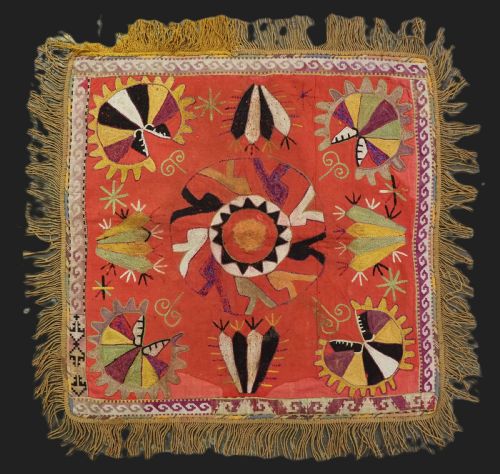
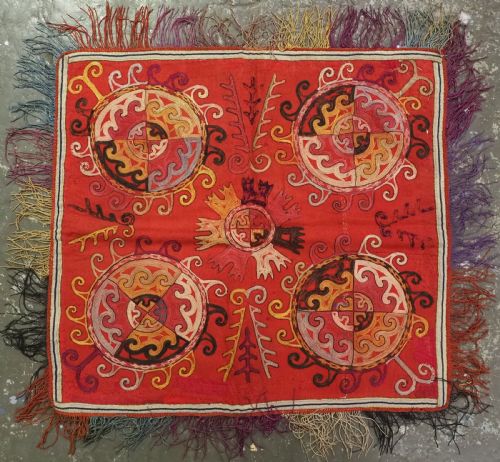
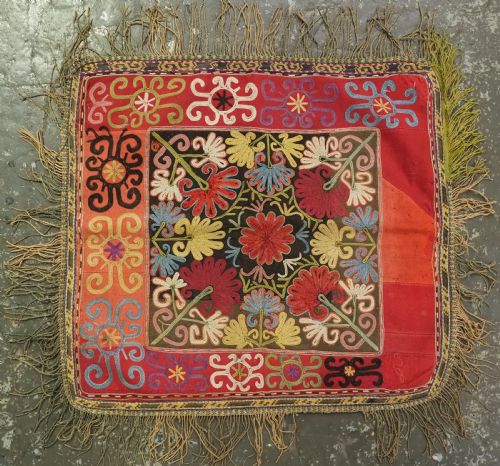
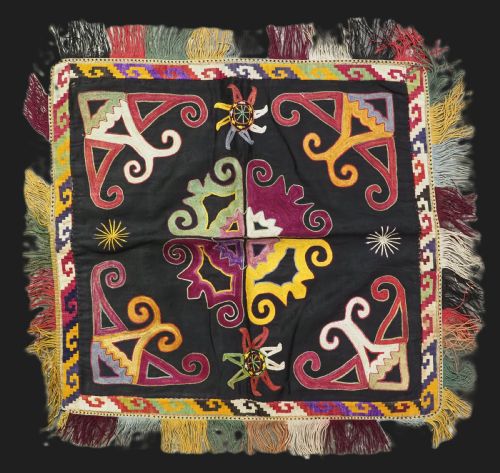
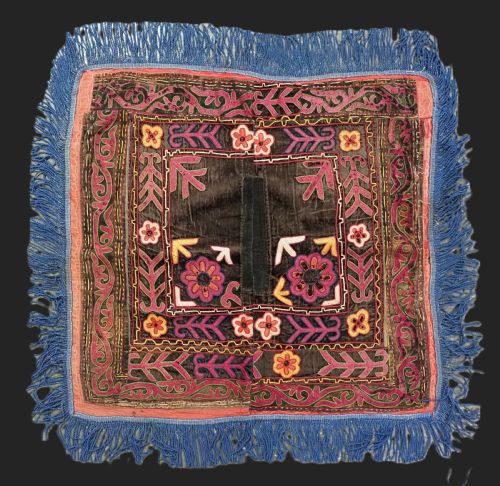
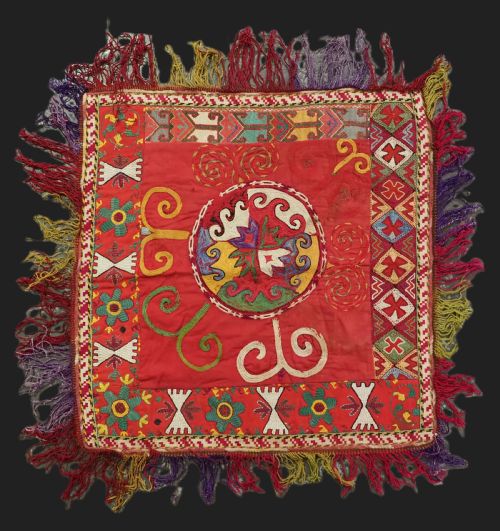
When searching for a central asian dowry rug, collectors encounter tribal textiles produced across the region during the nineteenth century, including specific pieces dated between eighteen seventy and nineteen hundred. The most common form on this page is the antique Uzbek Lakai tribe ilgich, created as dowry embroidery intended for use as a wall hanging.
Beyond embroidered wall hangings, the selection includes woven rugs and torbas associated with Turkmen groups such as the Tekke and Saryk tribes. These smaller formats served functional roles within tribal households and wedding ceremonies, often displaying traditional gul motifs and ovoid design variations.
The objects span multiple tribal identities across Central Asia, encompassing Karakalpak dowry weaving alongside Turkmen and Uzbek examples. Each piece represents traditional textile traditions passed down through generations, shaped by the specific cultural requirements of tribal life.
How they were made
These textiles rely primarily on wool and cotton foundations, combined with silk highlights and velvet elements to create surface contrast and texture. Artisans utilised soft wool for pile construction in rugs and torbas, while wall hangings employed detailed embroidery techniques on fabric backings.
Weavers incorporated natural dyes to achieve traditional colour palettes across the nineteenth century pieces. The construction ranges from standard village weaves to very fine work, particularly visible in smaller torbas and wedding rugs from the period.
Every dowry weaving carries the invisible hand of a nineteenth century artisan who probably drank tea while embroidering.
What varies in quality
Quality in these textiles rests upon the fineness of the weave and the clarity of traditional tribal motifs such as the ovoid gul or standard gol patterns. Pieces featuring silk highlights and exceptionally soft wool distinguish themselves within the range of tribal production.
The precision of nineteenth century embroidery work on ilgich wall hangings separates standard examples from finer specimens. Preservation of original materials and structural integrity also influence how a textile holds its character across decades.
The Central Asian Dowry Rug Glossary
- Ilgich
- A traditional Uzbek embroidery piece created as dowry work for wall hanging. These textiles display distinct tribal patterns associated with the Lakai people.
- Torba
- A small storage bag or hanging used in Turkmen households. These dowry items frequently feature fine weave structures and characteristic tribal gul designs.
- Gul
- A primary medallion or repeating motif used in Turkmen carpets and tribal weaving. The shape often identifies the specific tribe or sub-group that made the piece.
- Karakalpak
- A Central Asian tribal group known for distinctive textile traditions. Their dowry weaving often incorporates large Turkmen-style gols.
Central Asian Dowry Rug: Frequently Asked Questions
What is a central asian dowry rug?
A central asian dowry rug is a nineteenth-century tribal textile created for marriage traditions by groups such as the Tekke Turkmen. These pieces include small rugs, torbas, and embroidered wall hangings.
They functioned within nomadic and village households as decorative and practical items for the bride's new home. Today, collectors preserve them as examples of regional textile heritage.
How do I identify a Lakai ilgich?
Lakai ilgich pieces are Uzbek embroideries made as dowry items for wall hanging during the nineteenth century. They are recognised by their specific needlework style and tribal motifs.
These embroidered textiles contrast with knotted pile rugs while sharing the same cultural context of marriage and household establishment.
Where were these textiles made?
These pieces originate from Central Asia, produced by tribal groups including the Uzbek Lakai, Tekke Turkmen, Saryk, and Karakalpak communities. Each region maintained distinct weaving and embroidery traditions.
Makers utilised local materials like wool, cotton, and silk, applying traditional patterns passed down through generations.
How should I display a textile wall hanging?
Textile wall hangings such as ilgich pieces require careful mounting to distribute weight evenly across the fabric backing. Avoid hanging them in direct sunlight to protect the natural wool and silk colours.
Consulting a professional textile framer ensures the piece remains secure without sustaining damage from adhesives or direct pinning.