

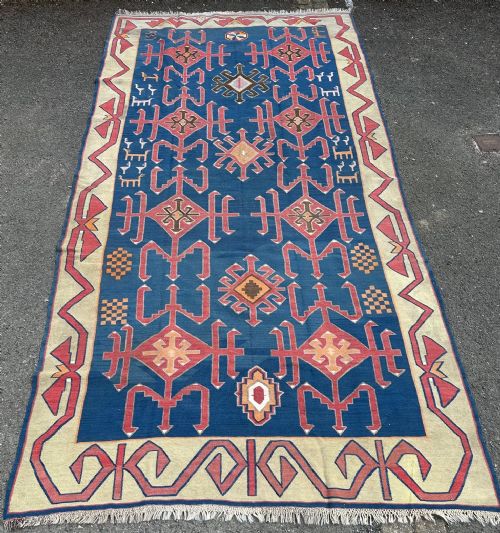


Caucasian Tribal Flatweave Rug
When choosing a caucasian tribal flatweave rug, you select a dense, patterned textile woven by nomadic groups in the mountain regions of the Caucasus.
Caucasian Tribal Flatweave Rug
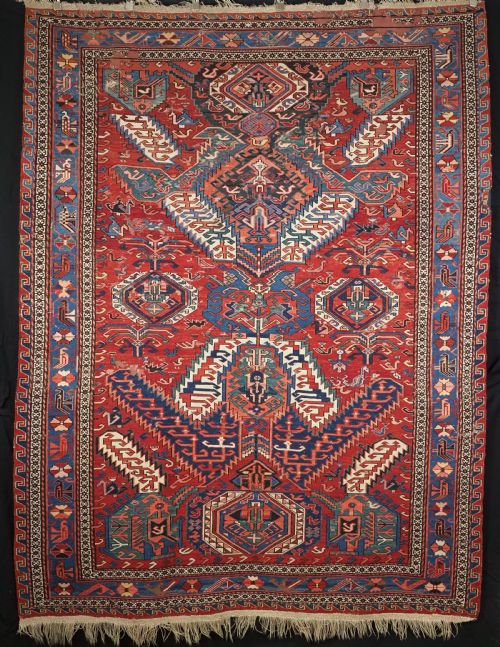
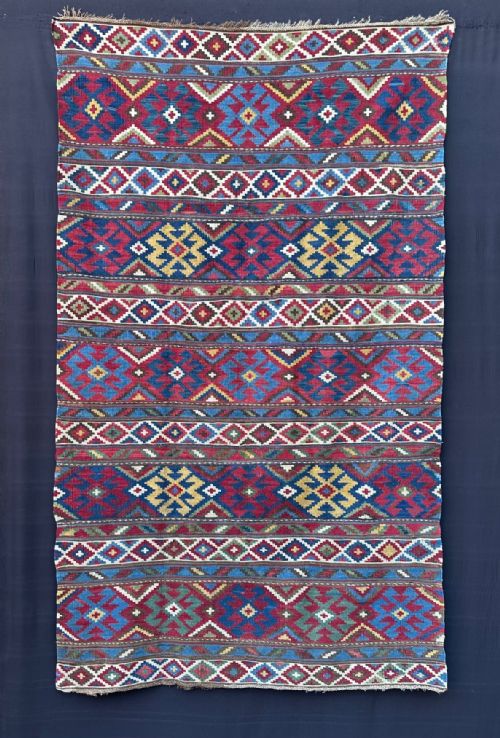
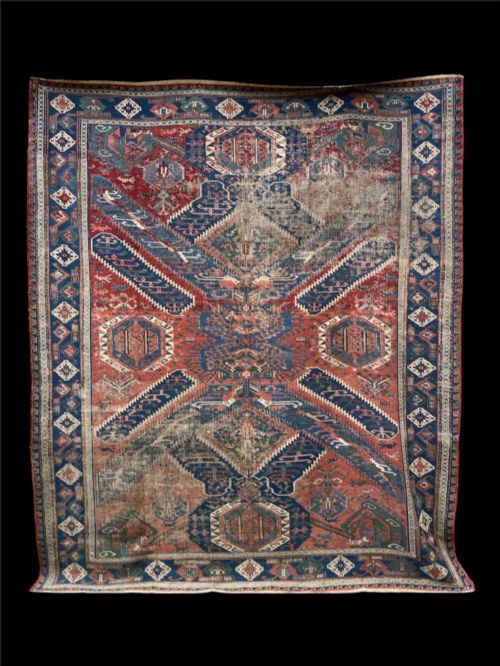
A caucasian tribal flatweave rug encompasses various utilitarian flatweaves, including kilims, soumaks, and utilitarian storage bags created by regional weavers. These textiles often feature geometric medallions, dragon motifs, and structured tribal patterns originating from centres like Shirvan, Daghestan, and Azerbaijan.
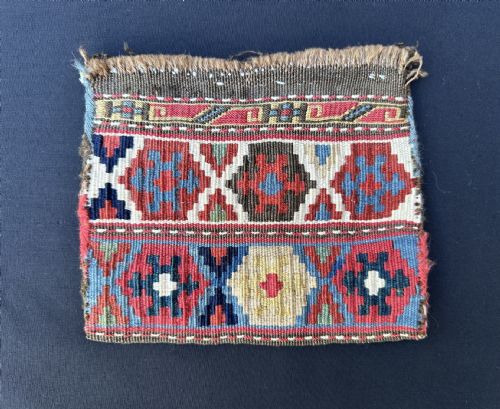
The objects available range from long runners and carpets to smaller saddle-bags, vanity bags, and complete mafrash panels. Many surviving examples originate from the nineteenth century, reflecting the distinct traditions of Shahsavan, Avar, and Jaf Kurd groups.
Buyers encounter items spanning diverse sub-styles, such as Kazak kilims and Armenian Karabagh pieces. Each piece demonstrates the functional artistry of nomadic life, adapted over decades into decorative floor coverings and wall art.
Assessing Quality and Execution
Quality rests upon the crispness of the geometric drawing and the complexity of the design, such as scarce dragon or bird motifs. Pieces displaying balanced proportions and well-rendered medallion layouts demonstrate superior artistic control.
The purity and interaction of the natural dyes determine the visual depth of the surface. Finer examples maintain disciplined tension in the weave, resulting in flat, stable textiles that preserve their structural integrity.
Object forms include runners, carpets, saddle-bags, vanity bags, and complete mafrash storage containers created by tribal weavers.
The Caucasian Tribal Flatweave Rug Glossary
- Kilim
- A flat-woven carpet or rug produced without a pile by tightly interweaving warp and weft strands. This technique creates a lightweight, reversible textile with sharp geometric patterns.
- Soumak
- A brocading technique where coloured weft threads wrap around warp threads in a continuous sequence. This method produces a textured, ribbed surface on the face and loose threads on the reverse.
- Mafrash
- A large rectangular storage box or bedding bag made by nomadic tribes, constructed from four woven panels and a base. These panels are frequently separated and repurposed into smaller flatweaves.
- Khorjin
- A traditional pair of saddle-bags designed for transport on animals, featuring twin compartments joined by a central slit. They are woven in flatweave or soumak structures for durability.
- Warp
- The vertical threads stretched lengthwise on a loom that form the foundational skeleton of the rug. Weft threads are passed horizontally through these structural elements.
Caucasian Tribal Flatweave Rug: Frequently Asked Questions
How do I clean an antique flatweave rug?
Gentle surface vacuuming without a beater bar removes loose dust and debris effectively. Professional textile conservators should handle wet washing to protect natural wool fibres and organic dyes.
Avoid chemical detergents and excessive moisture, which can cause historical dyes to bleed. Regular rotation prevents uneven fading from natural light exposure.
Where were these tribal textiles made?
These pieces originated across the Caucasus region, encompassing areas like Daghestan, Shirvan, and Azerbaijan. Nomadic confederations such as the Shahsavan and regional groups produced them for daily domestic use.
Specific towns and valleys imparted distinct colour combinations and geometric layouts to their output. Identifying these geographical origins relies on recognising specific border arrangements and medallion structures.
Can I use these rugs on the floor?
Flatweaves function well as floor coverings in areas with moderate foot traffic when paired with a quality rug underlay. The underlay provides necessary cushioning and prevents slipping on hard surfaces.
Heavily fragmented or delicate structural pieces, such as mounted textile art or delicate silk examples, benefit from wall display. This protects the historic weave from physical wear while showcasing the design.
What is the difference between a kilim and a soumak?
Kilims are woven using a slit-tapestry method that leaves small vertical slits where different colour areas meet. This creates a smooth, flat surface identical on both sides.
Soumaks incorporate a wrapped weft technique that builds a raised, ribbed texture on the face of the textile. This extra wrapping adds physical weight and allows for more intricate curved lines.