


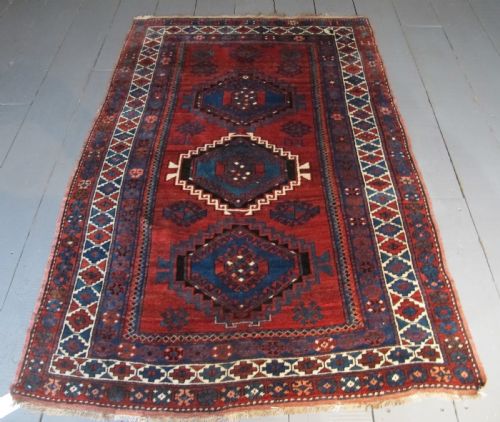
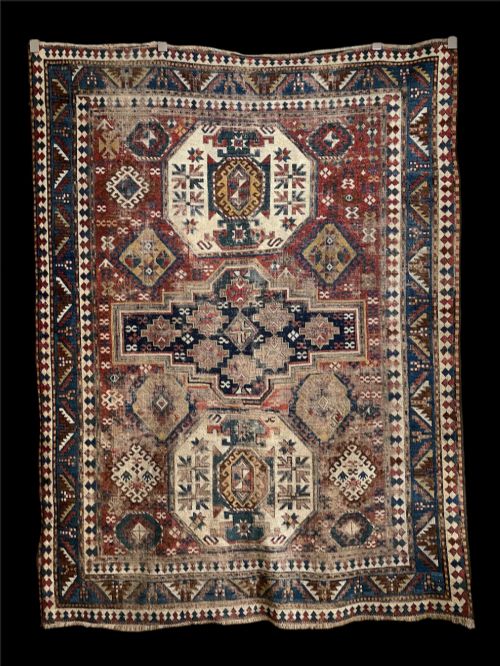


Caucasian Kazak Rug
When you want a caucasian kazak rug, you are looking for village weaving from the Caucasus with geometric strength and saturated primary colours.
Caucasian Kazak Rug
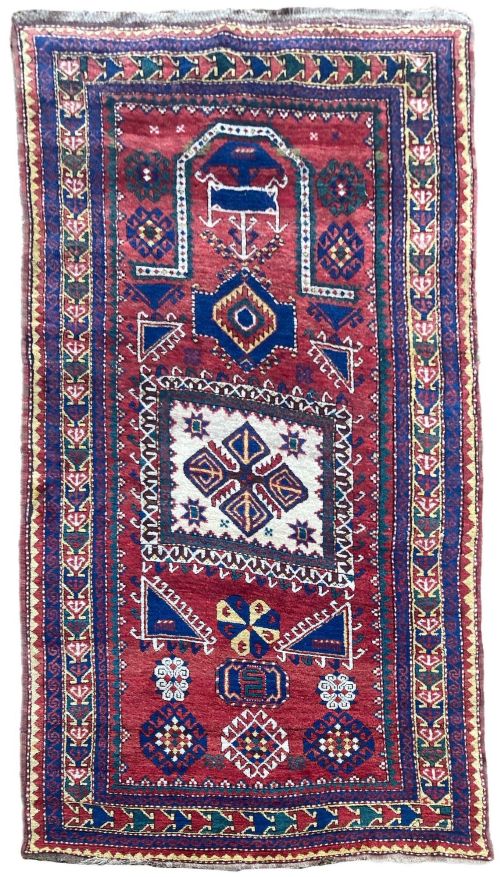
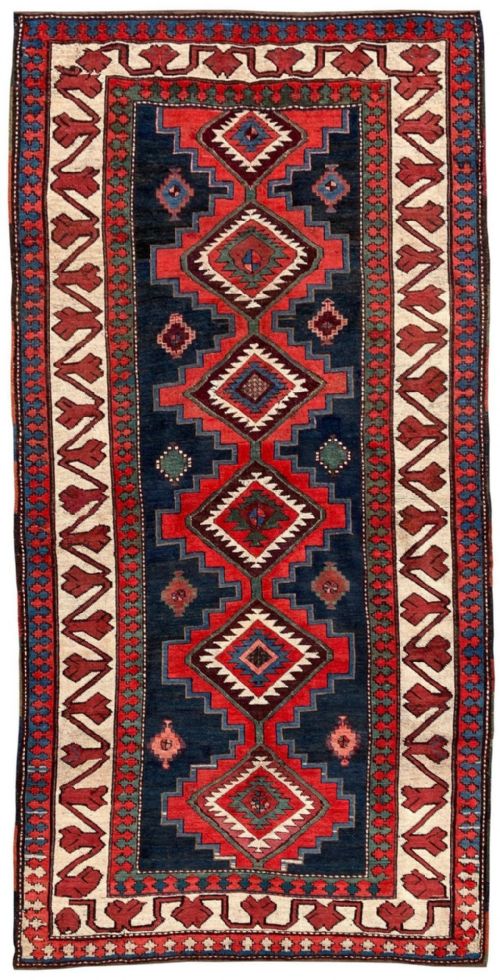
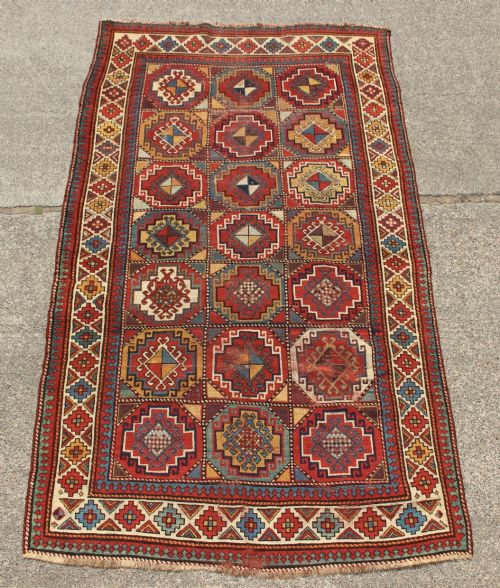
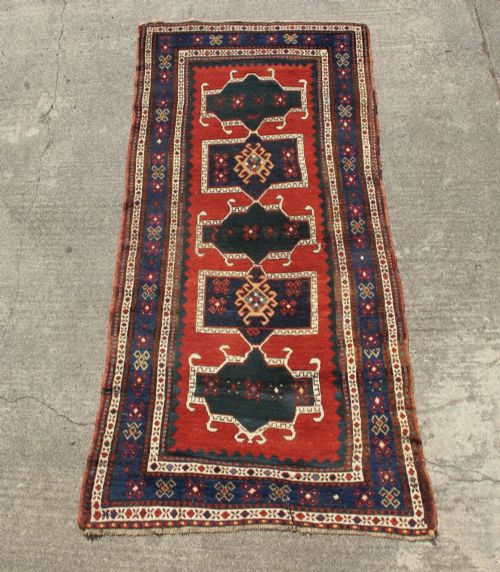
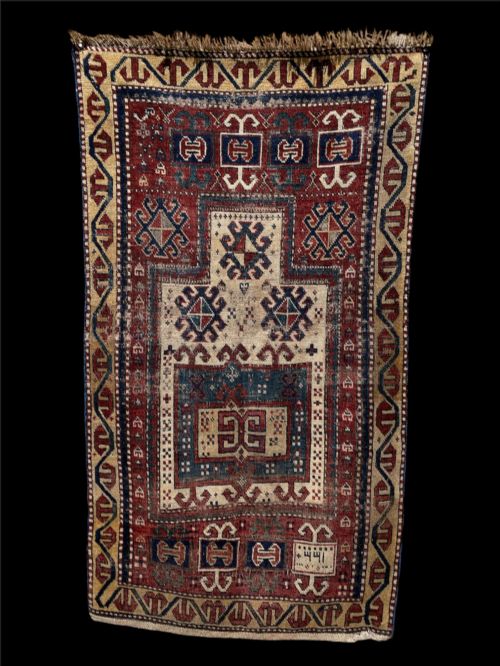
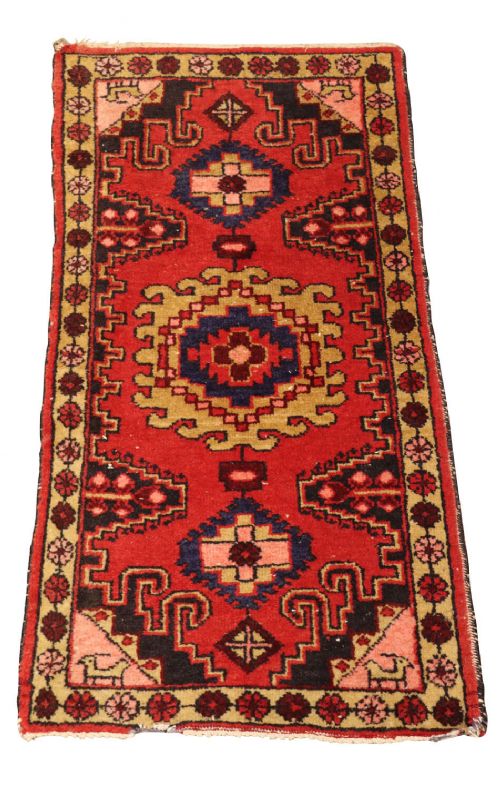
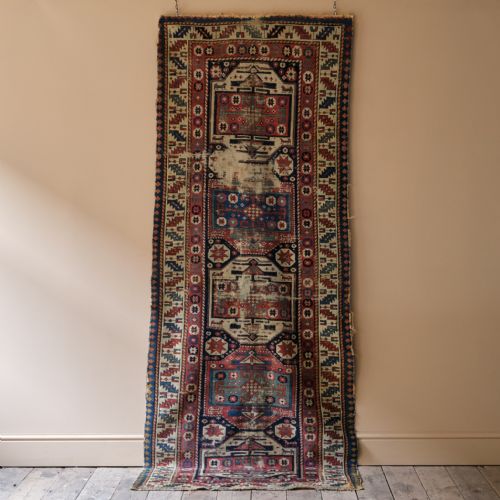
A caucasian kazak rug is a woven floor covering originating from the Caucasus region, celebrated for bold tribal motifs and rectilinear designs. These pieces often feature large medallions, star shapes, and animal figures arranged across distinct fields.
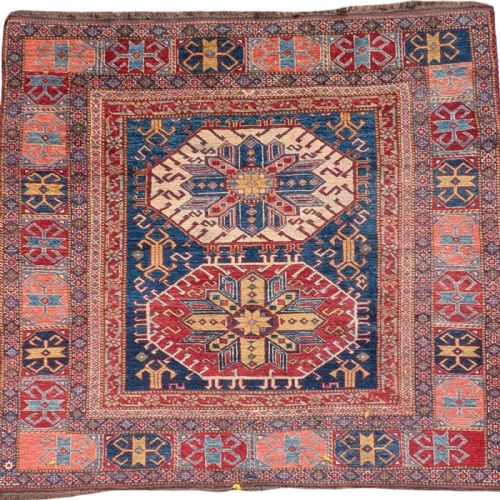
The selections available include standard area formats, square prayer rugs, and elongated runners with specific regional designs like Fachralo, Borjalou, Karachov, and Chelaberd. Village weavers produced these items using traditional looms, resulting in sturdy structures suited for domestic utility.
Collectors frequently encounter pieces dating from the nineteenth and early twentieth centuries, showcasing characteristic tribal patterns passed down through generations. Each specimen reflects the specific aesthetic of its mountain origin without standardisation.
Materials and Construction
Makers utilised hand-spun wool for both the pile and the foundational warps and wefts, creating a dense and resilient textile structure. Natural dyes derived from local plants and minerals provided deep reds, blues, greens, and yellows that soften gracefully over time.
Weavers tied symmetrical or asymmetrical knots by hand onto vertical looms, building up geometric patterns with characteristic stepped outlines. Cotton occasionally appears in the foundations of later examples, while older weaves rely entirely on wool.
Caucasian Kazak Rug Retail Price Guide 2026
Typical asking prices for caucasian kazak rug among the pieces listed under this phrase on Sellingantiques today, from the lower quarter to the upper quarter. They describe what is for sale here now, not the wider market.
Several runners and rugs incorporate scattered animal and bird motifs alongside strict geometry, adding unexpected life to the field.
Assessing Quality and Merit
The standard of a piece depends heavily on the crispness of the drawing and the saturation of the natural dyes used in the pile. Superior examples display balanced proportions in their medallions and harmonious colour placement without muddy transitions.
The handle and density of the knotting also separate finer items from simpler village work, dictating how well the textile holds its shape under foot. Preservation of the original outer borders and selvedges contributes substantially to the integrity of any specimen.
The Caucasian Kazak Rug Glossary
- Medallion
- A central decorative motif placed in the field of the rug. These often take octagonal, star, or hooked polygonal forms.
- Prayer rug
- A format featuring a specific architectural niche or mihrab design at one end. Weavers originally created these for devotional use.
- Gul
- A medallion or repeating guls pattern used across tribal rugs. The term covers various octagonal and stepped motifs.
- Boteh
- A pear-shaped or almond-like floral motif originating in Persia. It appears frequently in regional runner designs.
- Kilim
- A flat-woven textile produced without a pile. Some examples incorporate panels from larger storage bags.
Caucasian Kazak Rug: Frequently Asked Questions
Were these rugs used on floors?
Weavers and villagers utilised these textiles primarily as floor coverings, sitting rugs, or sleeping mats within domestic spaces.
Their heavy wool construction provided insulation against cold mountain floors.
How should I care for an antique rug?
Maintain these textiles by vacuuming gently without a rotating brush bar and keeping them out of direct sunlight.
Professional specialist cleaning is necessary when washing becomes required to protect the natural wool pile.
What is a Karachov Kazak?
A Karachov is a specific regional type distinguished by a large central octagonal medallion flanked by smaller geometric filler motifs.
They frequently display strong green or red grounds that make the central geometric elements stand out sharply.