



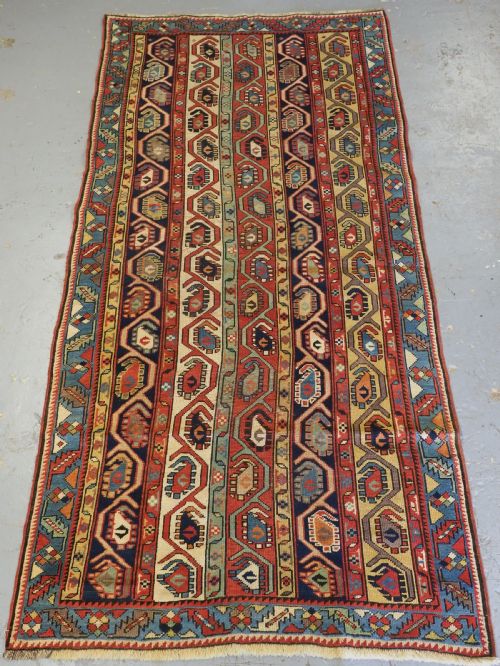
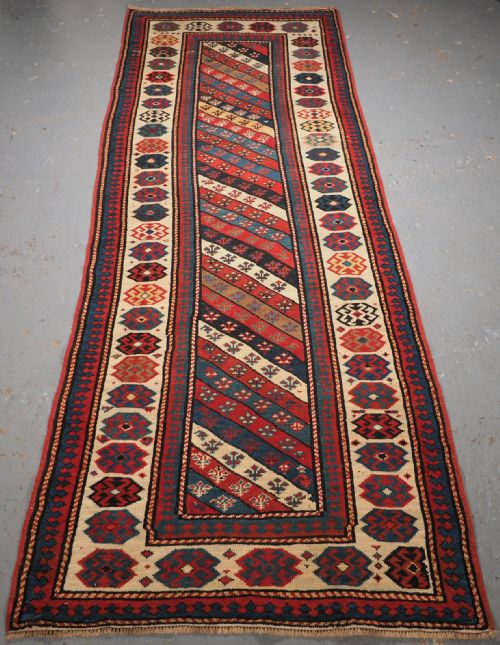
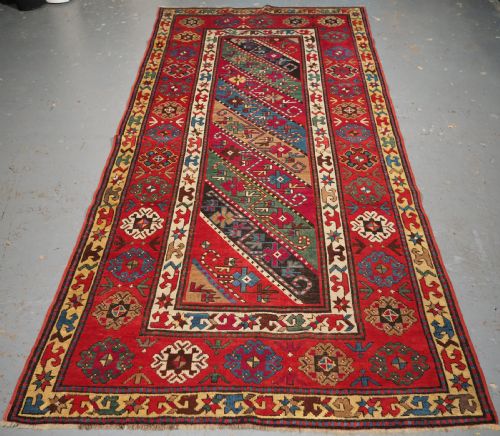

Caucasian Gendje Runner
A caucasian gendje runner is a geometric tribal textile woven in the Caucasus, prized by collectors for bold colour and crisp village designs.
Caucasian Gendje Runner
A caucasian gendje runner is a long, narrow tribal textile originating from the Caucasus region during the late nineteenth century. These woven pieces typically span periods from the eighteen-eighties to nineteen-hundred, combining utility with distinct folk traditions.
The format varies from long hallway runners to smaller prayer rugs and long rugs. Buyers will most frequently encounter tribal runners displaying geometric formats such as diagonal stripes, lattice patterns, and boteh motifs.
Geographic attribution often links these works to the Gendje region, sometimes overlapping with neighbouring Kazak or Shahsavan traditions. They function primarily as floor coverings or decorative long carpets suited to corridors and narrow spaces.
Materials and construction
These textiles rely entirely on wool foundations and surface piles, frequently utilising hand-spun wool for durability and irregular texture. The natural resilience of the fibre ensures the survival of pile across decades of wear.
Colour palettes derive from natural dyes, producing saturated hues that age gracefully. Dyers utilised plant and mineral sources to achieve the deep blue grounds and colourful motifs recorded in the pieces.
Weaving techniques follow traditional tribal methods of the Caucasus, producing firm, dense knots. The structure prioritises structural integrity alongside geometric precision in patterns like diagonal stripes and floral lattices.
Occasionally, a weaver tucked small figures of horses and people into the geometric rows, leaving folk art portraits in the wool.
Determining quality in these rugs
Quality rests upon the crispness of the geometric drawing and the handling of the wool. Finer examples display tightly packed knots and precise execution of lattice or boteh designs without distortion.
The depth and variety of natural dyes dictate visual success. Superior specimens exhibit rich colour contrast and harmonious palettes, particularly where scarce blue grounds or complex pictorial folk art elements appear.
The Caucasian Gendje Runner Glossary
- Boteh
- A stylised almond or pear-shaped motif representing a seed or floral sprout. It appears frequently in repeating rows across these tribal rugs.
- Lattice
- An open network of crisscrossing lines forming geometric compartments across the field. This pattern structures the arrangement of floral or abstract fills within the weave.
- Prayer rug
- A small format textile featuring a mihrab or arch design at one end, traditionally used for directional prayer. Examples from this group incorporate regional motifs within the niche.
- Hand-spun wool
- Yarn spun manually by twisting fleece fibres into thread before dyeing and weaving. This method creates subtle variations in thickness and texture along the pile.
Caucasian Gendje Runner: Frequently Asked Questions
How do I clean an old wool runner?
Surface dust should be removed gently using a soft brush or light suction without a beater bar. Professional textile conservators should handle wet cleaning to protect natural dyes.
Water exposure can cause fugitive dyes to bleed or weaken old wool foundations. Regular rotation prevents uneven wear in high-traffic hallways.
Where were these woven?
Weavers produced these textiles in the Caucasus region during the late nineteenth century. Village and nomadic workshops shaped the distinct geometric aesthetic.
Attributions often point to the Gendje region and surrounding tribal areas. The mingling of styles reflects shared traditions across local weaving communities.
How do I date a nineteenth century runner?
Dating relies on material analysis, dye characteristics, and structural evidence within the weave. Hand-spun wool and natural dye palettes point towards production around eighteen-eighty to nineteen-hundred.
Stylistic conventions and structural wear provide further clues to age. Comparing knot structure with documented examples helps narrow the period of origin.