


Cast Stone Garden Sculptures
These cast stone garden sculptures bring classical form and English country character to the lawn, weathering outdoors with moss and lichen over decades.
Cast Stone Garden Sculptures
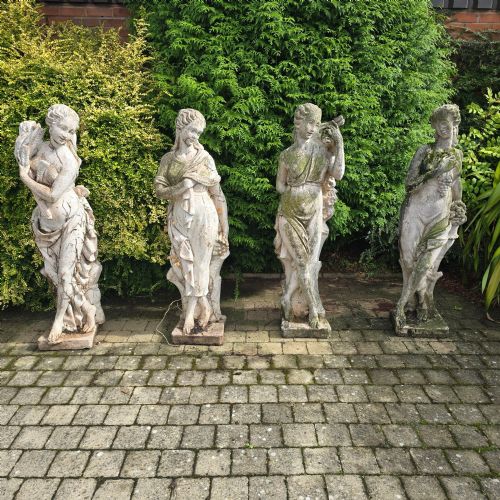
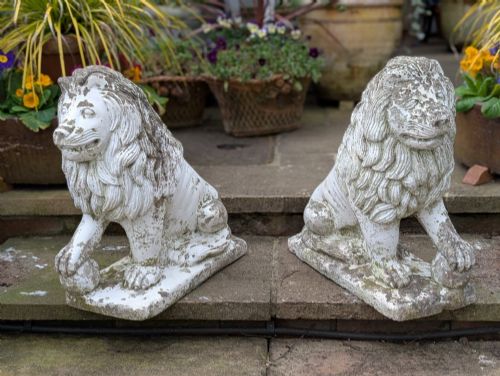
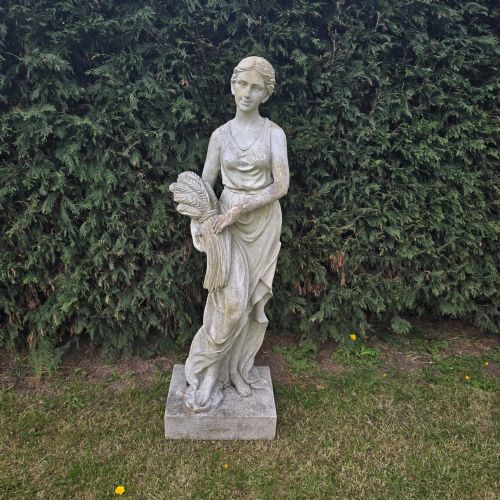
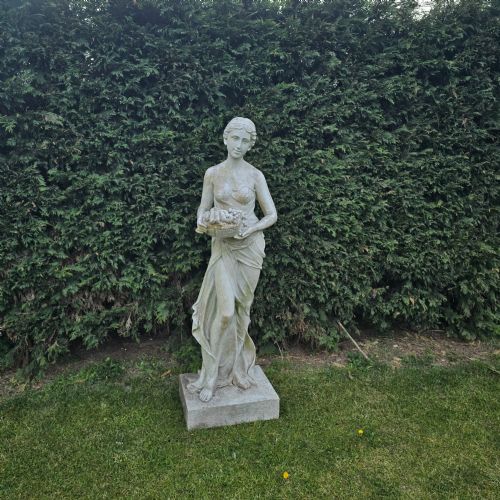
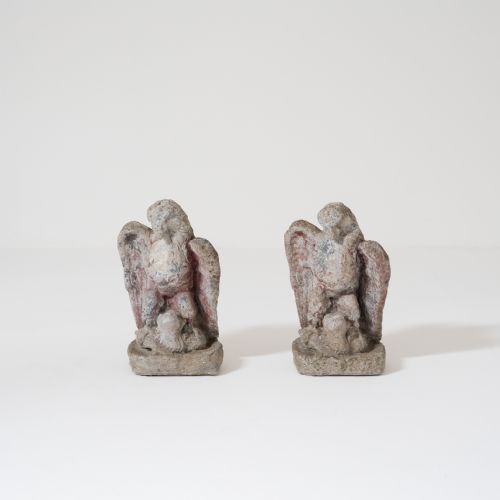
When you search for cast stone garden sculptures, you encounter heavy architectural ornaments and figural statues designed to anchor terraces, gates, and garden paths. The selection ranges from monumental pairs of Medici lions and eagles to domestic figures representing the Four Seasons or classical deities.
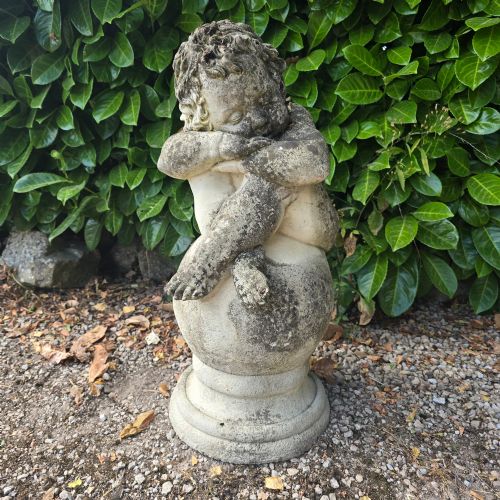
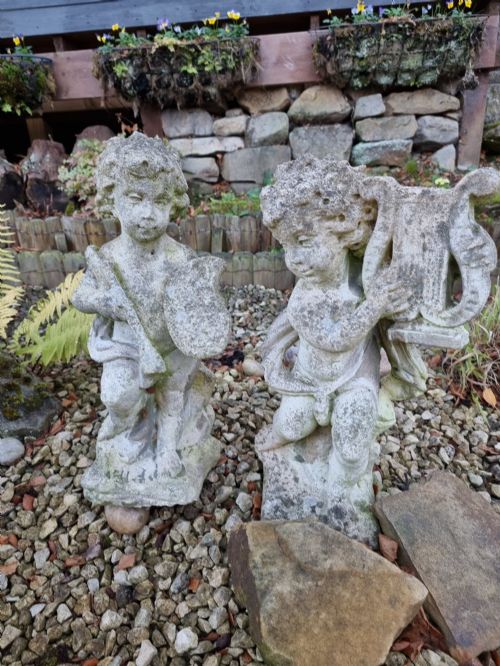
The versions most commonly met on this page date from the late nineteenth century through the middle of the twentieth century. These pieces draw heavily on Neoclassical and Classical Revival styles, alongside vernacular folk art and whimsical figures such as garden gnomes or sleeping cherubs.
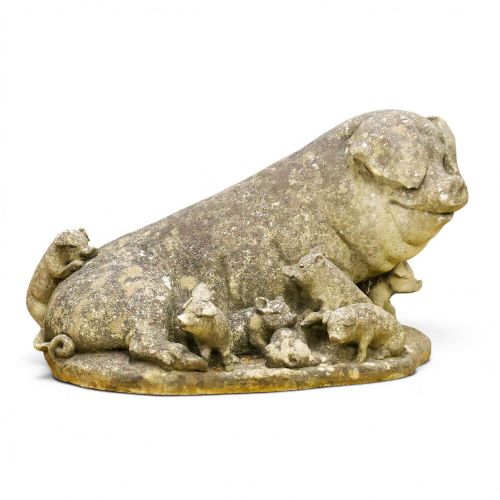
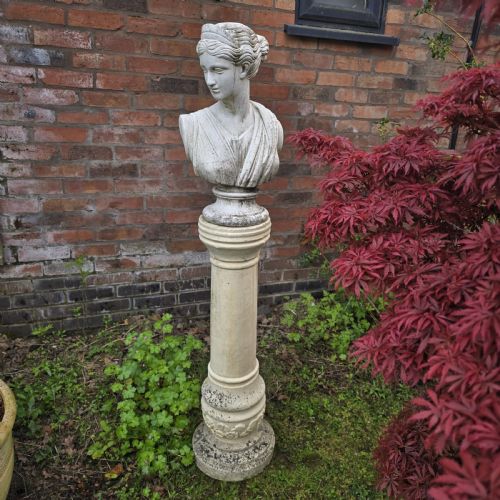
Forms span large standing ladies on plinths, architectural gate finials, and animal groups like sows with piglets. Many pieces integrate directly with pedestals, while others stand alone as life-sized focal points in conservatories or gardens.
Distinctions in quality and execution
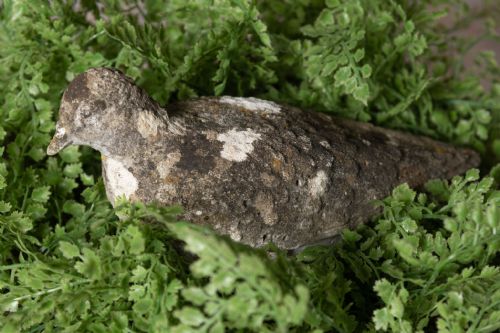
The standard of a cast stone garden sculpture rests on the crispness of the original moulding and the density of the aggregate mix. Finer examples retain sharp facial expressions and deep relief in foliage or drapery, whereas softer castings lose definition in details like hair or feathers.
Proportion and scale also separate standard items from superior commissions, particularly in architectural pairs such as lions or eagles designed to flank a grand entrance. The integration of supporting plinths and the natural accumulation of patination further define the character of a piece.
A cheerful garden gnome with original flaky paint keeps watch among the classical stone ladies, lions, and cherubs.
The Cast Stone Garden Sculptures Glossary
- Cast stone
- A refined building product manufactured from Portland cement, carefully selected aggregates, and chemical admixtures, intended to mimic natural cut stone. It provides a durable medium for intricate garden ornaments and architectural details.
- Reconstituted stone
- A material created by binding crushed natural stone fragments with a cement matrix. This mixture is compacted into moulds to produce weather-resistant statues and architectural elements.
- Composition stone
- An alternative term for manufactured stone mixtures used in garden statuary and architectural antiques during the nineteenth and twentieth centuries. It yields a dense surface capable of holding fine sculptural detail.
- Finial
- An ornamental architectural feature placed at the apex of a gatepost, pier, or roofline. In garden settings, these often take the form of stone pineapples, urns, or animal guardians.
- Pedestal
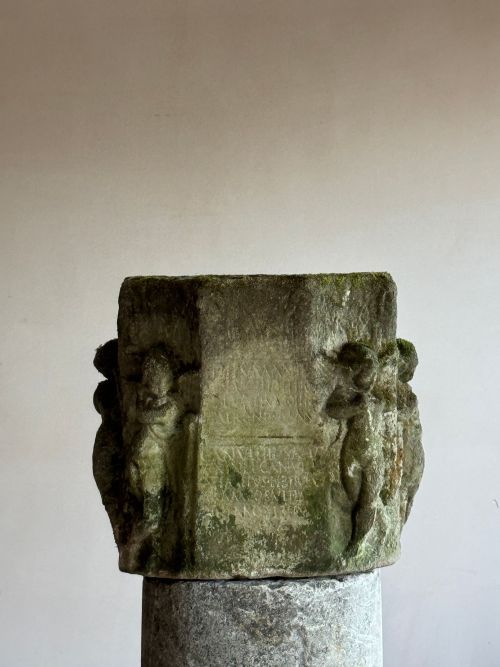
- A supporting base or plinth that elevates a bust, urn, or garden statue. They provide vertical emphasis and architectural framing for classical figures.
Cast Stone Garden Sculptures: Frequently Asked Questions
How should I clean my cast stone sculpture?
Gentle washing with water and a soft brush removes loose dirt without harming the surface skin or accelerated patination. Avoid harsh pressure washers that can erode the aggregate and strip away weathered character.
Allow the stone to dry naturally between cleanings. Preserving organic growth like light moss often enhances the historical appearance of nineteenth and twentieth-century garden ornaments.
Are these garden sculptures frost-proof?
Most cast stone and reconstituted stone pieces withstand standard winter conditions, provided water does not pool in unsealed hollows or crevices. Elevating heavy figures off direct soil contact prevents moisture from drawing upward into the base during freezing weather.
Moving delicate busts or smaller statues into a shed or conservatory during severe frosts offers extra protection. Ensuring proper drainage around plinths guards against internal cracking caused by expanding ice.
How do I date a cast stone garden statue?
Dating relies on stylistic cues, manufacturing materials, and the depth of surface weathering accumulated over decades. Pieces from the Victorian and Edwardian eras often reflect strict Classical Revival proportions, while mid-century examples incorporate simpler folk art or robust cast concrete techniques.
Examine the casting seams, tool marks, and composition of the stone aggregate to gauge the period. Comparing the surface texture against documented examples from the same decade clarifies the timeline.
Can these heavy statues be placed directly on grass?
Placing heavy garden statues directly on soil or turf causes them to settle unevenly and draws ground moisture continuously into the stone. Setting them upon a firm paved foundation, flagstone, or a stone plinth ensures stability and reduces damp absorption.
Using a solid base also protects the bottom edge from lawnmower strikes and strimmer damage. Proper levelling prevents the sculpture from tipping over under its own substantial weight.