

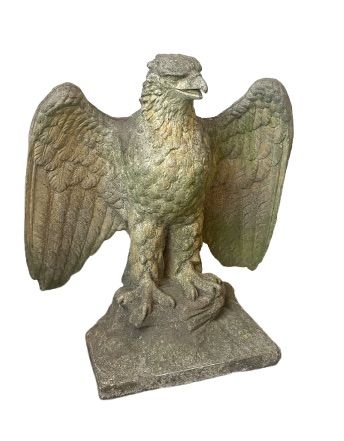
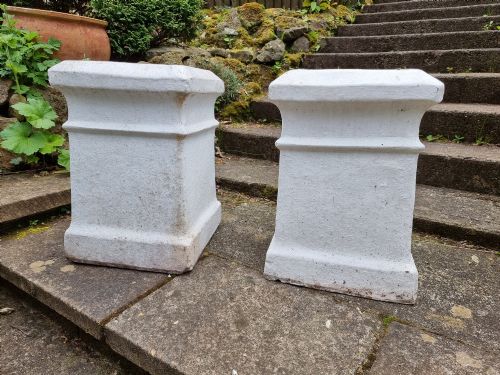
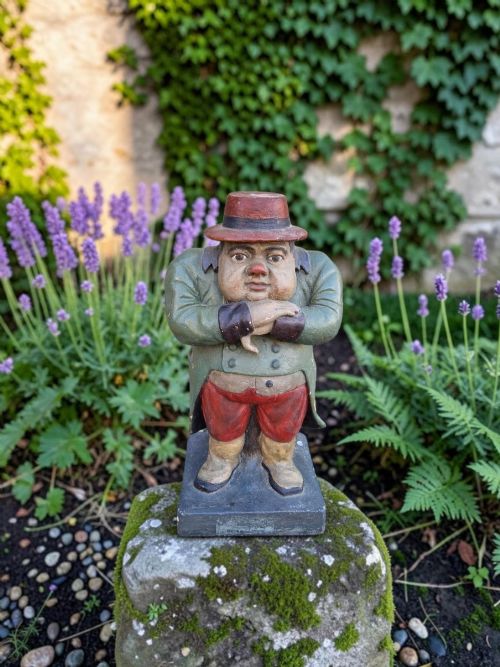
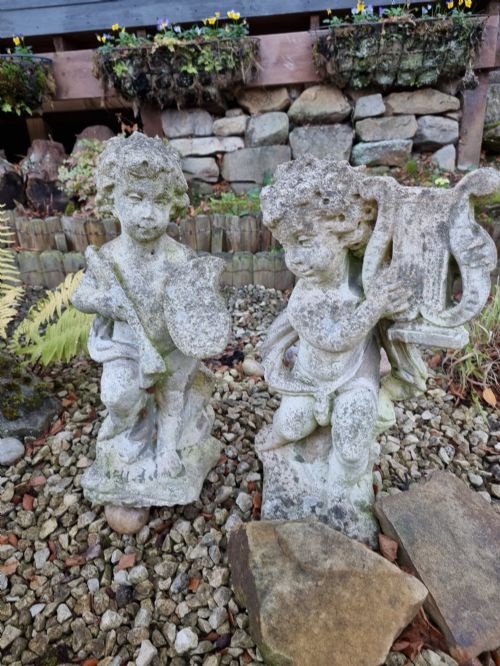



Pair Stone Garden Ornaments
Pair stone garden ornaments bring symmetry and classical weight to a terrace, and you will find them here in weathered limestone, terracotta and cast stone.
Pair Stone Garden Ornaments
Pair stone garden ornaments encompass architectural salvage, gate finials and statutory designed to anchor symmetrical layouts in outdoor spaces. When you search for pair stone garden ornaments, you encounter pieces intended for placement on piers, flanking garden paths or terminating garden vistas.
The selections span centuries, featuring Victorian creations alongside twentieth-century castings and earlier architectural elements. Lions, urns and baskets dominate the forms, frequently offered with matching plinths or bases for immediate display.
Materials range from traditional carved limestone and marble to durable terracotta and reconstituted stone. Each pair reflects the prevailing taste of its period, from classical revival urns to robust sentinel lions.
How they were made
Masons carved earlier examples directly from blocks of limestone, sandstone or marble, utilising traditional chisels and mallets to achieve crisp detail. Terracotta pieces required skilled moulding of clay before firing in large kilns to achieve a hard, porous finish.
Later nineteenth and twentieth-century production often utilised cast stone, concrete or reconstituted stone poured into moulds to replicate carved originals efficiently. Salt glazing provided a durable, vitreous coating for specific stoneware urns and figures.
Surface finishes frequently involve natural weathering, moss accumulation or applied paint that softens the raw material over decades outdoors.
Pair Stone Garden Ornaments Retail Price Guide 2026
Typical asking prices for pair stone garden ornaments among the pieces listed under this phrase on Sellingantiques today, from the lower quarter to the upper quarter. They describe what is for sale here now, not the wider market.
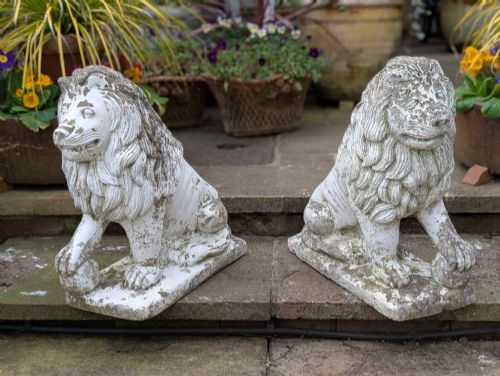
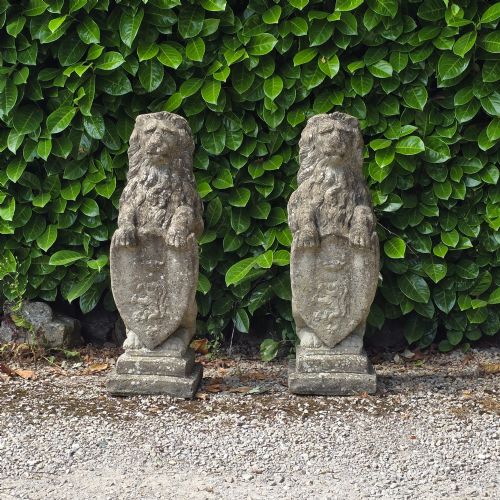
Several stone lions on this page formerly stood guard at Yorkshire minsters and French estates before retiring to domestic gardens.
What varies in quality
Proportion and anatomical accuracy in figurative pieces like lions or cherubs determine artistic success, distinguishing balanced compositions from rigid castings. The integrity of the material itself, whether dense limestone or well-fired terracotta, dictates resistance to frost and weathering.
Matching symmetry within the pair remains paramount, ensuring both pieces share identical scale and harmonious ageing.
Hurlford Kilmarnock
The Pair Stone Garden Ornaments Glossary
- Campana urn
- A bell-shaped garden vessel with a flaring rim, often mounted on a pedestal base. These classic vessels derive from ancient Roman forms.
- Reconstituted stone
- A composite material made from crushed stone aggregate and a binder, moulded to imitate natural stone. It offers durable uniformity for garden ornamentation.
- Finial
- An ornamental crowning detail placed at the apex of a gatepost, wall or architectural feature. Pairs often serve as gate guardians.
- Salt glaze
- A glassy, brownish finish achieved by throwing common salt into the kiln during high-temperature firing. This creates a hard, impermeable coating on stoneware.
- Terracotta
- A hard-baked, brownish-red clay used extensively for garden vases and figures. Its porous nature absorbs moisture and develops a characteristic patina over time.
Pair Stone Garden Ornaments: Frequently Asked Questions
Where should I place a pair of stone ornaments?
Position them symmetrically to frame entrances, gate piers, terrace steps or the ends of a main garden pathway. Their formal balance draws the eye and creates a defined sense of arrival.
Ensure the ground or foundation is level and capable of supporting substantial weight, particularly with large limestone or marble carvings.
How do I protect stone ornaments in winter?
Most durable stone and terracotta pieces withstand normal winter conditions, but standing water inside hollow urns can freeze and crack the material. Inverting vessels or covering them during severe frost prevents ice damage.
Elevate pieces slightly off damp soil using small feet to prevent moisture rising into the base through capillary action.
How do I clean weathered garden stone?
Gentle brushing with water and a soft bristle brush removes loose dirt and preserves the accumulated patina of age. Avoid aggressive pressure washing, which can scour the surface and strip away historical weathering.
Allow lichens and moss to remain if you prefer an aged appearance, as they do not harm dense stone or terracotta.
How can I tell the period of a stone ornament?
Examine the tool marks, material composition and weathering patterns to deduce age, comparing them with known stylistic periods like Victorian or Neoclassical. Hand-carved details and salt-glazed finishes often point towards nineteenth-century production.
Inspect the undersides and hidden surfaces for historic mortar remnants or weathering inconsistencies that indicate long installation outdoors.