

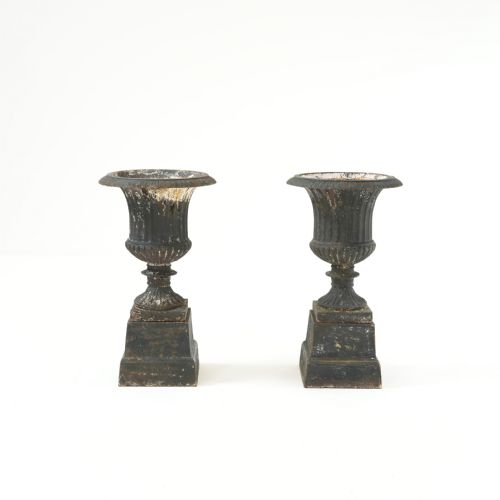


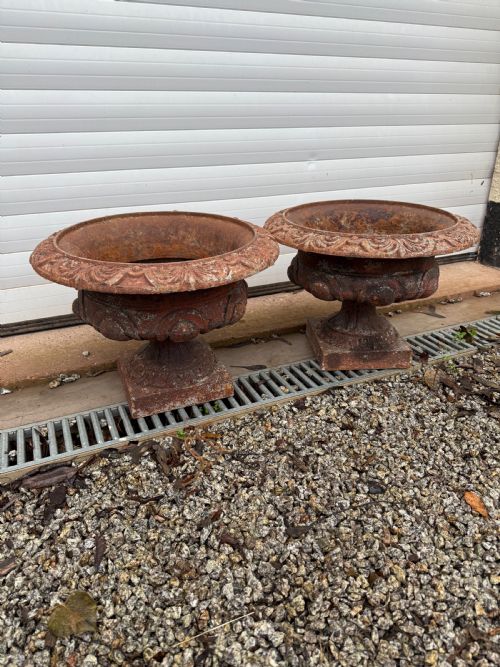

Cast Iron Garden Pots
These cast iron garden pots are robust vessels designed for outdoor display, offering enduring architectural presence to gardens and terraces.
Cast Iron Garden Pots
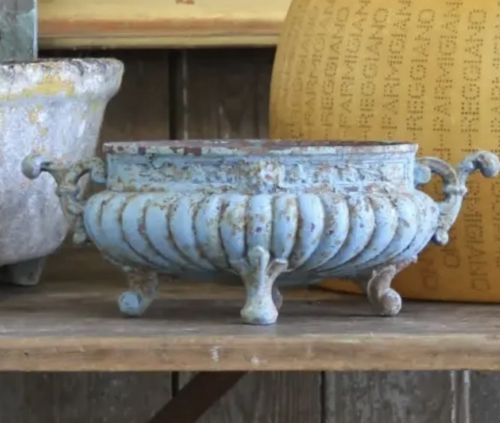
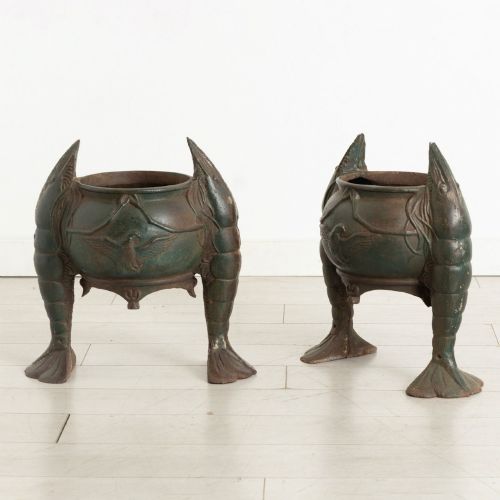
When you search for cast iron garden pots, you encounter heavy, durable vessels built to withstand the elements while providing structural planting solutions. These pieces primarily manifest as garden urns, jardinieres, and classical planters from the Victorian and nineteenth century periods.
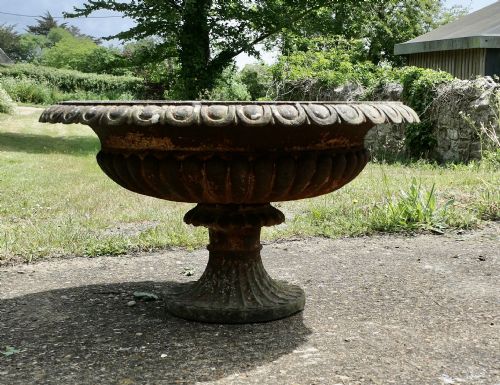
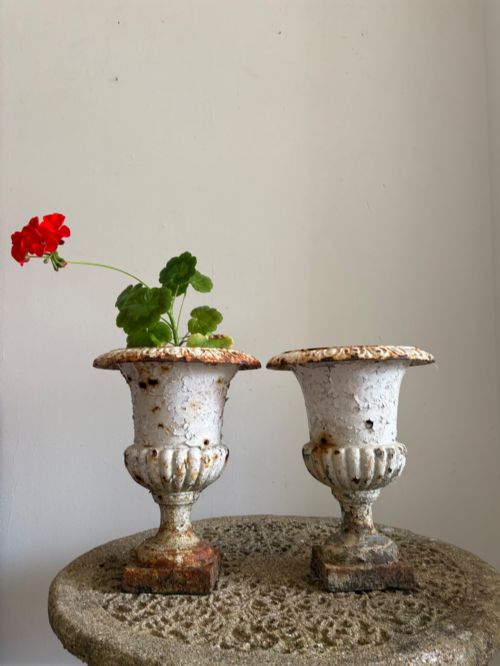
The selection ranges from small painted pots to large campana urns mounted on plinths. French and English origins predominate, often appearing as matched pairs suitable for framing entrances or pathways.
How they were made
Production relied on molten metal poured into sand moulds to achieve thick, rigid walls and crisp ornamental detailing such as gadrooning. Secondary materials like paint, wrought iron, and copper occasionally supplement the primary cast iron construction.
Surface finishes historically involved protective layers of paint, which over decades weather into distressed patinas. Heavier examples required precise foundry work to maintain even wall thickness across large decorative forms.
Listings feature Victorian, Edwardian, and twentieth-century pieces, incorporating materials such as cast iron, wrought iron, copper, and stone.
What varies in quality
Quality rests upon the crispness of the casting and the proportion of the classical detailing, such as fluting and rim profiles. Finer examples display sharply rendered motifs without the pitting or distortion common in utilitarian castings.
The presence of matching original plinths and intact historical paint surfaces elevates a pair's standing. Weight and structural integrity further separate standard utilitarian vessels from sculptural foundry works.
Andrew Handyside
The Cast Iron Garden Pots Glossary
- Campana urn
- A bell-shaped garden vessel with an everted rim and a pedestal base, frequently utilised in classical landscaping.
- Gadrooning
- A decorative carved or cast motif consisting of convex curves or flutes, commonly seen around the bowl of an urn.
- Jardiniere
- An ornamental pot or stand designed to hold growing plants or flowers, often possessing decorative sides.
- Plinth
- A heavy rectangular or square block base that elevates an urn or garden pot off the ground.
- Neoclassical
- A style drawing upon the classical art and architecture of ancient Greece and Rome, prevalent in nineteenth-century urn design.
Cast Iron Garden Pots: Frequently Asked Questions
How do I care for cast iron garden pots?
Keep the drainage holes clear and occasionally apply a protective coating to slow down active rusting.
Position them on stable stone or gravel surfaces to prevent moisture from trapping underneath the base during winter months.
Are these pots frost-proof?
Most heavy cast iron vessels tolerate cold weather well, but trapped saturated soil can expand and stress the metal.
Raising the pots slightly on feet or emptying dense damp compost during severe freezes protects the interior walls.
How do I distinguish Victorian urns from later pieces?
Victorian examples often display heavier mass, deep sand-cast textures, and distinct classical proportions associated with nineteenth-century foundry catalogues.
Later twentieth-century versions tend to have smoother interior walls and simplified decorative casting details.
Can these pots be used indoors?
They function effectively inside as dramatic decorative elements, provided you use a suitable tray to catch drainage water.
Their substantial weight means they require secure placement on reinforced flooring rather than standard furniture.