


Period Garden Planters
Period garden planters bring architectural weight and formal planting space to terraces and lawns through enduring materials like cast iron, stone, and bronze.
Period Garden Planters
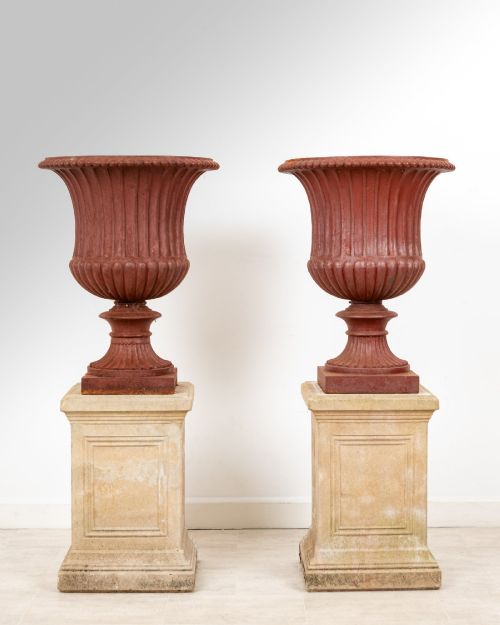
When you search for period garden planters, you encounter an array of heavy vessels and display containers designed to elevate outdoor flora. The selection spans classical urns, wirework plant stands, stoneware plinths, and robust troughs intended to anchor a landscape scheme.
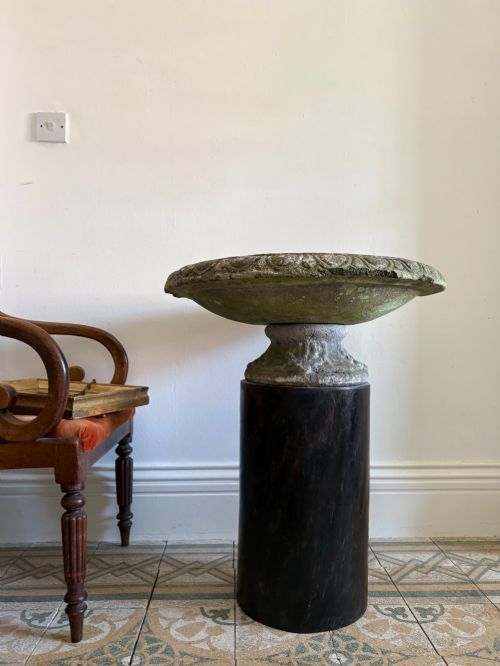
The most common versions met here include cast iron campana urns and stone pedestals from the nineteenth century, alongside weathered cast stone birdbath planters and wrought iron window boxes from the early twentieth century. Pieces range from formal Neoclassical designs to sturdy utilitarian strapwork frames.
Origins vary across English stoneware, colonial Indian stone pieces, and monumental Japanese bronze temple vases, offering diverse cultural interpretations of outdoor display. Each form serves the practical purpose of containing plants while adding historical gravity to a garden setting.
Materials and construction methods
Construction relies heavily on durable metals and mineral materials capable of withstanding exterior conditions. Cast iron, wrought iron, and bronze provide rigid metallic frameworks and classic urn silhouettes, often shaped through traditional founding and strapwork assembly.
Mineral compositions utilise natural stone, Purbeck stone, and reconstituted cast stone to build mass and weather resistance. Stoneware and heavy stone carving define the architectural plinths and birdbaths that support the planting vessels.
Listings feature items spanning the Georgian period, the nineteenth century, and the early twentieth century, utilising wrought iron, cast stone, and bronze.
Assessing quality in historical planters
Quality rests in the crispness of the casting detail and the architectural proportion of the vessel relative to its base. Superior pieces exhibit clean lines in ironwork and well-defined Neoclassical motifs without distortion from worn moulds.
The integrity of the material substance and its natural weathering dictate the visual depth of the piece. Genuine age shows in the stable mineral patina of stone and the authentic oxidation of iron rather than artificial surface treatments.
The Period Garden Planters Glossary
- Campana urn
- A bell-shaped garden vessel with an everted rim, widely used since antiquity for formal planting.
- Strapwork
- Ornamental metalwork formed of flat strips arranged in geometric patterns, seen on robust iron planters.
- Usubata
- A traditional Japanese bronze vase often utilised for formal flower arrangement and garden display.
- Plinth
- A heavy stone or concrete block base that elevates a planter or urn above ground level.
- Purbeck stone
- A fossiliferous limestone quarried in Dorset, prized for its durability in British garden architecture.
Period Garden Planters: Frequently Asked Questions
How do I choose the right size?
Consider the scale of your garden or terrace relative to the volume of the planter. Large bronze urns and monumental stone pieces require wide open spaces to balance their visual weight.
Smaller window boxes and wirework stands suit narrower paths or stone walls where heavy masonry would overwhelm the footprint.
Can these planters stay outside in winter?
Most historical planters are built from robust materials like cast iron, bronze, and dense stone designed for outdoor exposure. They endure seasonal weathering effectively when properly drained.
Porosity in certain cast stones or stoneware requires monitoring during deep freezes to prevent water expansion from causing structural stress.
How are heavy stone planters supported?
Heavy vessels often rest on dedicated stone plinths or architectural pedestals that distribute the downward load evenly. These bases elevate the planting area to improve drainage and visibility.
Ensuring a level foundation prevents shifting over time as soil moisture and plant growth add variable weight to the structure.
What plants suit historical urns?
Formal campana urns and classical vessels pair naturally with structural evergreen topiary, trailing ivy, or seasonal bedding plants. The silhouette of the urn dictates a balanced crown of foliage.
Lower wirework stands and troughs accommodate trailing flora or linear arrangements that complement the open strapwork design.