






Cast Bronze Lion Sculpture
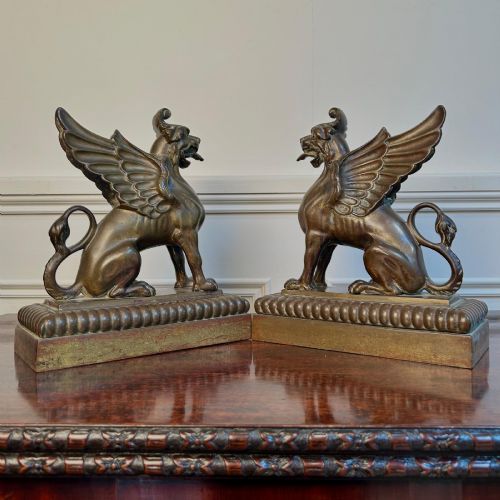
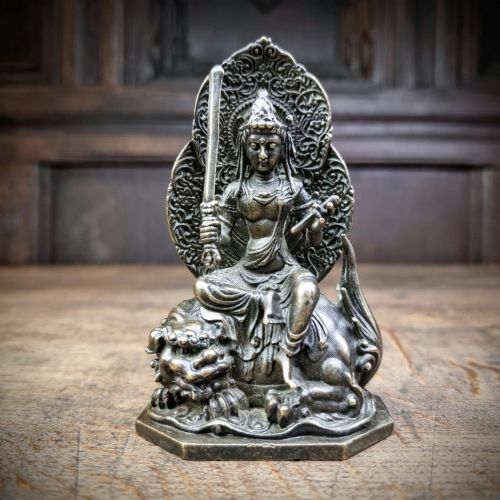
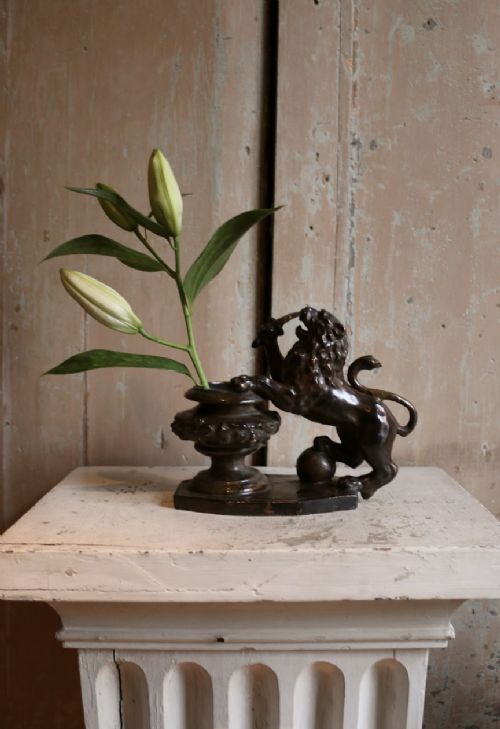
These cast bronze lion sculpture examples bring substantial presence to a room, spanning grand tour models, temple figures, and animalier studies.
Cast Bronze Lion Sculpture
When you search for a cast bronze lion sculpture, you encounter a range of forms from small desk inkwells and bookends to large temple pairs and monumental seated figures. The pieces on this page span the seventeenth, nineteenth, and early twentieth centuries, drawing upon neoclassical, baroque, and animalier traditions.
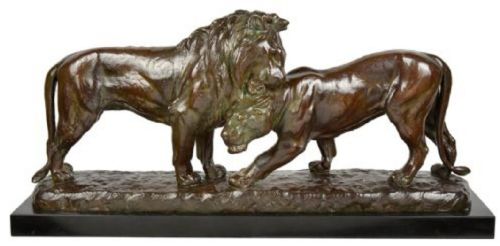
You are most likely to meet nineteenth-century French animalier studies and early twentieth-century pairs, alongside Tibetan temple lions and grand tour models of the Canova lions. These works manifest in bronze, patinated bronze, and cold-painted metal, frequently mounted on marble bases.
How they were made
The objects listed here rely upon traditional metal casting techniques, utilising bronze and brass poured into moulds to capture muscular detail and texture. Artisans applied patination treatments to achieve varied surface tones, ranging from deep brown and gilt finishes to cold-painted polychrome colours.
Secondary materials such as marble provide stable bases for heavy figures, while wood and paint occasionally appear in related decorative contexts. Foundry work is demonstrated by named makers and urban workshops operating in France, Austria, and Britain.
Among the great beasts, a pair of sea lion bookends demonstrates that even majestic marine mammals occasionally hold up heavy books.
What varies in quality
Quality in a cast bronze lion sculpture rests on the crispness of the chasing and the fidelity of the musculature and mane. Finer examples retain sharp surface definition after casting, whereas lesser pieces exhibit softened details and smoothed-over contours.
The depth and durability of the patination, as well as the quality of any associated marble plinth, distinguish standard production pieces from masterworks by known sculptors and prominent foundries.
Franz Bergman·Paul-Édouard Delabrièrre·G. Gardet·Louis Riche·Al Barye·Barbedienne
The Cast Bronze Lion Sculpture Glossary
- Animalier
- A nineteenth-century artistic movement focused on the realistic portrayal of animals. Sculptors in this tradition studied anatomy closely at menageries.
- Patination
- The chemical or natural coloration of the metal surface. It protects the bronze and creates rich tonal variation.
- Grand Tour
- Cultural travel undertaken by wealthy Europeans in the eighteenth and nineteenth centuries. Travellers acquired small-scale bronze copies of famous classical sculptures.
- Cold-painted bronze
- A technique where paint is applied to a bronze object without heat-firing. It is particularly associated with Viennese workshops.
- Lost-wax casting
- A historic method where a wax model is melted out and replaced with molten metal. This process allows for intricate undercuts and fine surface textures.
Cast Bronze Lion Sculpture: Frequently Asked Questions
How do I identify an animalier lion sculpture?
Animalier bronzes focus on naturalistic anatomical accuracy, depicting lions in dynamic poses such as prowling, resting, or subduing prey. Look for realistic muscle tension and textured manes rather than heraldic stiffness.
Signatures or foundry marks inscribed near the base often confirm attribution to nineteenth-century French schools.
What is the difference between temple lions and western lions?
Temple lions, often referred to as Foo dogs, derive from Asian traditions and typically appear as paired guardians with stylized curls and intricate harness details. Western lions lean towards neoclassical, baroque, or animalier realism.
Asian temple examples frequently incorporate gilt bronze or heavy Tibetan casting methods, unlike European grand tour or desk models.
How should I clean a antique bronze lion?
Dust gently with a soft, dry cloth to prevent accumulation in recessed areas of the mane and casting seams. Avoid commercial metal polishes, which can strip the historic patina.
Applying microcrystalline wax periodically helps protect the surface metal from atmospheric moisture and handling wear.
Where were cold-painted bronze lions made?
Many cold-painted bronze figures originated in Vienna during the late nineteenth and early twentieth centuries. Makers such as Franz Bergman produced small, brightly coloured animal sculptures using this method.
The paint layer sits directly on the metal surface and requires careful handling to prevent flaking.
How do I date a bronze lion sculpture?
Dating relies on stylistic clues, foundry marks, and the character of the patination. Nineteenth-century pieces often feature deep brown patinas and realistic animalier styling.
Early twentieth-century works frequently include cold-painted finishes or distinct art deco geometric bases.