
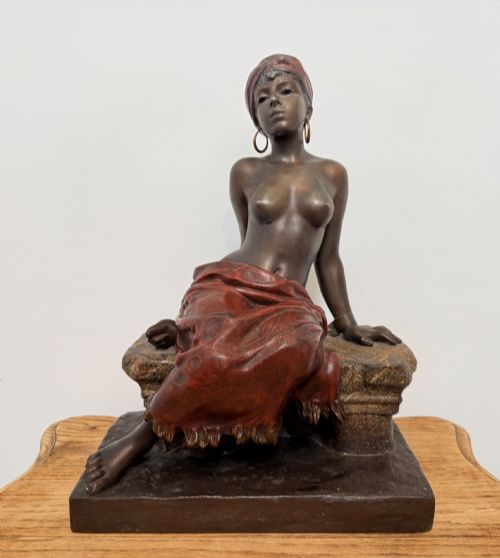
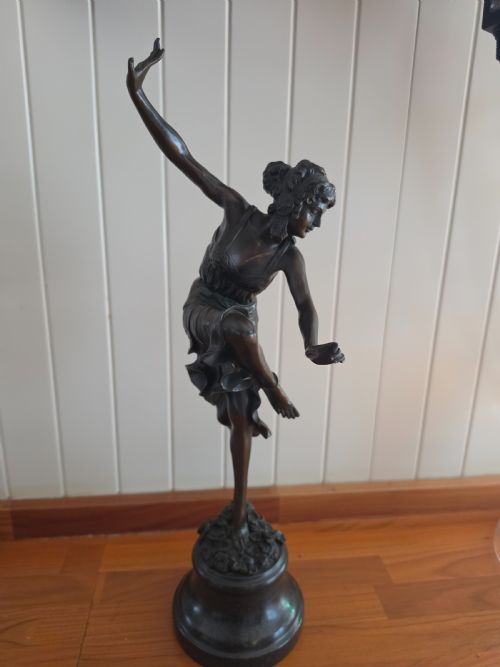


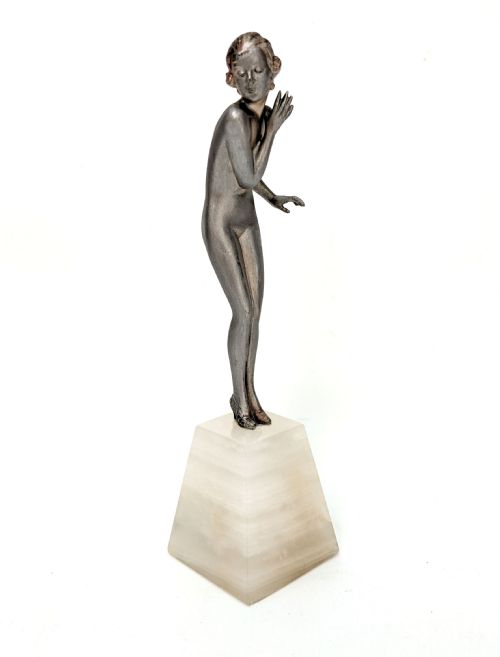


Cast Bronze Female Figurine
A cast bronze female figurine brings nineteenth-century and early twentieth-century foundry work straight into your room.
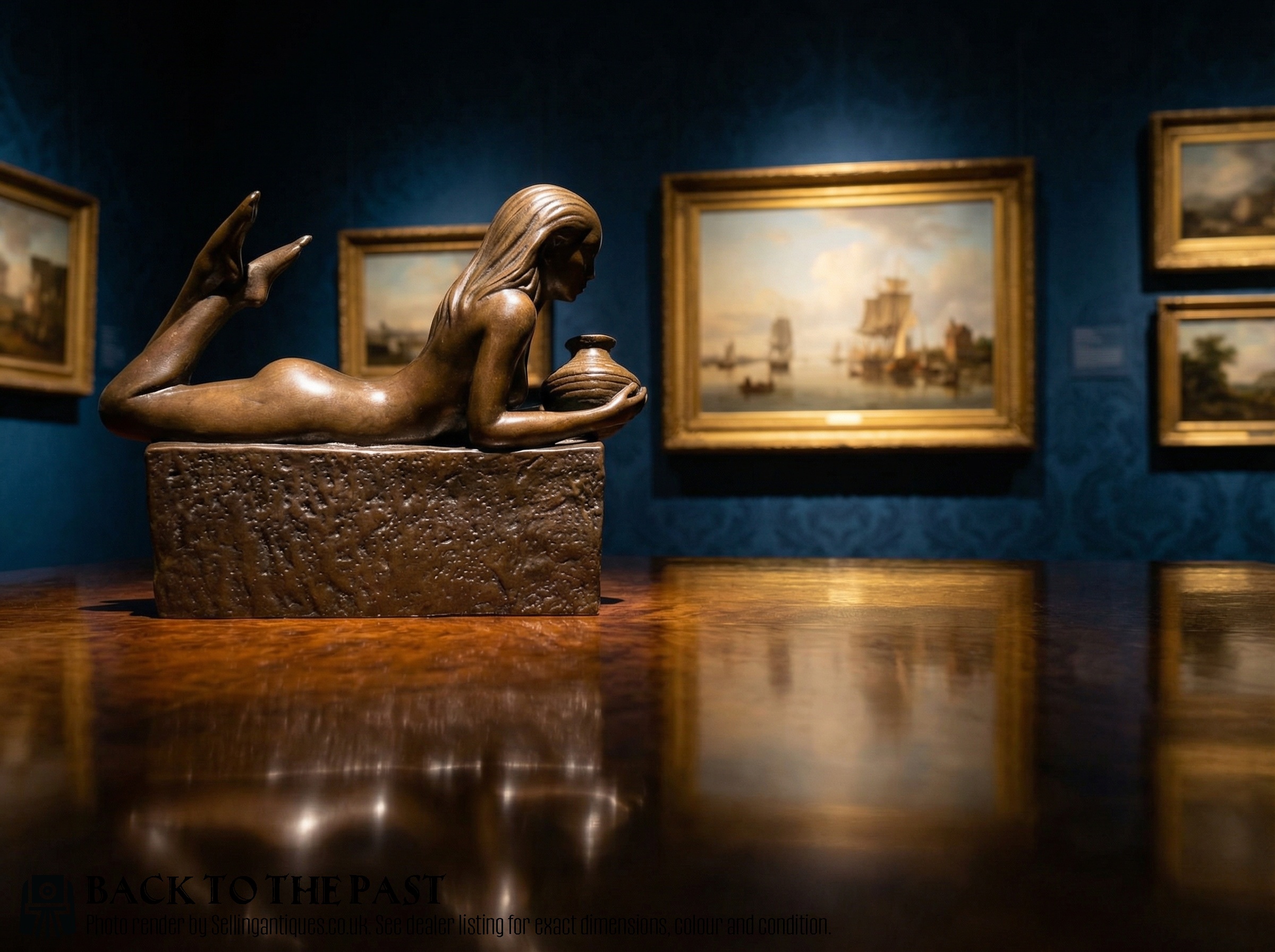
Cast Bronze Female Figurine
When you search for a cast bronze female figurine, you examine works spanning the nineteenth century through the 1930s. The selection on this page centres on French and European foundry productions, featuring dancers, classical deities, and elegant society portraits. You encounter full-length standing nudes alongside bust-length studies and theatrical figures.
Art Nouveau and Art Deco styles dominate the physical forms you meet here. Many pieces emerge from this French tradition, capturing women in fluid organic curves or stylised geometric poses. Makers frequently applied patinas in varying shades to accentuate the contours of drapery and hair.
What varies in quality
The precision of the chasing work separates standard foundry output from superior examples. Skilled artisans hand-finished the metal surface after casting, sharpening lines and smoothing transitions that a lesser hand left blunt.
The integration of the figure with its base also marks the tier of execution. Finer works feature custom-fitted stone plinths and sophisticated multi-toned patination rather than flat, uniform finishes.
Listings span the nineteenth century, 1880, 1890, 1900, 1910, 1920, and 1930, employing bronze, spelter, marble, onyx, and wood.
E Villanis·C J R Colinet·Georges Van Der Straeten·Barbedienne·Hebrard·Elizabeth Anna Clapp·Jules Dalou·Susse Freres·Josef Lorenzl·Emmanuel Villanis·Bruno Zach·Antoine Coysevox·A Gaudez·Carrier-Belleuse·J C De Blezer
The Cast Bronze Female Figurine Glossary
- Spelter
- A zinc alloy commonly utilised as a substitute for bronze in decorative figures. It accepts patination and metal finishes similarly to bronze but weighs less and proves softer to the touch.
- Parcel-gilt
- A technique where selective areas of the bronze surface receive a thin layer of gold leaf or gilt. This highlights specific details such as jewellery or garment trims against the darker patinated body.
- Foundry mark
- A stamp or signature cast into the bronze by the workshop responsible for pouring the metal. These stamps connect the sculpture to specific enterprises like Susse Freres or the Barbedienne firm.
Cast Bronze Female Figurine: Frequently Asked Questions
How do I display a bronze figure?
Place your cast bronze female figurine on a stable surface away from direct moisture and excessive heat.
A heavy wooden or marble console table provides adequate support for heavier pieces whilst keeping them at a comfortable viewing height.
What periods do these figures cover?
The listings on this page span from the nineteenth century through the 1930s.
You will encounter works created during the Belle Epoque, Art Nouveau, and Art Deco movements alongside nineteenth-century French Realism.
Are these pieces signed by artists?
Many examples feature signatures or foundry stamps inscribed directly into the metal base or body during casting.
These marks often name the sculptor or the specific foundry responsible for producing the edition.
What is the difference between bronze and spelter?
Bronze is a durable copper alloy that takes fine detail and deep patination, whilst spelter is a softer zinc alloy utilised for more accessible decorative figures.
Spelter figures often show a lighter weight and distinct surface textures compared to traditional cast bronze.