
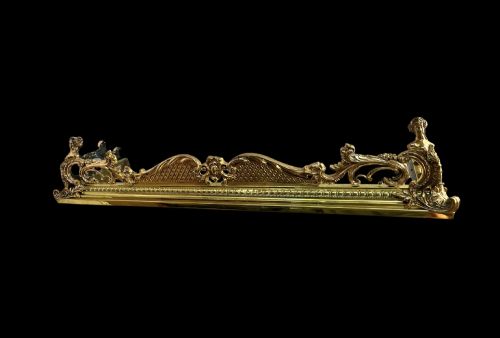


Cast Brass Fireplace Curb
A cast brass fireplace curb frames the hearth, protecting the room from stray embers while anchoring the fireplace with substantial metalwork.
Cast Brass Fireplace Curb
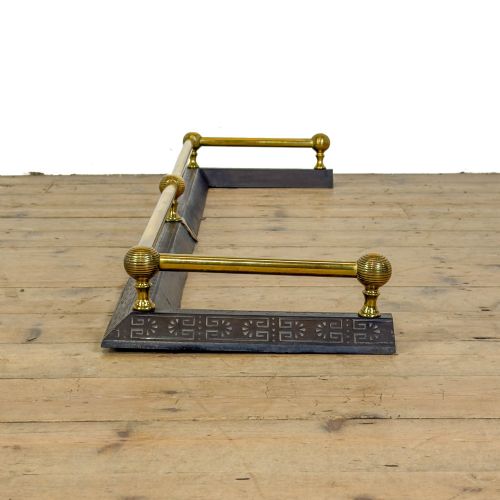
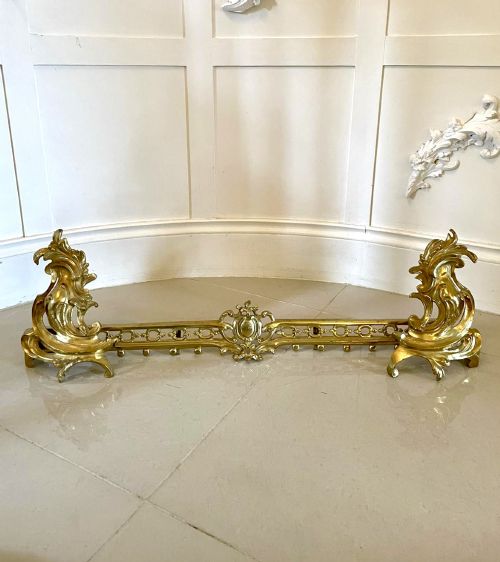
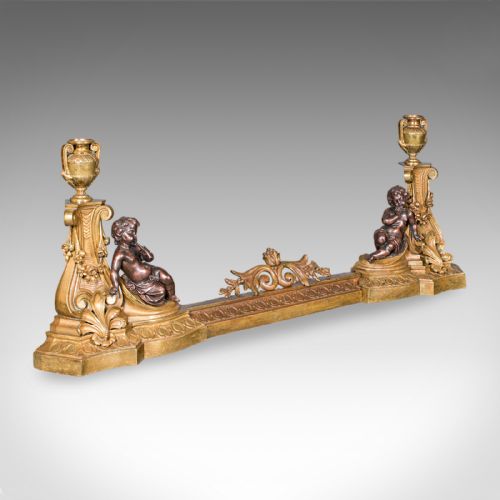
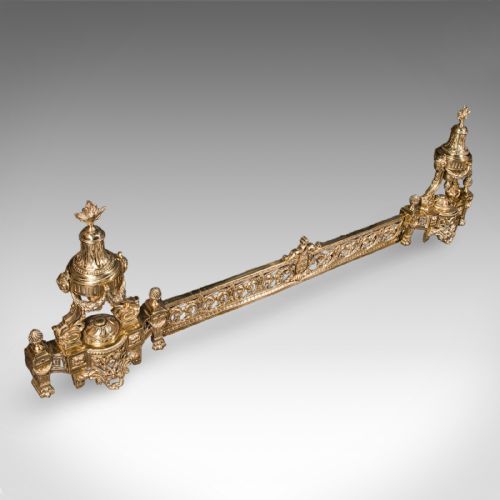
A cast brass fireplace curb acts as a fender around the hearth, stopping sparks and holding fire irons while containing the coals. The examples found here span the Victorian, 19th Century, and Edwardian periods, stretching from eighteen-sixty to nineteen-hundred.
Most items on this page take the form of adjustable hearth fenders or fireplace fenders. Materials mix brass, bronze, cast iron, and steel, creating heavy borders for domestic hearths.
Stylistic influences range from French Rococo and Louis XV to Art Nouveau, Grand Regency, and Rococo Revival. English and French origins appear frequently among these heavy metal furnishings.
How they were made
Foundries cast brass, bronze, and iron components separately before joining them into sturdy frames. Many pieces incorporate steel elements for added structural rigidity around the hearth.
Ornaments such as brass garlands, scrolled motifs, and cast lions are applied to the heavy gauge metal framework. Gilded brass and gilt bronze finishes provide surface richness on French and English examples.
Listings on this site include styles from French Rococo and Louis XV to Art Nouveau.
What varies in quality
Weight and metal thickness distinguish standard production from superior pieces, with heavy gauge brass and bronze offering greater longevity. The refinement of cast details, from scrolled acanthus leaves to applied lions and garlands, separates basic frames from ornate works.
Extending mechanisms and adjustable joints operate with varying degrees of precision and mechanical integrity. The crispness of the casting work and the original quality of the gilding or bronze finish dictate the visual strength of the piece.
The Cast Brass Fireplace Curb Glossary
- Curb
- A metal barrier placed on the floor around a hearth to contain ashes and wood. It serves both a protective and a decorative function in the room.
- Fender
- An alternative term for a curb, designed to fit the perimeter of the fireplace opening. These often include adjustable sections to suit different hearth dimensions.
- Gilt Bronze
- Bronze metal coated with a thin layer of gold or gold-coloured alloy. This finish enhances the decorative impact of French Regency and Louis XV style pieces.
- Cast Brass
- Brass formed by pouring molten metal into a mould rather than beating it from sheet metal. This technique allows for deep relief ornamentation and heavy structural components.
Cast Brass Fireplace Curb: Frequently Asked Questions
What is a cast brass fireplace curb?
A cast brass fireplace curb is a heavy metal guard placed on the floor around a hearth. It contains logs, coal, and sparks while framing the fireplace.
These pieces appeared in various forms throughout the nineteenth and early twentieth centuries, reflecting the interior tastes of their era.
How do adjustable curbs work?
Adjustable curbs feature sliding sections that let the owner alter the overall length to fit different hearth sizes. This mechanism allowed makers to sell standard designs that suited multiple fireplace dimensions.
Users simply pull the ends outward or push them inward until the curb rests properly against the chimney breast.
Can I use these with a modern fire?
These curbs fit modern hearths just as they did nineteenth-century fireplaces, provided the dimensions match your floor space. They serve to keep rugs safe from stray sparks and hot embers.
Care should be taken to clean the metal gently without removing the patina accumulated over decades of use.
How do I date a brass fender?
Dating relies on stylistic clues like Rococo scrolls, Louis XV symmetry, or later Art Nouveau curves. Heavier gauge metal and construction methods also point towards specific decades within the Victorian and Edwardian periods.
Maker details or registration marks, when present, offer further confirmation of the manufacturing date.