

Cased Table Silver
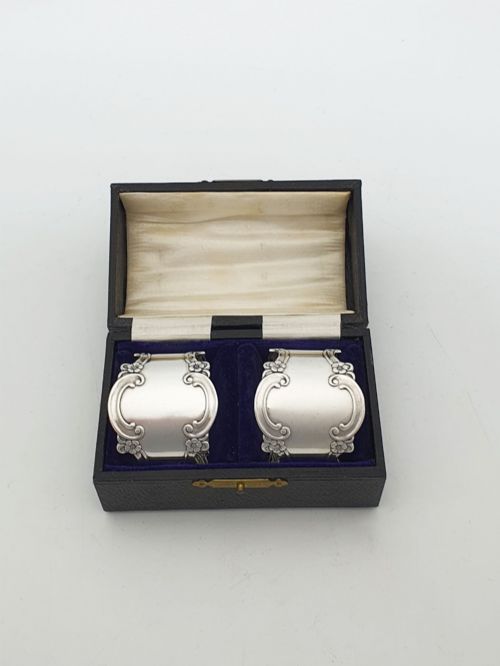
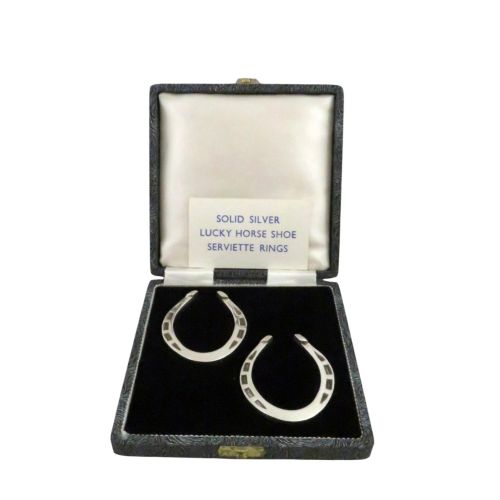
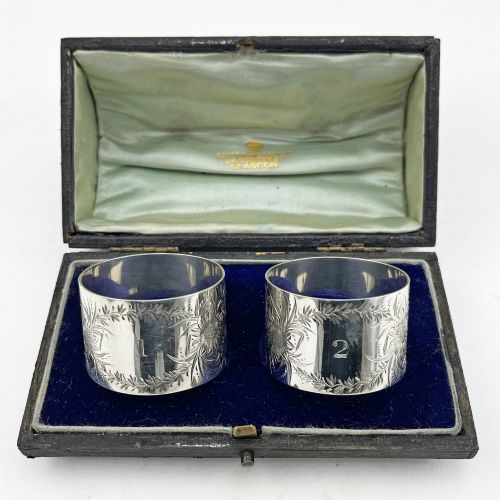
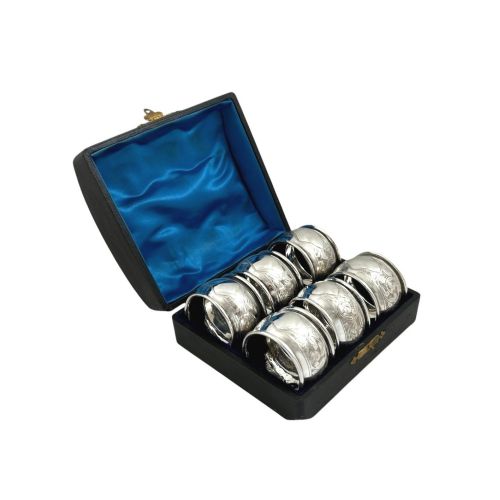
When you search for cased table silver, you find fitted boxes housing matched sets of cutlery, napkin rings, and salts designed for dining.
Cased Table Silver
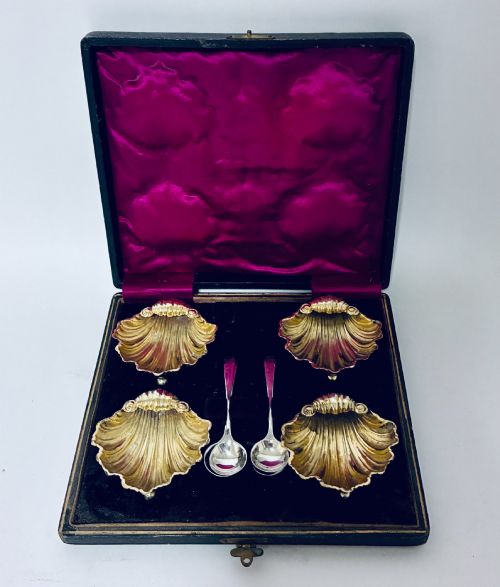
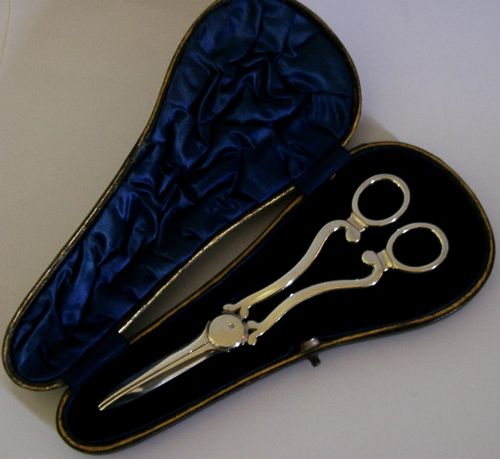
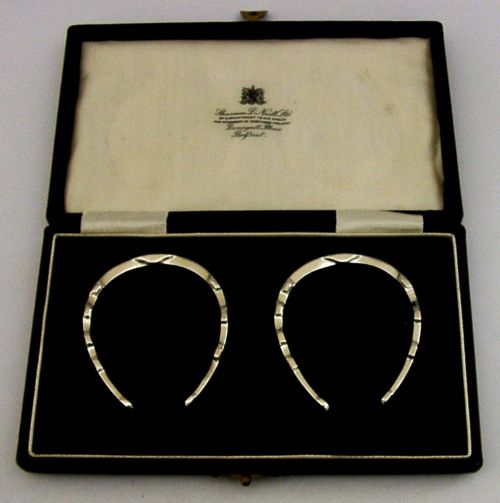
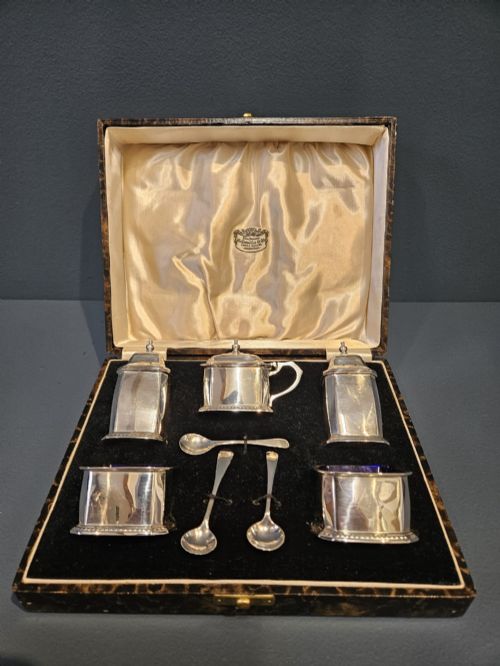
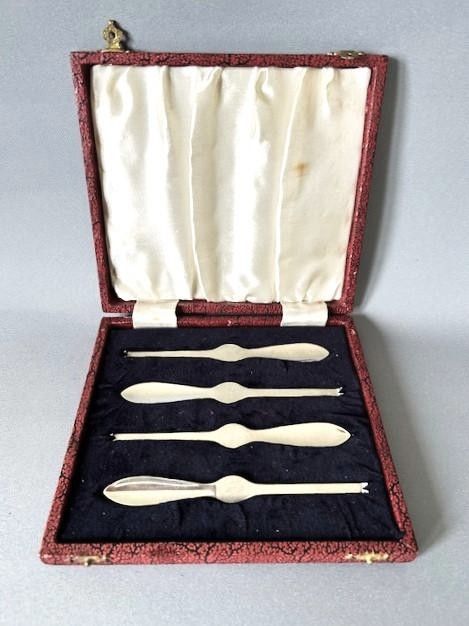
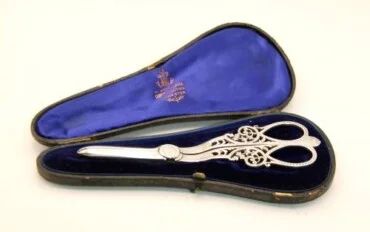
Cased table silver encompasses dining accessories and cutlery presented in fitted protective boxes, often lined with velvet or silk. These items span periods from the Georgian era through the Victorian, Edwardian, and Art Deco years, reflecting changing domestic habits.
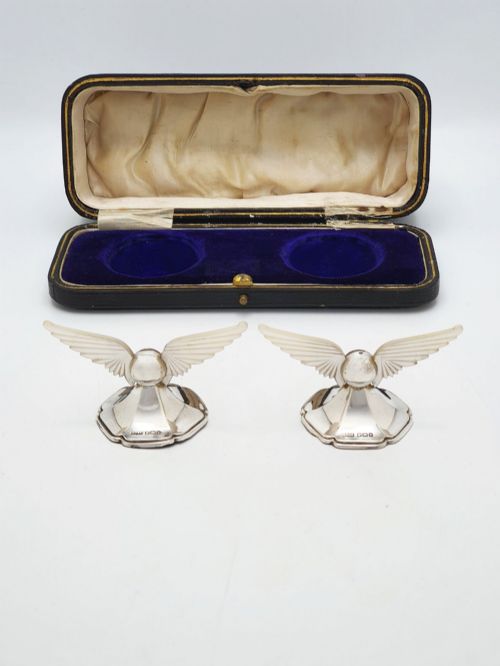
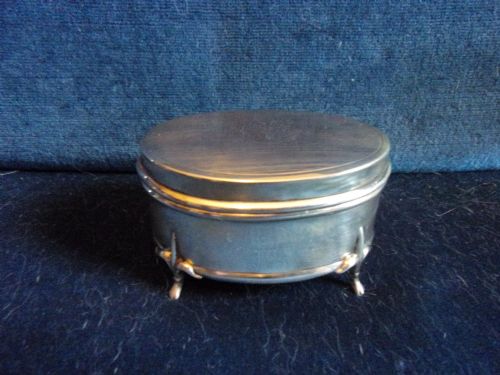
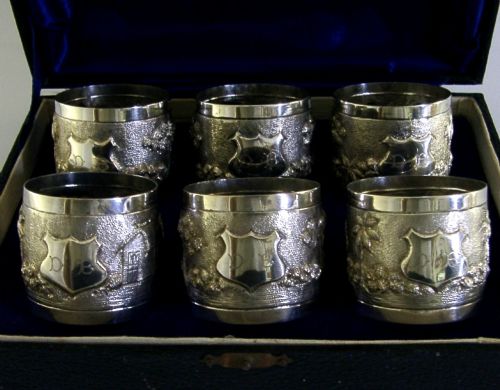
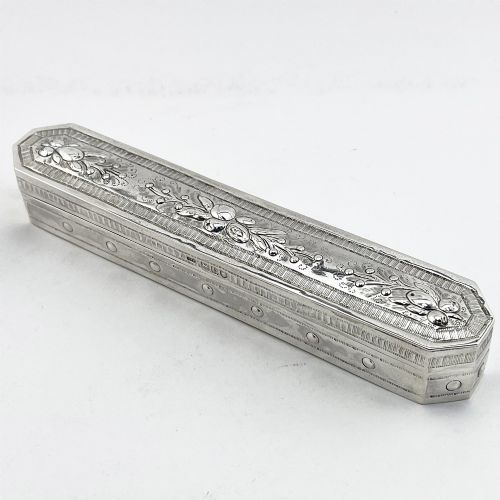
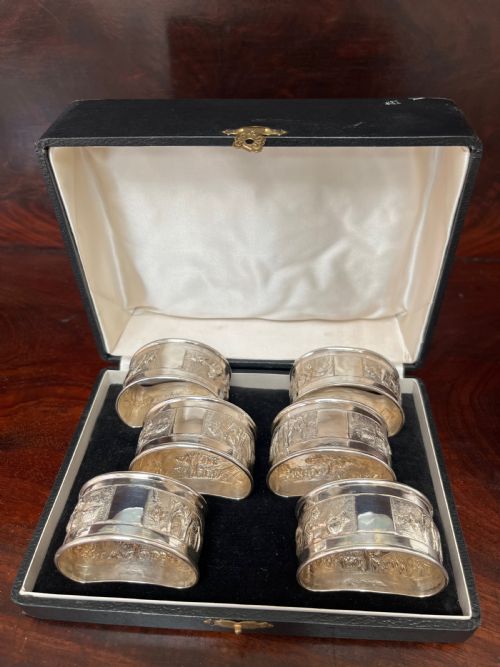
Napkin rings, cruet sets, and cutlery dominate the offerings, frequently accompanied by novelty salt cellars, menu holders, and small boxes. The sets range from pairs to larger groups intended for formal dining tables.
Origins vary from British workshops in Sheffield and London to continental makers and Anglo-Indian pieces, showing diverse stylistic influences including Rococo Revival alongside clean geometric Art Deco designs.
Materials and Construction
The primary material is sterling silver, shaped by hammering, casting, or piercing, and often hallmarked to denote the town of assay and year of production. Cases utilise wood or sturdy foundations covered in leatherette, fitted internally with moulded velvet, silk, or satin beds.
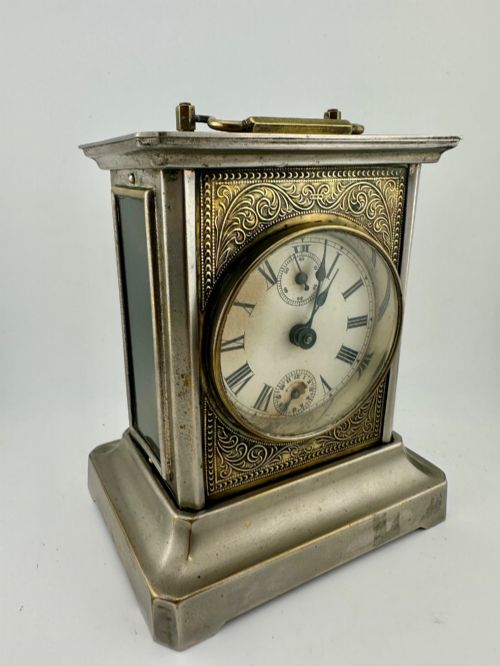
Associated components incorporate glass for cruet bottles or clock faces, alongside brass hinges and catches securing the outer cases. Interior linings are meticulously shaped to hold each individual silver piece snugly in place.
Cased Table Silver Retail Price Guide 2026
Typical asking prices for cased table silver among the pieces listed under this phrase on Sellingantiques today, from the lower quarter to the upper quarter. They describe what is for sale here now, not the wider market.
Dinner guests once consulted silver owls and grouse standing rigidly on the table to discover what culinary surprises awaited them next.
Assessing the Pieces
Quality rests upon the gauge of the silver and the crispness of any chased or engraved detail, distinguishing substantial items from thinner pressings. Maker marks and the completeness of matching sets also dictate standard.
The integrity of the original case matters significantly, including the preservation of the internal silk or velvet lining and the smooth operation of brass latches and hinges.
Martin Hall & Co·Levi & Salaman·A. Wilcox·Josiah Williams & Co·Mappin & Webb
The Cased Table Silver Glossary
- Sterling silver
- A silver alloy containing 92.5 percent pure silver and 7.5 percent other metals, usually copper, ensuring durability for table use. This standard is verified by official assay office hallmarks.
- Cruet set
- A matched group of small bottles or containers holding condiments like vinegar, oil, salt, and pepper, usually arranged in a silver frame. These sets sit centrally on the dining table.
- Menu holder
- A small decorative upright stand designed to hold printed menu cards on the dining table. They often take figurative forms such as animals or birds.
- Gauge
- The thickness of the silver sheet used to form an object. A good gauge indicates a heavier, more rigid piece that resists denting during daily use.
Cased Table Silver: Frequently Asked Questions
How do I store cased silver?
Keep the case in a dry, stable environment away from direct sunlight to protect both the exterior leatherette and the internal silk or velvet lining.
Ensure the silver is clean and dry before placing it back into its fitted slots to prevent tarnishing and moisture damage.
Were these sets meant for daily use?
Many of these sets were produced for formal entertaining, weddings, or celebratory gifts during the Victorian and Edwardian periods. They spent most of their time stored safely in sideboards rather than seeing everyday meals.
Households utilised them primarily when hosting guests for dinner parties or festive occasions.
How do I date these items?
Examine the silver components for official hallmarks, which typically include a date letter, a city mark, and a standard purity mark indicating sterling quality.
Stylistic cues such as Edwardian floral engraving or Art Deco geometric lines also help determine the era of manufacture.
Can I polish the silver safely?
Use a soft, non-abrasive silver cloth specifically designed for precious metals to remove tarnish gently without wearing down hallmarks or fine details.
Avoid liquid dips that can harm delicate velvet or silk linings inside the presentation case.