





Cased Fruit Cutlery Set
A cased fruit cutlery set brings matching knives, forks, or spoons into a fitted box for dining and dessert.
Cased Fruit Cutlery Set
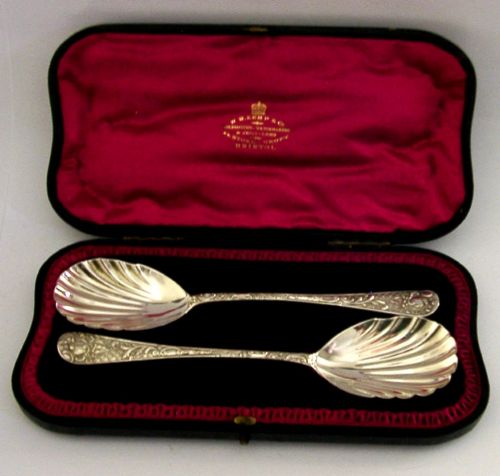
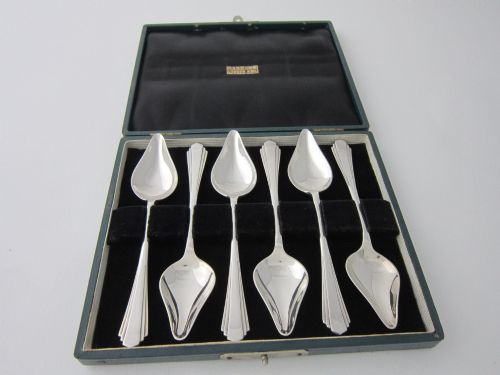
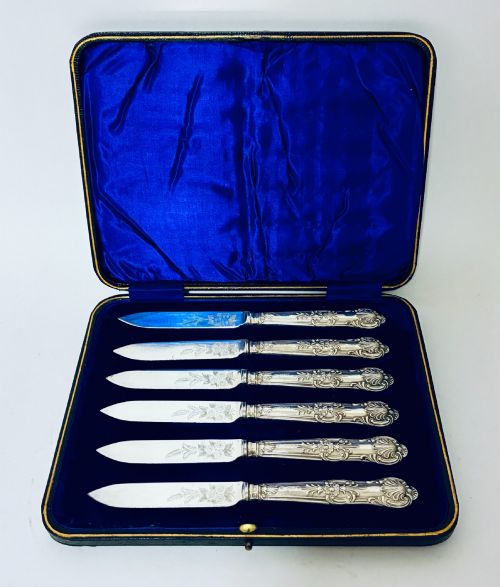
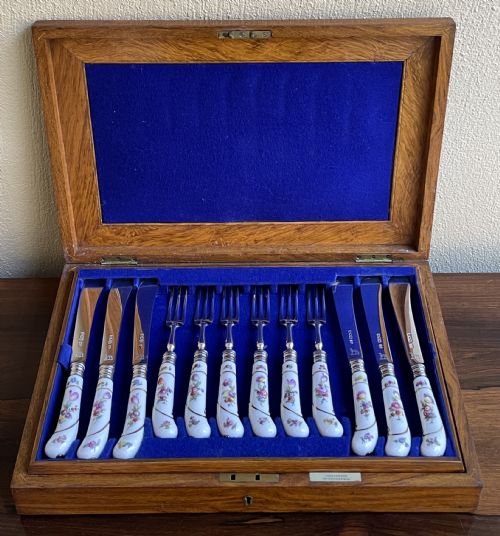
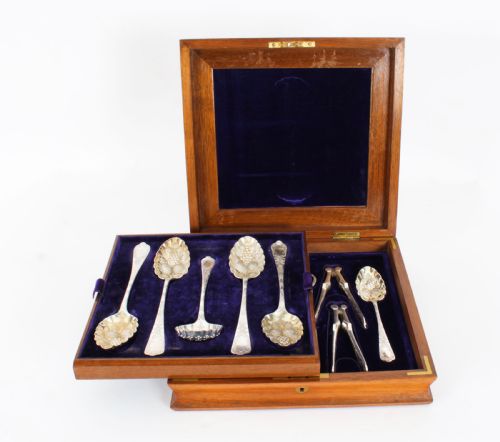
A cased fruit cutlery set groups specialised dining implements inside a fitted presentation box lined with silk or velvet. These assemblies appear across the Victorian, Edwardian, and Georgian periods, alongside items bearing dates from eighteen hundred through nineteen forty.
The configurations vary from small knife sets to larger arrangements incorporating serving spoons, nutcrackers, grape scissors, and butter knives. Most examples span the nineteenth and early twentieth centuries, reflecting formal dining habits of the period.
Materials and construction
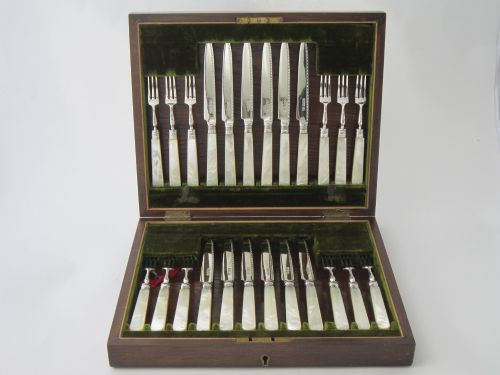
Makers paired blades of sterling silver, silver plate, or steel with handles carved from mother of pearl. Cases typically utilise fitted wooden frames covered in materials like velvet and silk to protect the contents.
Metal components often feature engraved decoration on handles or bowls, while fitted boxes provide segmented storage tailored to each individual piece of cutlery.
Quality factors in cased sets
Superior sets display crisp, detailed engraving on the metalwork and precise matching across every handle and blade. The integrity of the original fitted case and its internal fabric lining significantly influences the standard of the overall assembly.
Material choice separates standard production from finer examples, with solid sterling silver and well-matched mother of pearl handles commanding greater regard than silver plated alternatives.
Carrington·Hukin & Heath
The Cased Fruit Cutlery Set Glossary
- Sterling Silver
- A silver alloy containing ninety-two point five percent pure silver by mass, frequently used for blades and spoons in formal cutlery sets. This material carries traditional hallmarks indicating assay office and date.
- Mother of Pearl
- The iridescent inner layer of certain mollusc shells, shaped into smooth handle scales for knives and forks. It offers a tactile, lustrous grip.
- Silver Plate
- A base metal coated with a thin layer of silver, providing the appearance of solid silver at a different production level. It appears widely across nineteenth-century serving sets.
- Berry Spoon
- A large serving spoon with an embossed or engraved bowl designed specifically for serving soft fruits. These often feature detailed foliate work on the handle.
Cased Fruit Cutlery Set: Frequently Asked Questions
What are cased fruit cutlery sets used for?
These sets were designed for serving and consuming fruit, dessert, or small courses during formal nineteenth and early twentieth-century meals. The specialised blades prevented acidic juices from reacting with standard steel cutlery.
Today, they function both as display pieces and as usable tableware for dining occasions. The fitted presentation boxes keep the implements organised and protected when not in use.
How do you date a cased fruit cutlery set?
Dating relies on metal hallmarks, style indicators, and the construction methods of the fitted case. Sterling silver components often feature assay office marks and date letters that pinpoint the exact year of manufacture.
Period styles ranging from Georgian to Art Deco provide broader chronological markers. Examining the box lining and hinge types also helps determine the era of production.
Are mother of pearl handles durable?
Mother of pearl provides a sturdy and tactile surface for cutlery handles when handled with reasonable care. It resists moisture well but requires gentle cleaning to maintain its iridescent finish.
Harsh detergents and dishwashers should be avoided to protect both the natural shell and the historical adhesives securing it to the tang.
What is the difference between fruit and dessert sets?
Fruit sets typically emphasise specialised implements like small knives, grape scissors, or nutcrackers designed for fresh produce. Dessert sets often include spoons alongside or instead of cutting tools.
Both types share the characteristic fitted presentation box, though their exact tool combinations reflect the specific foods served at the table.