


Edwardian Silver Fruit Set
These edwardian silver fruit set pieces bring polished sterling silver, steel, and mother of pearl to the dining table.
Edwardian Silver Fruit Set
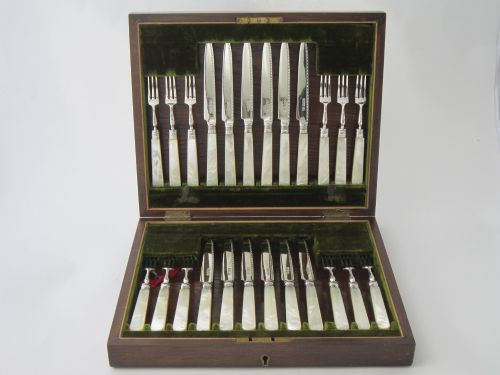
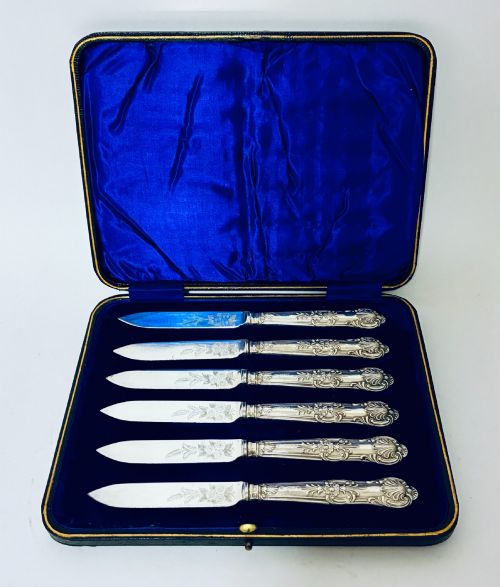
An edwardian silver fruit set comprises matched or cased dining implements designed specifically for finishing a meal with fresh fruit or desserts. These groupings usually take the form of boxed knife and fork sets featuring gleaming blades and decorative handles.
Most examples found here date from the Edwardian period or closely adjacent decades, employing traditional materials like sterling silver, silver plate, and iridescent mother of pearl. They appear both as standalone cutlery sets and housed within fitted wooden canteens lined with velvet.
How they were made
Silversmiths shaped sterling silver and silver plate for the ferrules, collars, and spoons, often stamping assay office marks directly into the metal. Blades were frequently forged from durable steel to maintain a sharp cutting edge.
Handles relied heavily on natural mother of pearl, carved and polished to catch the light, or occasionally smoothed wood mounted with silver accents. These components were pinned together securely to withstand regular dining use.
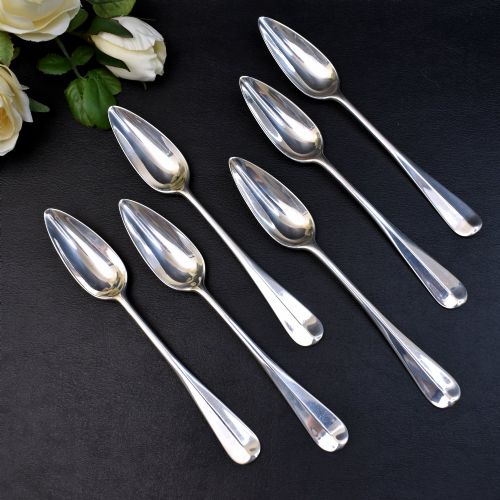
Grapefruit spoons bring a surprising pointed tip to the table.
What varies in quality
The distinction between ordinary and exceptional sets rests on the crispness of the maker's marks and the uniformity of the natural materials used for the handles. Mother of pearl with deep iridescence and unblemished surfaces elevates a canteen significantly.
Casing also plays a role, as original oak boxes lined with fitted velvet preserve the set much better than loose items. Finer pieces demonstrate precise balancing in the hand and careful engraving upon the silver blades.
Hamilton and Inches·Roberts and Belk
The Edwardian Silver Fruit Set Glossary
- Mother of Pearl
- The lustrous inner layer of mollusc shell utilised for cutlery handles. It provides a shimmering, durable grip that resists moisture.
- Sterling Silver
- An alloy consisting of pure silver and other metals to add strength. It forms the bright metal components of better quality dining sets.
- Silver Plate
- A base metal coated with a thin layer of pure silver. It offers the appearance of solid silver at a different production level.
- Ferrule
- The metal ring or cap that joins the handle of a knife to its blade. It secures the two disparate materials firmly in place.
Edwardian Silver Fruit Set: Frequently Asked Questions
How do I clean mother of pearl handles?
Wipe the handles gently with a damp cloth and dry them immediately with a soft towel. Avoid submerging them in water or using harsh silver dips.
Harsh chemicals can ruin the natural iridescence of the shell and weaken the adhesives holding the handle to the blade. Regular gentle care keeps the surface bright.
Can I use these sets for everyday dining?
These pieces can certainly be used for special meals, provided you wash and dry them by hand straight after use. Storing them in a dry place prevents tarnish.
Many people reserve them for dessert courses or formal dinners to preserve the vintage steel blades and delicate handles from heavy dishwasher cycles.
What is the difference between a fruit set and a dessert set?
Fruit sets specifically emphasise knives and sometimes forks tailored for slicing citrus, apples, or stone fruit. Dessert sets often include spoons or broader implements.
In practice, historical makers used the terms interchangeably for cased cutlery intended for the final course of a meal.
How do I identify an Edwardian set?
Look for hallmarks stamped on the metal components that correspond to assay office records from the early twentieth century. Sheffield and Edinburgh marks frequently appear.
The overall design aesthetic tends to be lighter and more refined than heavy Victorian styles, often pairing bright sterling silver with smooth mother of pearl.