




Boxed Sterling Silver Knives
Boxed sterling silver knives bring fitted presentation cases and gleaming metal to the dining table, offering both decorative charm and historic utility.
Boxed Sterling Silver Knives
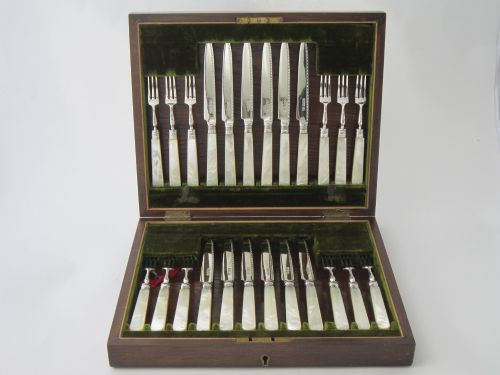
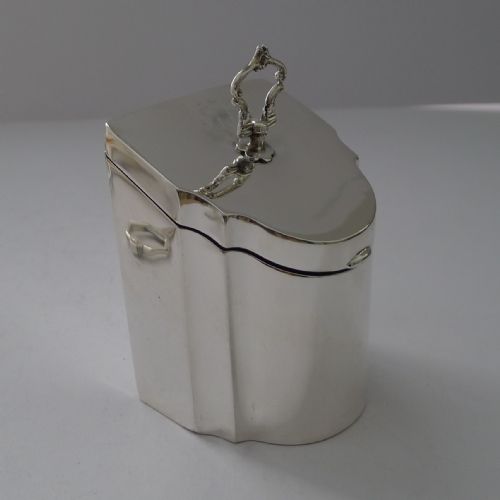
When you search for boxed sterling silver knives, you encounter fitted sets designed for specific dining tasks such as dessert, butter, fruit, or fish consumption. These pieces span the Georgian, Victorian, Edwardian, and George V periods, appearing alongside related tableware like tea caddies, butter dishes, and christening sets.
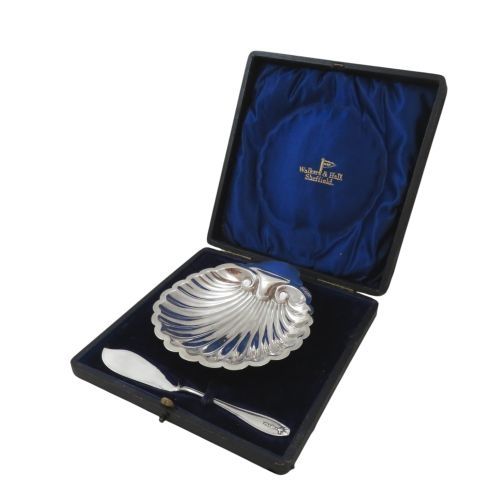
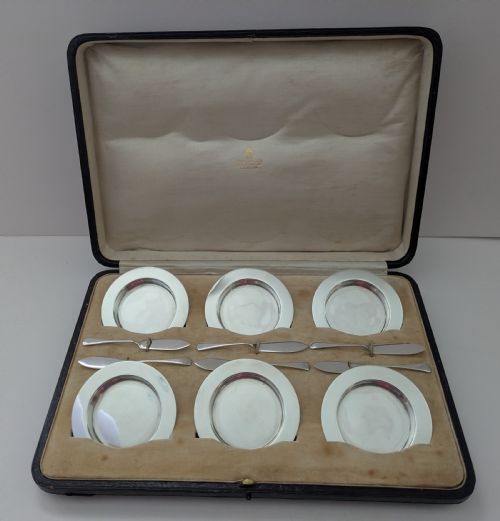
The most common formats on this page include sets of six butter knives with silver handles, dessert sets pairing blades with mother of pearl, and individual serving pieces housed in custom cases. Originating from workshops in Sheffield and beyond, these items range from complete cutlery sets to matched pairs.
The presentation boxes themselves form an integral part of the experience, utilising materials like leatherette, leather, wood, velvet, and silk to protect the metal and mother of pearl within. Each period brings distinct stylistic flourishes, from the simple geometry of early twentieth-century sets to the ornate patterns of the nineteenth century.
Materials and construction
Makers utilised sterling silver for blades, handles, and accompanying tableware, often pairing the precious metal with natural mother of pearl for grips. Cast silver blades appear alongside constructed handles, demonstrating careful metalworking traditions.
Cases were constructed from wood and covered in leather, leatherette, or textured papers, then lined internally with fitted beds of silk and velvet to cradle each knife securely.
Listings feature sterling silver combined with velvet, silk, leather, and mother of pearl across Victorian, Edwardian, and Georgian periods.
Markers of quality
The distinction between tiers rests upon the harmony of the set, the crispness of hallmarks, and the integrity of the original fitted case. Complete sets with matching components command greater interest than assembled groups.
Superior execution shows in the secure seating of handles, the preservation of the silk and velvet linings, and the depth of cast detail on blades and handles alike.
Asprey and Co.
The Boxed Sterling Silver Knives Glossary
- Sterling Silver
- A standard alloy of silver containing ninety-two point five percent pure silver by mass and seven point five percent other metals, usually copper. This composition balances durability with the bright lustre expected in fine tableware.
- Mother of Pearl
- An iridescent organic-inorganic composite material produced by some molluscre shell inner layers. It provides a smooth, tactile grip for knife handles.
- Hallmark
- An official mark stamped on items made of precious metals in the United Kingdom. It authenticates the silver standard and often reveals the assay office, maker, and year of production.
- Cutlery Set
- A matched collection of eating or serving utensils housed together. These sets frequently include specialised knives, forks, and spoons for specific courses.
Boxed Sterling Silver Knives: Frequently Asked Questions
What are boxed sterling silver knives used for?
These items were traditionally employed for specific dining courses, including dessert, butter, fruit, and fish. Their fitted presentation boxes protected the delicate materials between meals.
The inclusion of materials like mother of pearl and velvet indicates they were meant for formal dining rooms and special household occasions rather than daily kitchen work.
How do I identify a Victorian set?
Victorian sets often display more ornate decorative patterns on the silver blades and handles compared to later twentieth-century styles. Hallmarks stamped into the metal provide the exact assay year.
The fitted cases from this era frequently utilise rich velvet and silk linings inside leather-covered wooden boxes to house the cutlery securely.
Are mother of pearl handles durable?
Mother of pearl provides a sturdy and tactile grip for knife handles, though it requires gentle handling to prevent chipping. The organic material is secured firmly to the silver tangs within.
Storing the knives in their original velvet and silk-lined boxes helps protect the delicate handles from impact and wear over time.
What is the difference between Georgian and Edwardian pieces?
Georgian pieces originate from the late eighteenth and early nineteenth centuries, often featuring distinct regional patterns like Coburg. They reflect the hand-craftsmanship of their era.
Edwardian pieces, dating from the early twentieth century, tend to show cleaner lines and often appear in larger matched sets for butter or dessert service.
How should I care for boxed silver cutlery?
Keep the knives stored in their original fitted cases when not in use to protect the silver from tarnishing rapidly in the open air. Occasional gentle cleaning with a suitable silver polish maintains the metal's brightness.
Avoid immersing antique cases in water, as the wood, leather, velvet, and silk linings require dry maintenance to preserve their structural integrity.