


Silver Fruit Knife Set
These silver fruit knife set pieces bring the refined ritual of dessert dining to the table, pairing precious metal blades with tactile handles.
Silver Fruit Knife Set
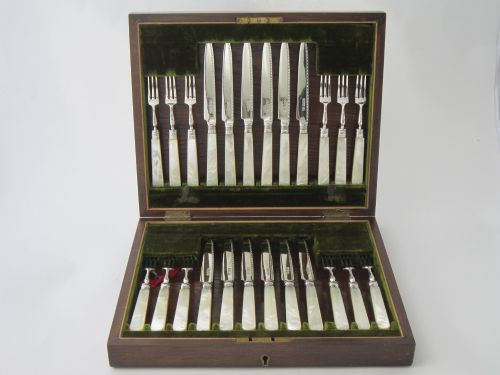
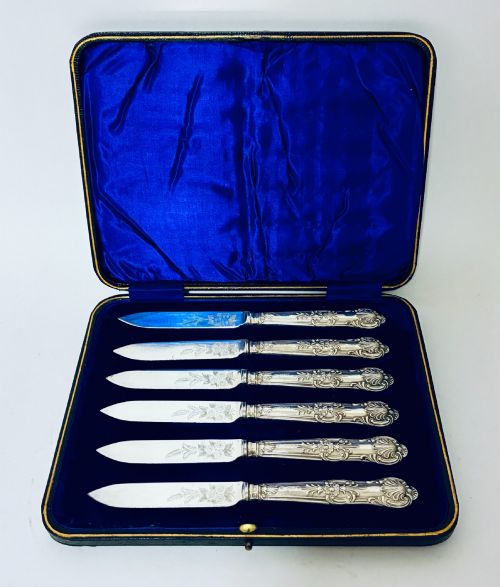
A silver fruit knife set comprises matched or cased eating implements designed specifically for the dining table, most frequently appearing in Victorian, Edwardian and Georgian iterations. These sets often take the form of boxed pairs or larger services of six, occasionally accompanied by matching forks.
The objects seen here span from the early nineteenth century through to the early twentieth century, incorporating English Sheffield production as well as nineteenth-century European examples. Buyers encounter everything from cased canteens to modest boxed pairs intended for domestic dessert service.
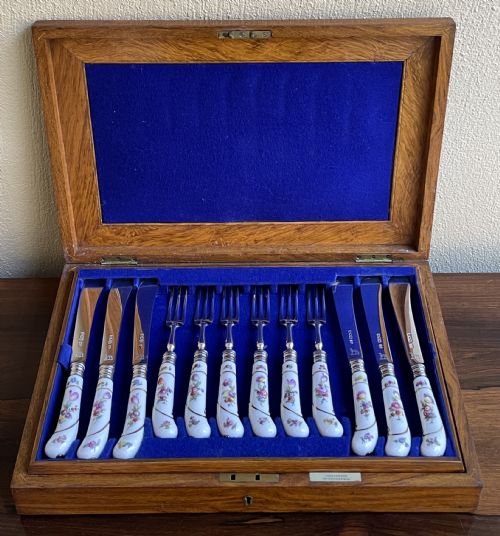
Forms range from individual fruit knives to dedicated dessert cutlery sets and butter knives. The configuration reflects the formal dining habits of the periods represented, with many pieces surviving in their original fitted wooden or velvet-lined boxes.
Materials and Construction
Blades and ferrules utilise sterling silver, silver gilt, steel and silver plate, shaped to meet the demands of cutting acidic fruit without tarnishing the metal prematurely. Solid silver and silver gilt provide a bright finish, while steel blades offer a durable cutting edge.
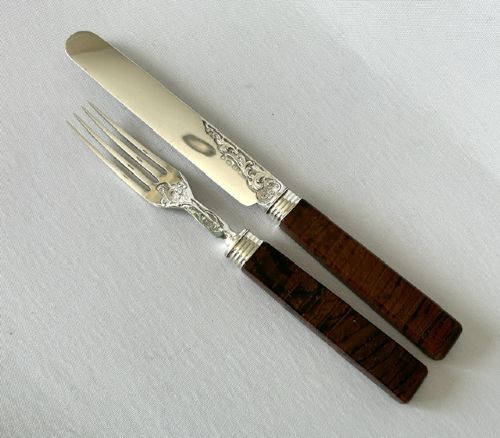
Handles rely on organic and natural materials including mother of pearl, agate, tortoiseshell, porcelain and woods such as oak. These panels are pinned or riveted to the tangs, creating a secure grip that contrasts with the metallic lustre of the blades.
Victorian diners required specialist cutlery simply to slice a peach without offending polite company.
Markers of Quality
Quality rests in the harmony of the materials and the integrity of the fitted housing. Superior examples combine lustrous mother of pearl or polished agate with fully hallmarked sterling silver blades, housed in sturdy wooden boxes lined with velvet.
The finesse of the handle shaping and the crispness of any engraving on the silver blades distinguish finer services from standard utility pieces. Matching sets that retain their complete complement within an original case command greater attention from collectors.
Carrington
The Silver Fruit Knife Set Glossary
- Sterling silver
- A silver alloy containing 92.5 percent pure silver by mass, standard for quality British tableware. It provides both durability and a bright reflective surface.
- Mother of pearl
- The iridescent inner layer of certain mollusc shells, utilised extensively for knife handles. Its natural grain creates a shimmering effect under table lighting.
- Silver gilt
- Silver that has been coated with a thin layer of gold on its surface. This technique adds a warm yellow tone and protects the underlying metal.
- Sheffield
- A city in England renowned for metalworking and cutlery production. Pieces originating here often reflect traditional manufacturing standards.
- Canteen
- A fitted box or case designed to store a set of cutlery securely. These cases often feature velvet or satin linings to protect the contents.
Silver Fruit Knife Set: Frequently Asked Questions
What is a silver fruit knife set used for?
These sets were traditionally used at the conclusion of a formal meal for slicing fresh fruit. The metal used prevented the unpleasant metallic taste that standard steel cutlery sometimes imparted to acidic fruits.
Over time, they evolved into decorative table accessories as well as functional items for dessert courses. Today, collectors often appreciate them for their craftsmanship and historical association with dining rituals.
How can I tell a Victorian set from an Edwardian one?
Victorian sets often display heavier ornamentation, elaborate engraving on the blades, and sometimes incorporate colourful handle materials like agate or tortoiseshell. The design reflects the ornate aesthetic prevalent during the reign of Queen Victoria.
Edwardian pieces tend toward cleaner lines and simpler geometric forms, aligning with the tastes of the early twentieth century. Makers' marks and hallmarks stamped on the silver components provide the most definitive dating evidence.
Are these knives dishwasher safe?
Modern cleaning methods are entirely unsuited to antique cutlery. The harsh detergents and prolonged heat of a dishwasher will strip finishes, damage organic handles like mother of pearl and wood, and destroy adhesives.
Hand washing in lukewarm water is the only acceptable method for maintaining these pieces. Careful maintenance preserves the integrity of the antique materials.