




Antique Porcelain Dessert Set
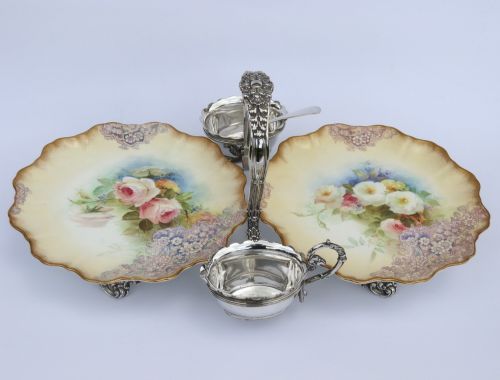
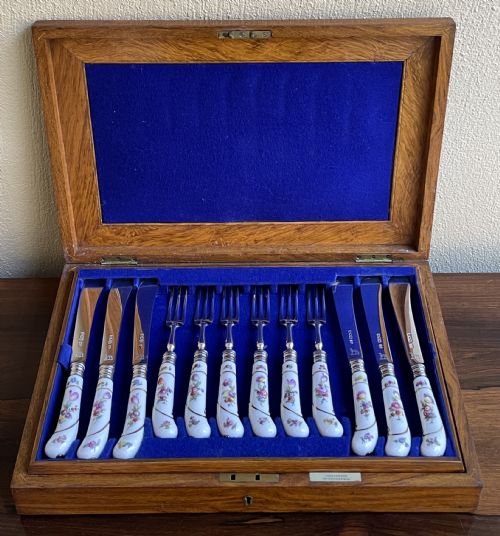
An antique porcelain dessert set brings formal dining history to the table, offering matched plates and serving dishes for the final course.
Antique Porcelain Dessert Set
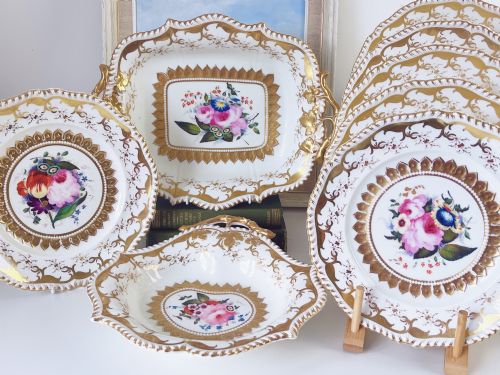
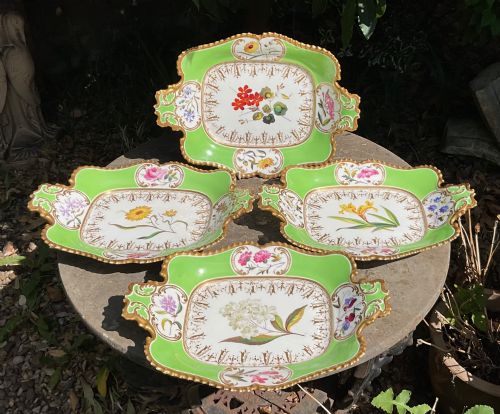
An antique porcelain dessert set comprises matched collections of plates, comports, and serving dishes designed specifically for the final course of a formal meal. These services emerge from the eighteenth, nineteenth, and early twentieth centuries, spanning periods from Georgian and Regency eras through to Victorian and Edwardian decades. Buyers meeting these pieces on this page will encounter English porcelain and earthenware alongside continental European works.
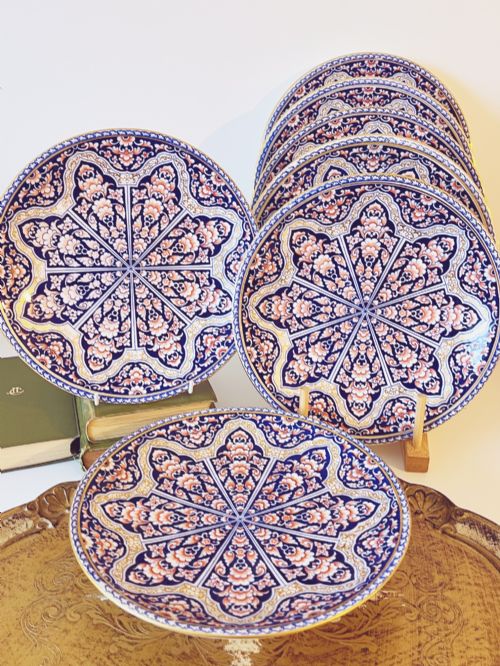
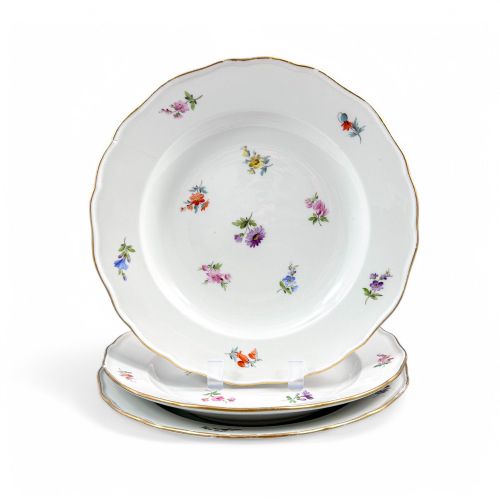
The services appear as comprehensive suites of multiple pieces or as smaller groupings of plates and dishes. Forms range from dedicated dessert services and comports to stone china tea plates and French cream pots. Makers from English factories and French potteries dominate the offerings, providing tangible links to historical dining traditions.
What Varies in Quality
The refinement of the ceramic body and the skill of the handpainting dictate the upper tiers of quality. Finer sets display crisp moulding, translucent porcelain pastes, and detailed pictorial or floral work executed by skilled hands.
Execution of the gilding and the preservation of enamel colours over centuries distinguish superior services from simpler production pieces. The completeness of a service, maintaining matching comports and plates together, elevates the standing of the set.
Listings feature nineteenth-century pieces alongside eighteenth-century soft paste porcelain and twentieth-century French sets.
Grainger Lee And Co·Royal Crown Derby·Chamberlains Worcester·Walker And Hall·Doulton Burslem·John Ridgway·Rockingham Pottery·Spode·Carrington·Chantilly·Sevres·Kerr And Binns·Davenport·Jean Pierre Feuillet
The Antique Porcelain Dessert Set Glossary
- Comport
- A raised dish or pedestal bowl used for serving fruit or sweetmeats as part of a dessert service. These pieces usually stand higher than the surrounding plates to create visual hierarchy on the dining table.
- Bone china
- A type of porcelain containing animal bone ash, developed in England to create a strong, brilliantly white ceramic body. It allowed potteries to produce thinner, more refined tableware.
- Soft paste porcelain
- An early ceramic composition fired at lower temperatures than hard paste, producing a warm glaze texture. Eighteenth-century French factories utilised this material extensively.
- Gilding
- The application of gold leaf or gold paint to ceramic surfaces, particularly along rims and borders. This decorative technique adds formal elegance to dessert services.
- Stone china
- A dense, durable ceramic body developed in the nineteenth century to bridge the gap between earthenware and true porcelain. It offered high resistance to chipping during regular use.
Antique Porcelain Dessert Set: Frequently Asked Questions
How were dessert sets used?
These services were brought out at the conclusion of a formal dinner for the dessert course, which typically featured fruit, sweetmeats, and confectioneries. The array of comports and matched plates created an impressive display on the dining table.
Servants would present the fruit and sweet dishes on the elevated comports while guests used the individual plates. The arrangement emphasised the host's wealth and aesthetic taste through porcelain artistry.
How do I care for antique porcelain?
Wash antique dessert plates and dishes by hand using mild detergent and warm water, avoiding modern dishwashers entirely. Hand washing protects delicate handpainted enamel and gold leaf gilding from harsh detergents and thermal shock.
Store pieces with felt dividers between stacked plates to prevent surface scratching on the glaze. Display comports and dishes away from direct sunlight to preserve the vibrancy of nineteenth-century colours.
Can I use them for dining?
Many collectors prefer to use their antique dessert services for special occasions, treating historical porcelain as a functional part of modern life. The durable glaze on nineteenth-century ironstone and bone china generally handles careful serving use.
One must check for any hairline cracks or delicate overglaze enamel work before serving food. Soft paste porcelain from the eighteenth century requires much greater caution and is best reserved for display.
How do I distinguish regional styles?
English dessert sets from factories like Worcester and Derby often feature botanical painting and rich cobalt blues influenced by Asian export porcelain. French services tend to show neoclassical Empire forms or ornate Rococo revival moulding with heavy gilding.
Examining the foot rim and paste consistency helps separate English bone china from continental hard paste porcelain. Maker marks on the underside provide definitive clues to the geographic origin and period.