




Victorian Cased Dessert Cutlery
Victorian cased dessert cutlery brings tailored elegance to the table, pairing precious metals with fitted presentation boxes designed to impress.
Victorian Cased Dessert Cutlery
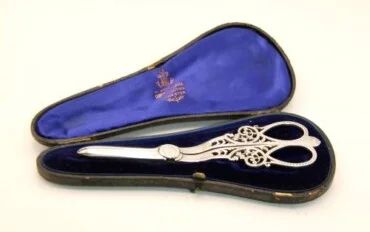
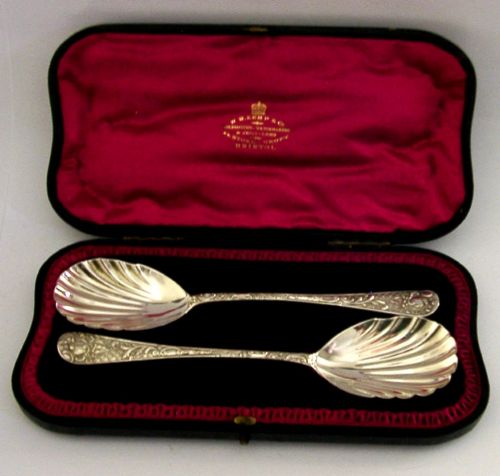
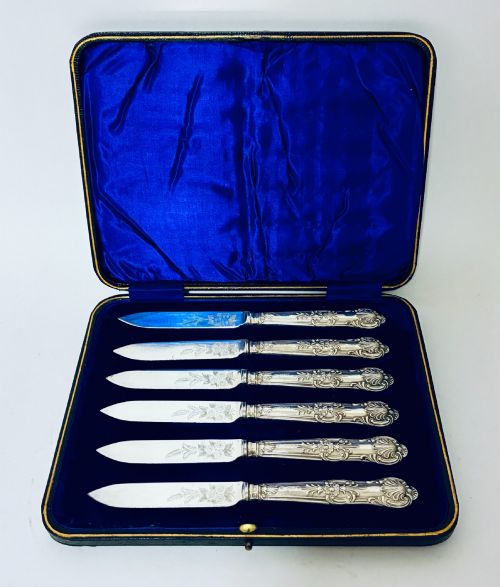
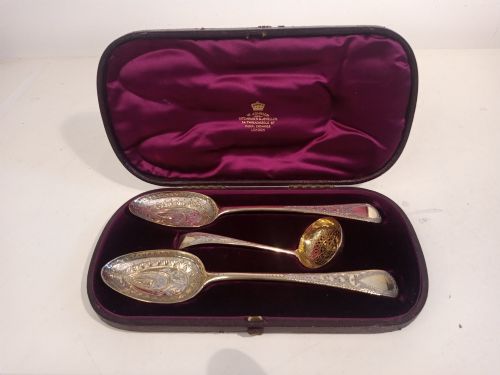
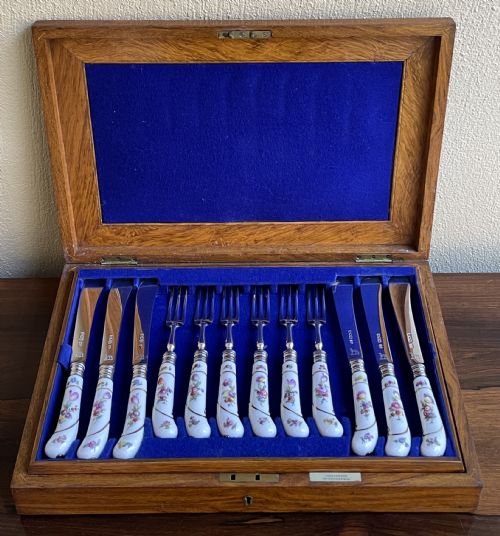
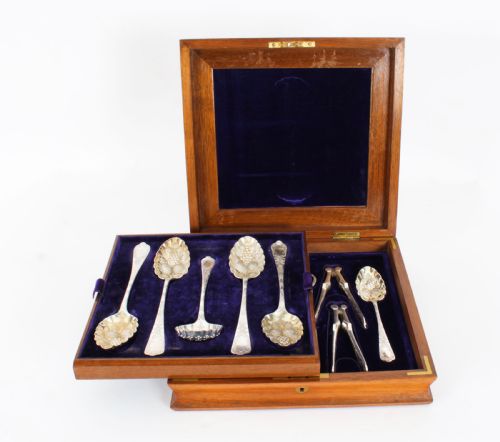
Victorian cased dessert cutlery encompasses fitted sets designed for fruit, cheese, and sweet courses, presented within dedicated boxes lined in silk, satin, or velvet. These assemblies typically comprise fruit knives, serving spoons, nutcrackers, or grape scissors produced across the nineteenth and early twentieth centuries.
Buyers encounter a variety of configurations ranging from single boxed serving knives and forks to larger sets of six fruit knives or comprehensive hors d'oeuvres assortments. The accompanying presentation cases protect the delicate handles and polished metalwork from damage when not in use.
The prevailing styles span Victorian and Edwardian periods, reflecting the shifting aesthetic preferences of late nineteenth-century and early twentieth-century dining habits. Pieces often bear period characteristics such as cast silver blades, engraved handles, and silver gilt finishes.
Materials and construction
Manufacturers utilised sterling silver, silver plate, and mother-of-pearl for the cutlery handles and implements, frequently combining these durable materials within a single fitted case. Mother-of-pearl provides a luminous, iridescent grip, while sterling silver and silver plate offer resilient surfaces suited to ornate engraving and gilding.
Interior linings of satin, silk, and velvet cushion each individual piece within wooden or oak-cased canteens, ensuring secure transport and presentation. Metal blades and tines frequently feature intricate chased decoration or cast silver construction, demonstrating the high level of specialist silversmithing applied to dining implements of the era.
Listings feature items spanning the nineteenth century through to the 1920s, incorporating materials such as satin, silk, velvet, and mother-of-pearl.
Quality and execution
The distinction between standard utility items and finer examples rests upon the depth of hand engraving, the quality of the silver gilt work, and the integrity of the fitted case. Superior sets display crisp, ornate detailing across the handles and blades rather than mass-produced stamped patterns.
Material selection significantly influences the overall desirability, with solid sterling silver and pristine mother-of-pearl commanding greater attention than silver plate. Furthermore, the original lining materials inside the oak or wooden cases must remain intact to preserve the historical context of the set.
Carrington·Hukin & Heath
The Victorian Cased Dessert Cutlery Glossary
- Silver plate
- A thin layer of silver bonded to a base metal substrate, commonly utilised for nineteenth-century cutlery sets to provide the appearance of solid silver at a lower production cost.
- Silver gilt
- Silver objects that have been coated with a thin layer of gold on the surface, creating a rich two-tone decorative effect often seen on nineteenth-century berry spoons.
- Mother-of-pearl
- The iridescent inner layer of mollusc shells, carved and polished to form smooth, tactile handle scales for dessert knives and fruit sets.
- Canteen
- A fitted box, chest, or case specifically designed to store a matching collection of cutlery or flatware in dedicated slots and recesses.
- Hors d'oeuvres
- Small savory dishes served before meals, requiring specialised forks and serving implements included in select Victorian dining sets.
Victorian Cased Dessert Cutlery: Frequently Asked Questions
What is Victorian cased dessert cutlery used for?
These specialised sets were utilised for serving and consuming post-dinner courses such as fruit, cheese, and sweet dishes in formal nineteenth-century dining settings.
Individual fruit knives, engraved serving spoons, and dedicated nutcrackers allowed guests to handle delicate foods cleanly and with appropriate etiquette.
How do I care for cased cutlery?
Keep the pieces stored within their original velvet, silk, or satin-lined cases to protect the delicate mother-of-pearl and metal surfaces from unnecessary abrasion and tarnishing.
Clean the silver and silver plate gently with appropriate non-abrasive polishes, avoiding harsh chemical immersion that might damage the organic handle materials.
Are these sets safe to use today?
Most solid silver, silver plate, and mother-of-pearl dessert implements remain structurally sound for occasional modern dining use, provided they receive careful hand washing.
Owners should avoid putting antique cased cutlery into modern mechanical dishwashers, as high temperatures and harsh detergents can ruin historic linings and loosen handles.
How can I tell Victorian pieces from Edwardian ones?
Victorian examples typically date from the nineteenth century and display heavier, highly ornate engraved decoration influenced by high Victorian design standards.
Edwardian pieces, produced after nineteen hundred, often lean toward lighter, refined Edwardian aesthetics while retaining similar fitted presentation cases and materials.