




Cased Dessert Cutlery
Cased dessert cutlery gathers silver and mother of pearl implements into fitted presentation boxes for the table.
Cased Dessert Cutlery
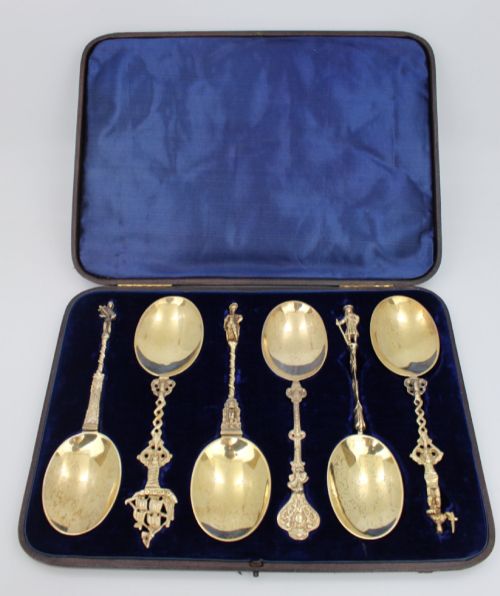
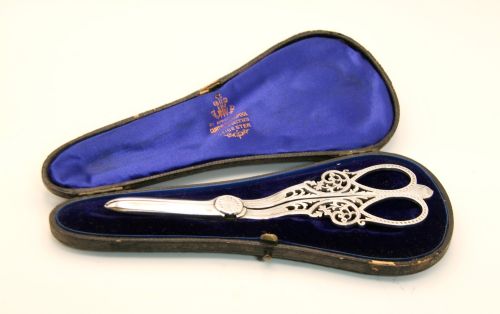
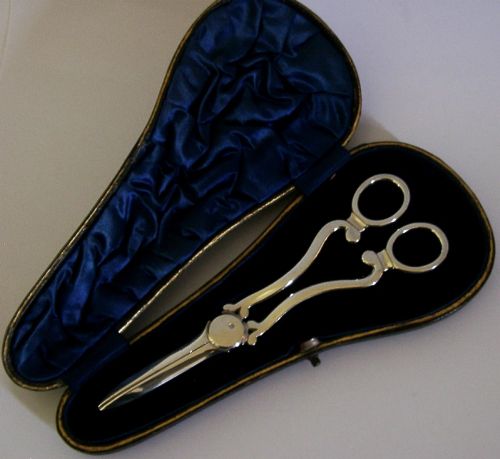
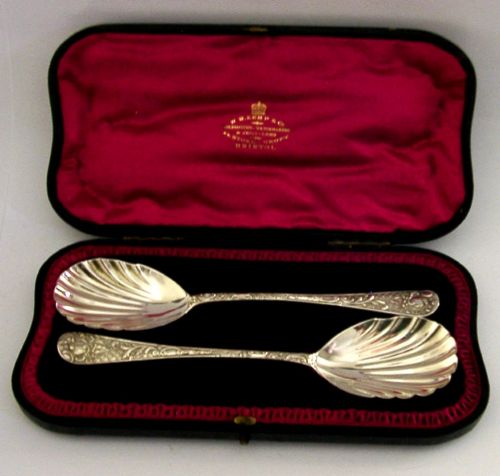
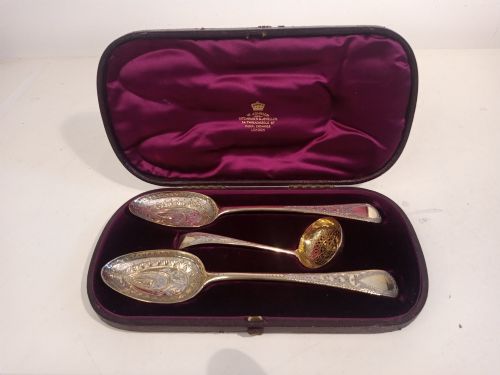
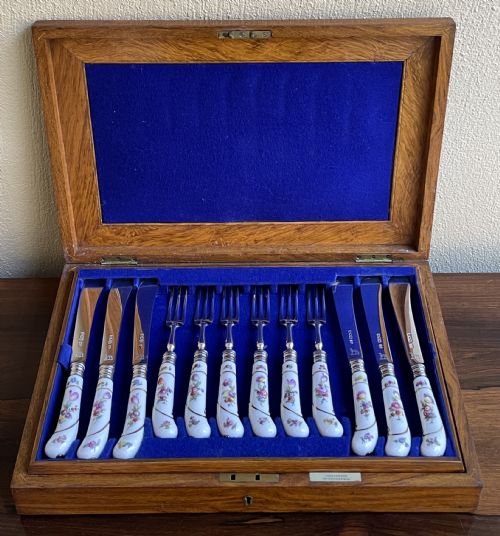
Cased dessert cutlery brings together specialised implements for fruit, berries, and sweet courses, housed in fitted containers lined with silk or velvet. When you search for cased dessert cutlery, you encounter sets designed for formal dining, ranging from individual knife and fork sets to larger groupings with serving spoons and grape shears.
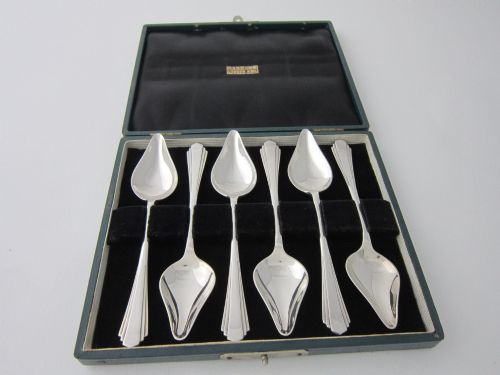
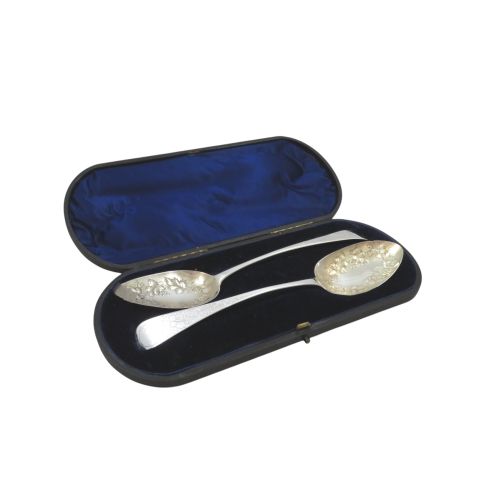
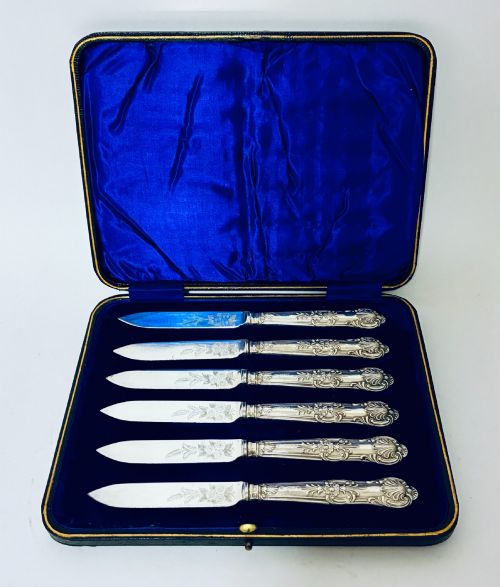
The pieces on this page span several eras, showing particular strength in the Victorian, Edwardian, and Georgian periods. You will frequently find sets comprising fruit knives, berry spoons, and grapefruit spoons, alongside boxed teaspoons and cake forks.
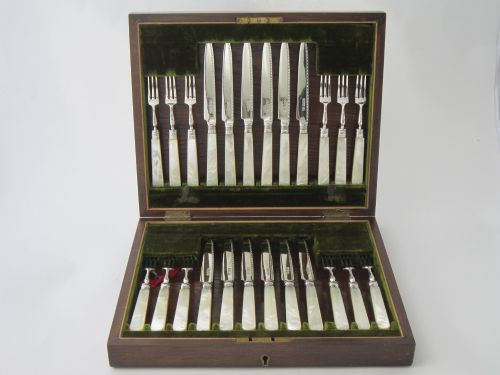
Origins stretch across the nineteenth and twentieth centuries, represented by sterling silver, silver plate, and steel blades paired with mother of pearl handles. The fitted boxes often feature leatherette or oak outer construction, preserving the contents securely within.
Materials and construction
Makers utilised sterling silver and silver plate for the bowls, tines, and blades, frequently applying gilding or ornate engraving to the metal surfaces. Handles were carved from mother of pearl or fashioned from silver, sometimes complemented by porcelain elements.
Presentation containers required specialist craftsmanship, employing wood frames covered in leatherette and lined internally with padded silk, satin, or velvet to cushion each individual implement. Hinges and catches were fitted precisely to secure the cutlery within the box.
Listings feature sterling silver and silver plate combined with mother of pearl, oak, velvet, and silk.
Judging the execution
Quality rests upon the crispness of the chasing and engraving on the silver, along with the uniformity and grain of the mother of pearl handles. Superior sets maintain matching hallmarks across every piece and display robust construction in the hinges and locks of the outer case.
The integrity of the interior lining also marks the distinction between standard and finer examples, with intact silk and velvet retaining the original fitted indentation for each utensil.
Carrington·Hukin & Heath
The Cased Dessert Cutlery Glossary
- Berry spoon
- A large spoon with an embossed or engraved bowl, typically designed for serving soft fruits.
- Mother of pearl
- The iridescent internal layer of mollusc shells, shaped and polished for knife and fork handles.
- Sterling silver
- An alloy containing a high proportion of pure silver, standard for quality tableware and marked with official assay stamps.
- Silver plate
- A base metal coated with a thin layer of silver, offering an alternative to solid silver sets.
- Grape shears
- Specialised scissors created for severing individual grapes from the bunch without damaging the fruit.
Cased Dessert Cutlery: Frequently Asked Questions
What is included in cased dessert cutlery?
Sets generally comprise knives and forks for fruit, alongside specialised pieces like berry spoons, grape shears, and cake forks. They are organised within a dedicated box.
Additional items such as sugar sifters or nutcrackers occasionally appear within larger fitted canteens.
How do I date a cased set?
Dating relies upon hallmarks stamped on the silver components, which indicate the assay office and year of manufacture. Stylistic indicators like Art Deco geometric lines or Victorian floral engraving also help determine the period.
The materials of the case, such as oak or leatherette, provide further contextual clues regarding the era.
Were these sets meant for everyday use?
They were produced primarily for formal dining and dessert courses in middle and upper-class households. The fitted cases protected the silver and mother of pearl between special occasions.
Consequently, many surviving sets retain their original presentation condition due to infrequent deployment.
How should I store cased cutlery?
Storage requires a stable environment away from direct sunlight and excessive humidity to protect the delicate silk or velvet interior linings. Keeping the box closed prevents tarnishing of the silver components.
Handling the mother of pearl gently prevents stress fractures along the natural grain of the material.