
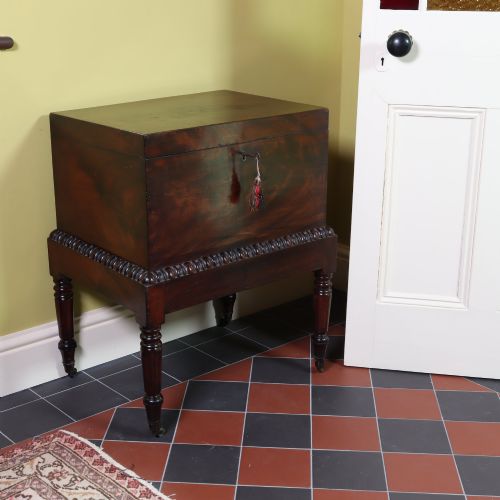

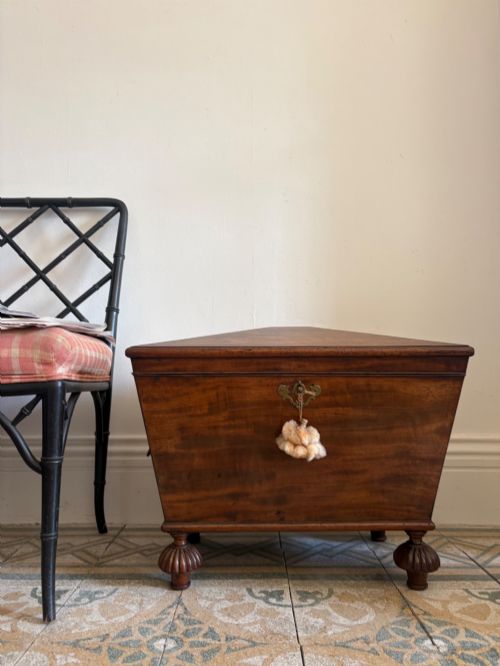


Carved Wooden Wine Cooler
A carved wooden wine cooler brings gravitas to a dining room, offering serious collectors a practical receptacle designed to keep bottles chilled in style.
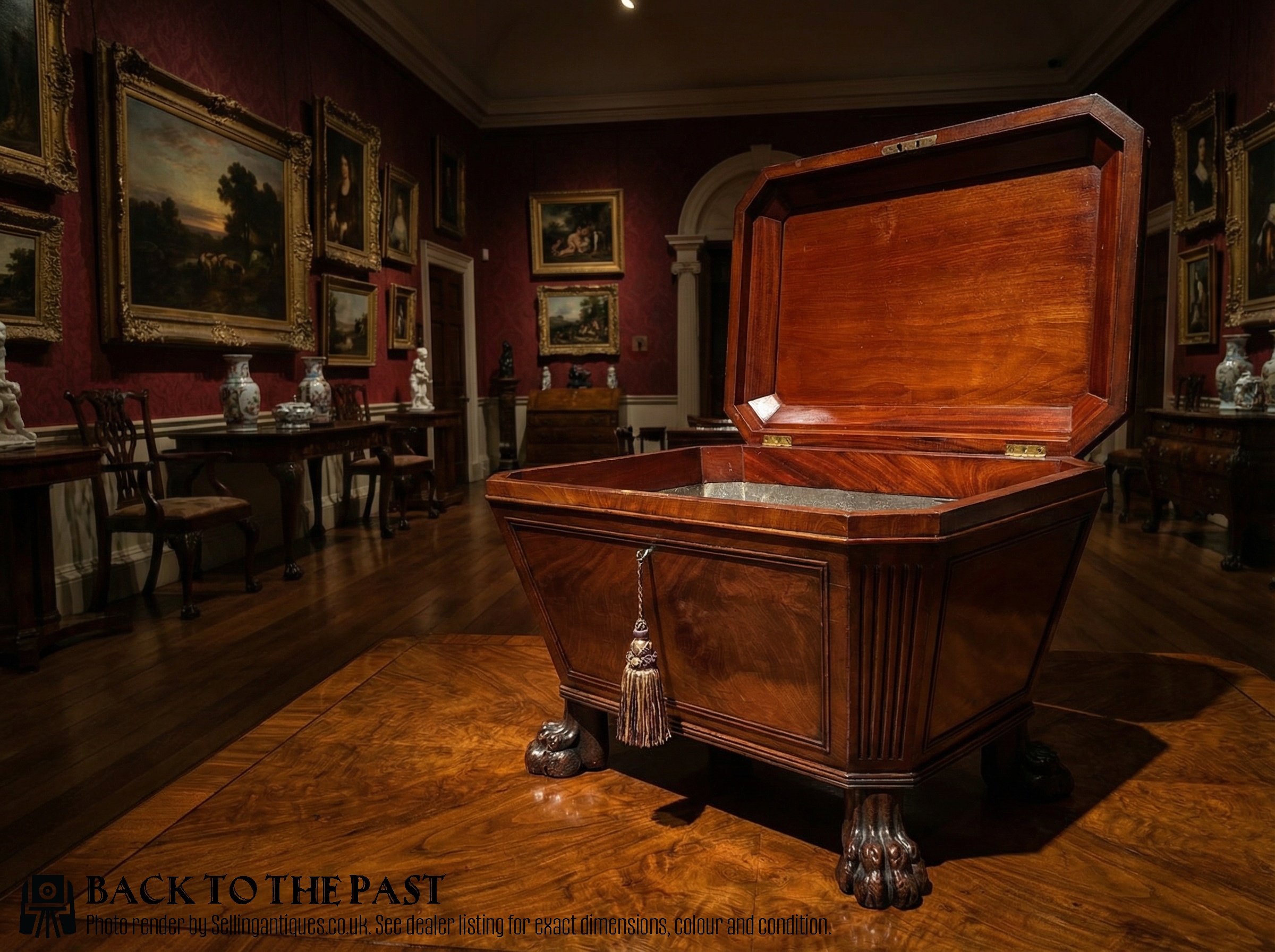
Carved Wooden Wine Cooler
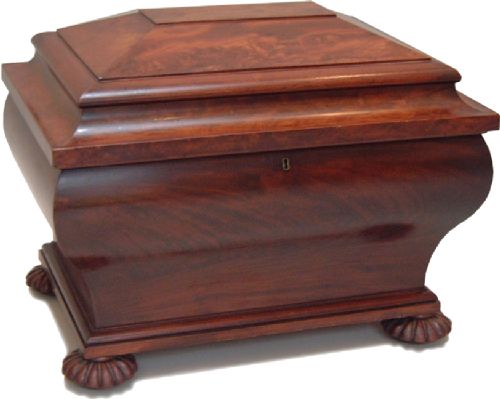
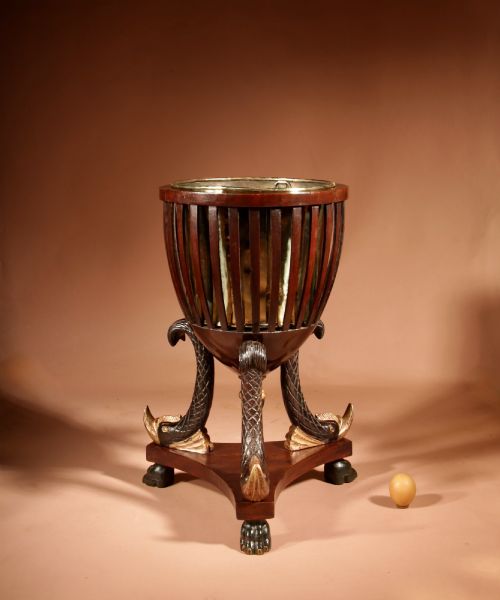
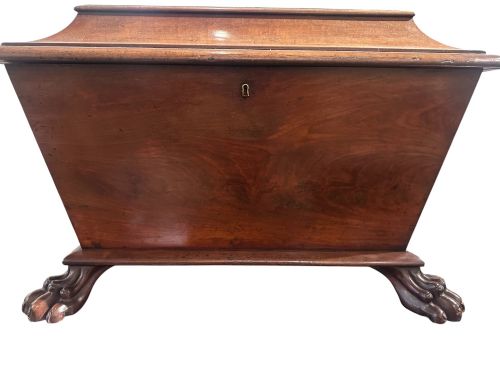
A carved wooden wine cooler takes several distinct architectural forms, most commonly the sarcophagus shape resting on paw feet, alongside freestanding tubs and bucket styles. These pieces span the Georgian, Regency, and Victorian periods, with William IV and Edwardian examples also appearing across the inventory.
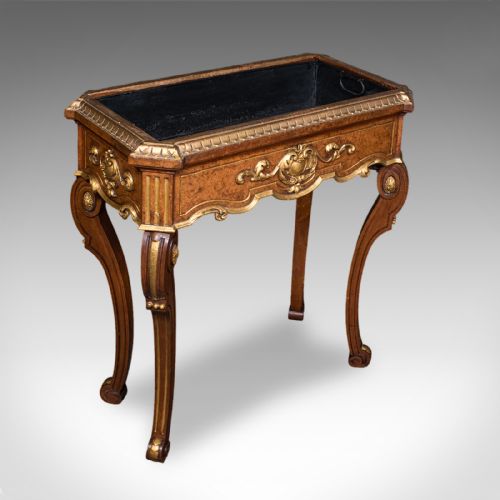
Buyers seeking a carved wooden wine cooler encounter robust English and Irish iterations in rich timbers, alongside continental French Empire and Dutch variants. These functional dining room additions often double as planters, jardiniere tables, or decanter caddies within historical domestic settings.
Materials and construction
Cabinetmakers utilised dense hardwoods such as mahogany, walnut, and oak, frequently selecting figured timber or flame veneers for visible surfaces to maximise visual depth. Carved ornamentation, ebonised details, and applied mouldings define the exterior aesthetic of these substantial vessels.
Internal functionality relied on metal components, predominantly original lead linings designed to hold melting ice, complemented by brass handles, bands, or paw feet. Structural integrity depended on heavy timber framing to support the significant weight of wet ice and glass bottles.
Judging execution and finish
Quality rests in the crispness of the timber carving and the sophistication of the cabinetmaker's joinery, distinguishing standard production from pieces bearing refined proportions. The choice of figured mahogany or burr elm veneers dictates the visual prestige of the exterior.
Provenance and maker attribution elevate certain items significantly, separating unmarked vernacular pieces from documented works by recognised cabinetmakers. The survival of internal lead linings and original brass mounts preserves the historical completeness of the object.
Freemans of Norwich·T.Feetham·Maples & Co·Robert Strahan & Co of Dublin·Gillows of Lancaster
The Carved Wooden Wine Cooler Glossary
- Cellarette
- A lockable container used for storing wine bottles near the dining table. They frequently mirror miniature sarcophagus architecture.
- Sarcophagus
- A tomb-like architectural shape with sloping sides, popular for Regency and Georgian wine coolers. This heavy form suits monumental dining room interiors.
- Jardiniere
- An ornamental stand or pot intended for holding plants and flowers. These share construction techniques and timber vocabularies with wine coolers.
- Paw foot
- A carved furniture foot resembling an animal's paw. They appear frequently on Regency and William IV supports.
Carved Wooden Wine Cooler: Frequently Asked Questions
What is a cellarette?
A cellarette is a historical container specifically built to hold and cool wine bottles near the dining table before service.
These pieces typically feature heavy timber construction and internal compartments designed for ice and bottles.
How were wine coolers lined?
Period wine coolers relied on metal inserts, most frequently lead, to contain melted ice water without damaging the surrounding wood.
Some later examples incorporate brass banding or modern metal substitutes to secure the internal structure.
Where were wine coolers placed?
Dining rooms accommodated these large vessels directly beneath sideboards or freestanding near the main dining table for easy access during meals.
Their substantial weight and size meant they remained stationary rather than moving around the home.
How to date a wine cooler?
Dating relies on identifying the prevailing architectural style, such as Georgian sarcophagus forms, Regency paw feet, or Victorian proportions.
Timber choice and construction methods, including the presence of flame mahogany or ebonised wood, provide further chronological clues.