




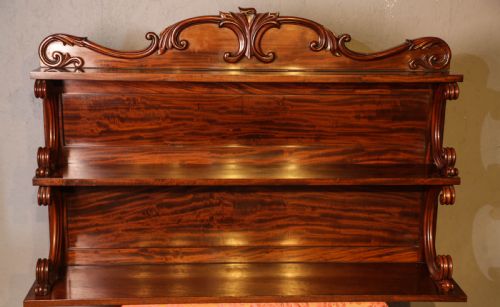
Carved Wooden Wall Rack
A carved wooden wall rack organises everyday items with distinct craftsmanship, ranging from simple country pine plate holders to elaborate Black Forest animal carvings.
Carved Wooden Wall Rack
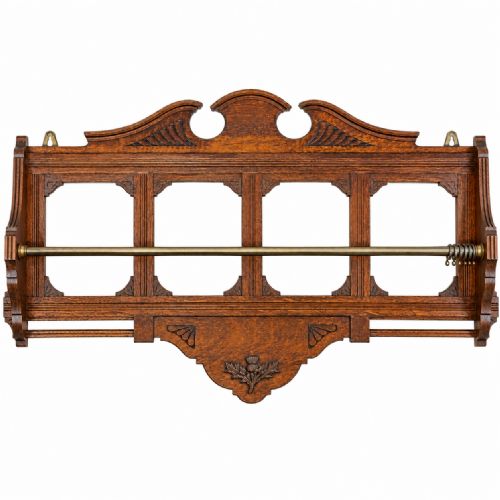
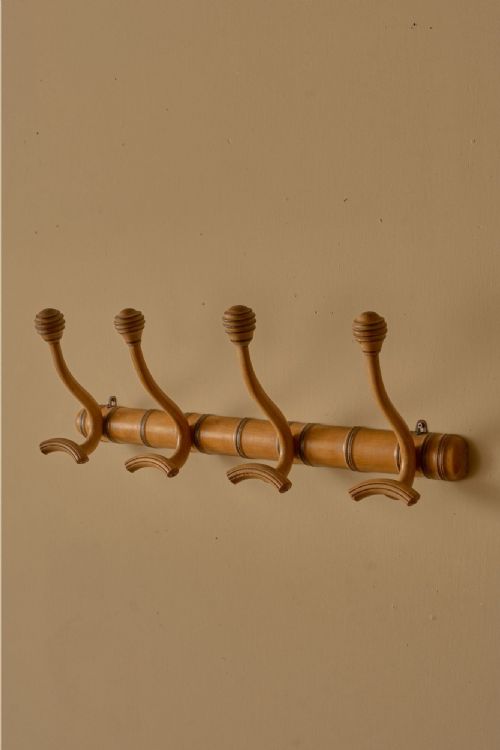
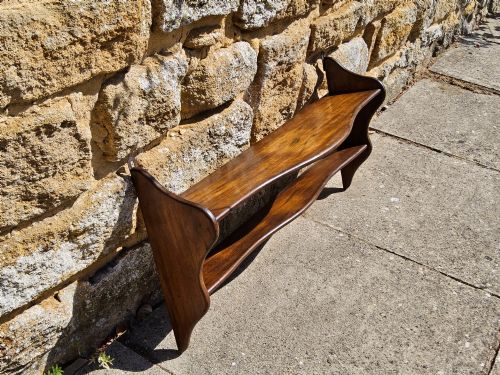
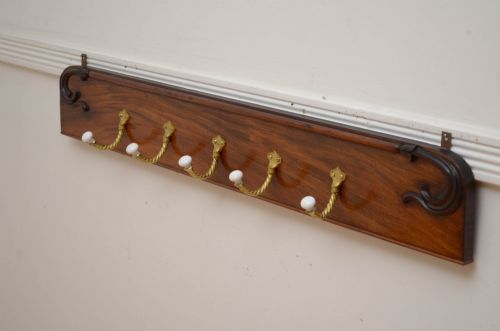
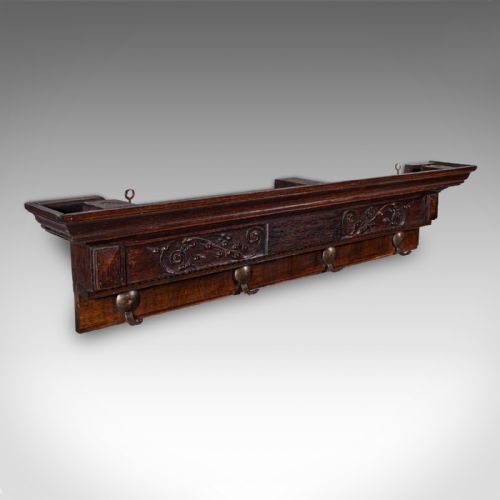
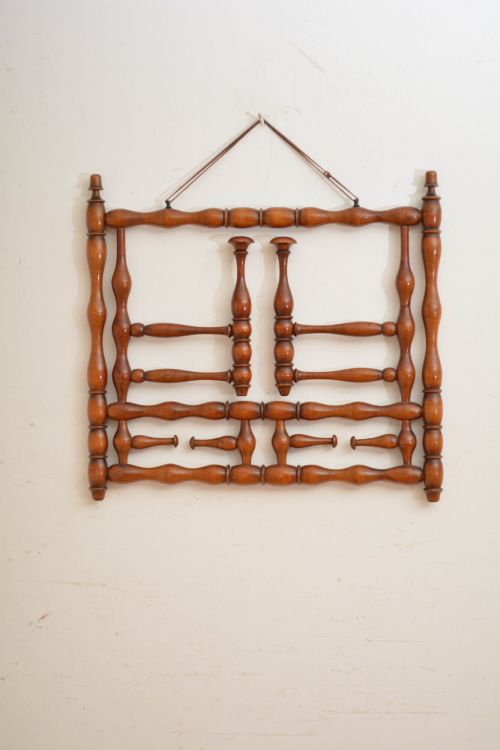
A carved wooden wall rack serves as both a practical holder and a decorative fixture, appearing in forms such as coat racks, wall shelves, plate racks, and spoon racks when you search for this phrase. These functional pieces accommodate hats, coats, cutlery, or ceramics in domestic hallways, kitchens, and reception rooms.
The selection on this page draws from the eighteenth, nineteenth, and early twentieth centuries, spanning periods from Georgian country furniture to Victorian Gothic Revival and Edwardian designs. Oak and mahogany dominate the timber choices, though walnut, pine, and linden wood also appear frequently.
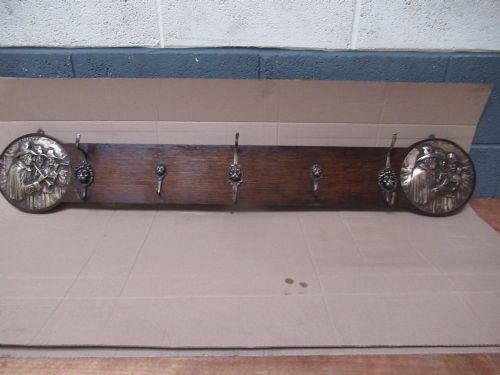
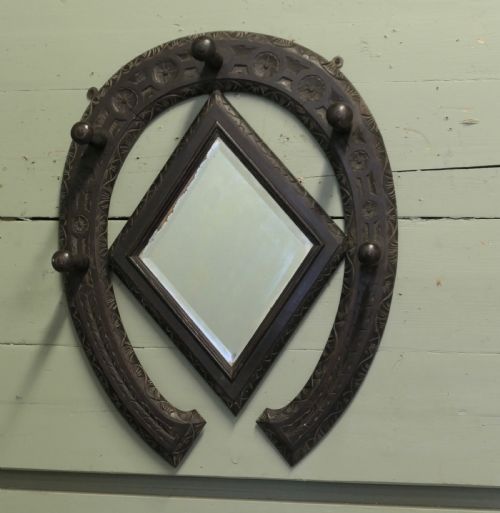
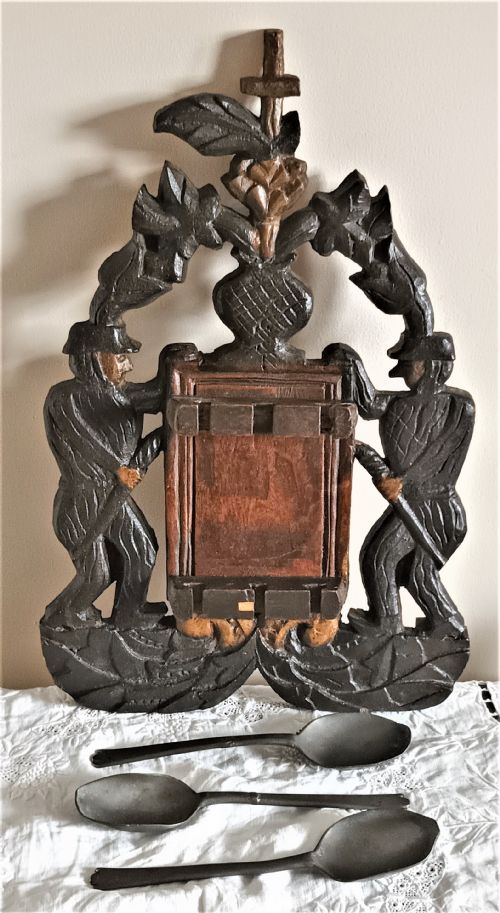
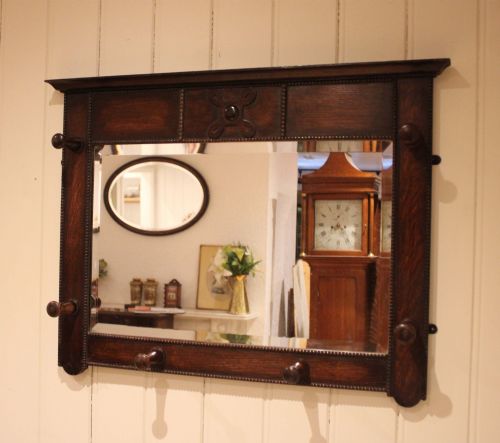
Domestic pieces range from sturdy utilitarian oak coat racks with brass or ceramic hooks to ornamental Black Forest carvings featuring animal heads and gnomes. Buyers encounter everything from slim wall hanging shelves to combined mirror and hat stands suited for period hallways.
How they were made
Cabinet makers and vernacular craftsmen utilised solid hardwoods like oak, mahogany, and walnut, alongside softer timbers such as pine and linden wood for intricate carving work. Surfaces often display hand-turned wooden pegs, deep bevelling on mirror plates, or hand-painted details.
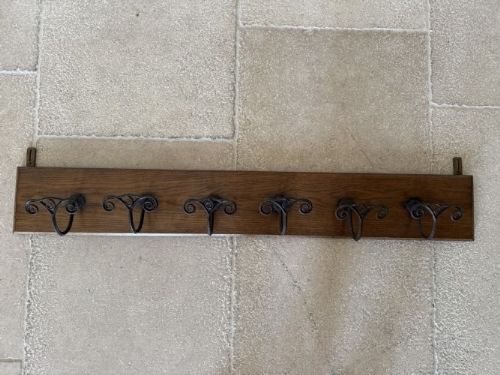
Metal elements form an integral part of the construction, with brass, wrought iron, and pewter appearing as hooks, trefid spoons, or structural supports. Joinery methods reflect the period of origin, combining pegged mortise and tenon joints on earlier pieces with later nineteenth-century manufacturing techniques.
Carved Wooden Wall Rack Retail Price Guide 2026
Typical asking prices for carved wooden wall rack among the pieces listed under this phrase on Sellingantiques today, from the lower quarter to the upper quarter. They describe what is for sale here now, not the wider market.
What varies in quality
The depth and precision of the carving separate standard utility items from exceptional artistic examples, particularly within Black Forest and folkloric pieces where anatomical detail defines the work. Timber selection also drives distinction, moving from straightforward pine or utility oak to finely figured mahogany, satin birch, and golden oak.
Original hardware integrity maintains the value of a piece, distinguishing items that retain their period brass hooks, ceramic points, or pewter spoons from those with later replacements. The overall scale, proportion, and survival of original surface patination determine how successfully a rack holds its historic character.
The Carved Wooden Wall Rack Glossary
- Black Forest
- A style of wood carving originating from the Swiss and German border regions during the nineteenth century. These pieces typically depict naturalistic animals, foliage, and folkloric figures with deep relief work.
- Trefid Spoon
- An early form of spoon featuring a flat, three-lobed terminal handle shape. They frequently accompany antique spoon racks from the seventeenth and eighteenth centuries.
- Plate Rack
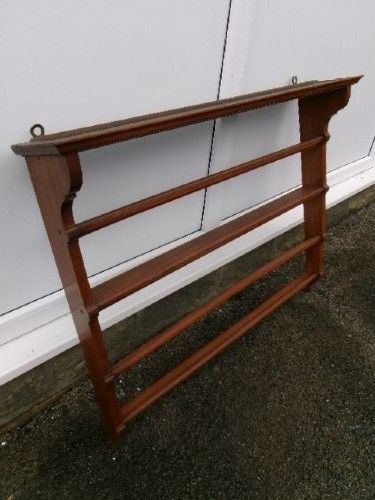
- A wall-mounted wooden frame designed to display and store ceramic plates upright. Examples range from simple eighteenth-century oak designs to country delft racks incorporating architectural columns.
- Delft Rack
- A traditional open wall shelf structure intended for the display of imported tin-glazed earthenware and tableware. These often feature shaped friezes and plate grooves.
- Hall Stand
- A larger entranceway furniture combination incorporating wall hooks, mirror plates, and umbrella stands. They bring together multiple storage functions into a single carved wooden fixture.
Carved Wooden Wall Rack: Frequently Asked Questions
How do I clean a carved wooden wall rack?
Dust the carved recesses regularly using a soft-bristled brush to prevent dirt accumulation within the detailed woodwork. Avoid harsh chemical cleaners and apply a traditional beeswax polish sparingly to maintain the timber finish.
Keep wooden racks away from direct heat sources and strong sunlight to prevent the timber from drying out and splitting over time.
Were these racks made for kitchens or hallways?
Their placement depended entirely on the specific form and room layout. Plate and spoon racks belonged in kitchens and dining spaces, while coat and hat racks served entrance halls and cloakrooms.
Many multi-functional pieces combined wall shelves, mirrors, and hooks together to serve reception areas and narrow passageways efficiently.
How can I tell an eighteenth-century rack from a Victorian one?
Examine the timber selection, construction joints, and overall aesthetic style of the piece. Eighteenth-century examples generally utilise heavy native oak or pine with pegged joinery and vernacular detailing like Corinthian columns.
Victorian and later pieces often introduce exotic timbers such as mahogany or walnut, alongside machine-sawn components, bevelled mirror plates, and varied revival styles.