





Carved Wooden Saint
A carved wooden saint brings centuries of devotional devotion and workshop craftsmanship straight into a modern interior.
Carved Wooden Saint
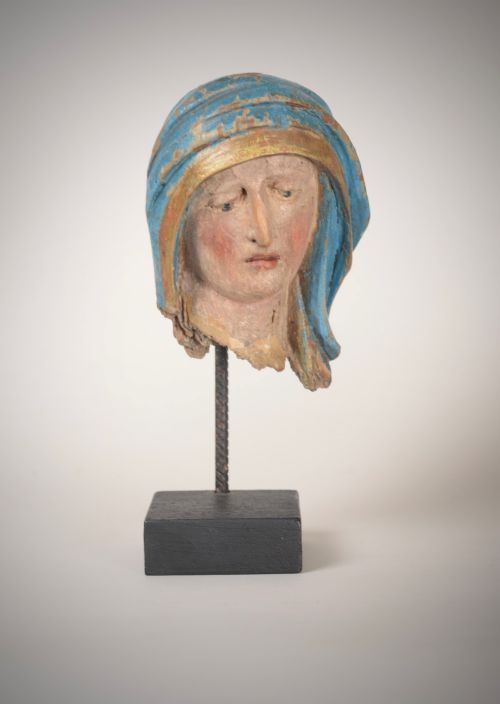
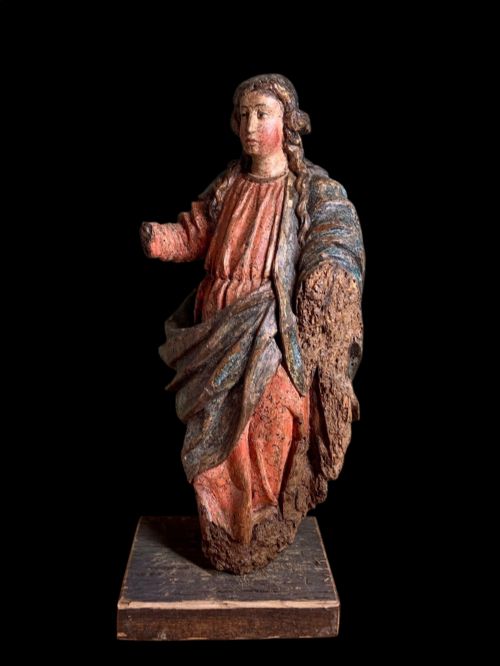
A carved wooden saint represents holy figures, bishops, and martyrs shaped from timber across the medieval, Renaissance, and Baroque periods. These religious sculptures served churches, home altars, and processional rituals throughout Europe, spanning French, German, Italian, and Spanish traditions.
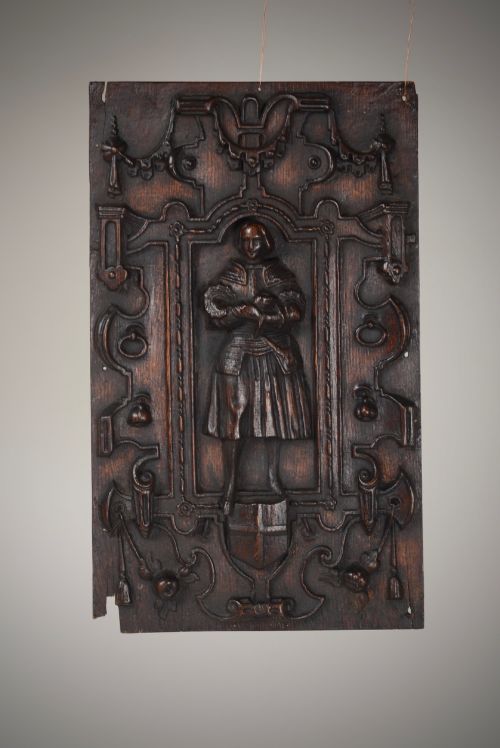
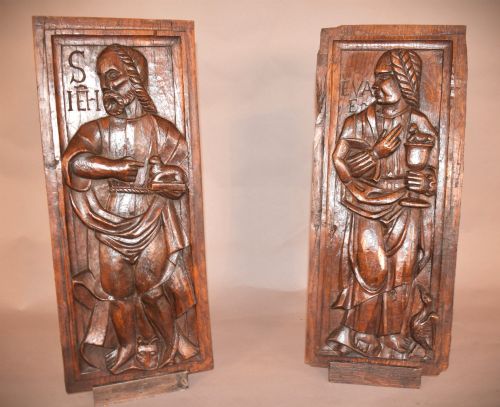
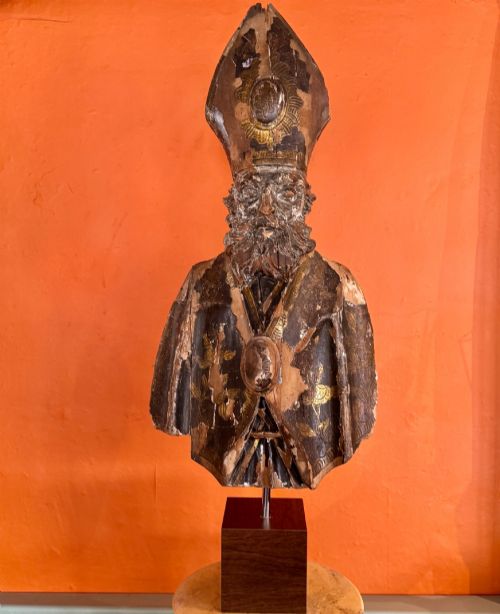
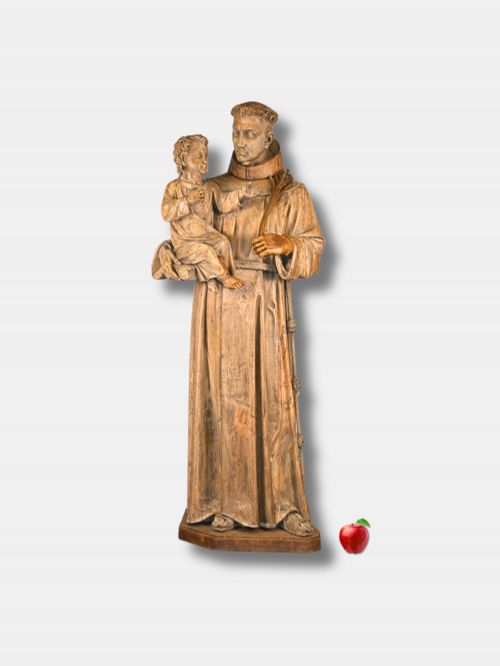
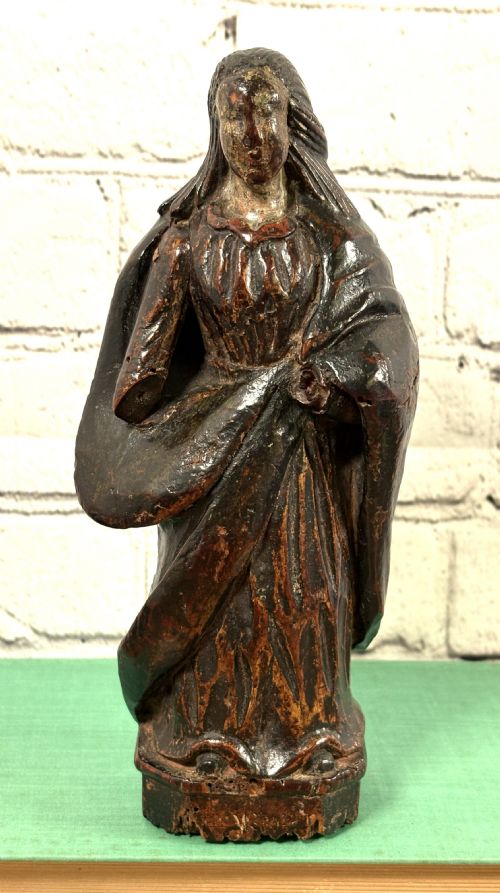
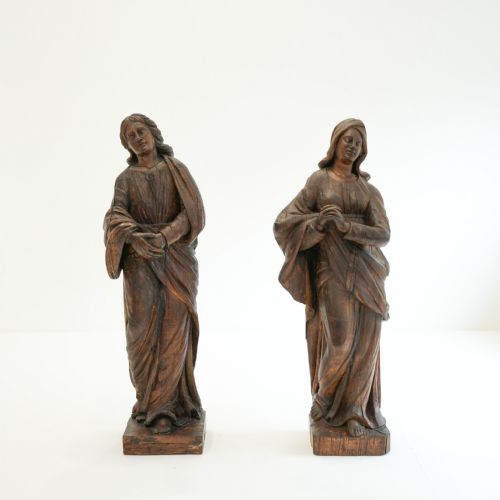
The versions most commonly met on this page include 17th-century and 18th-century Continental figures, alongside earlier Gothic oak examples and later folk art pieces. Collectors encounter full-size statues, panel reliefs, architectural fragments, and bust formats depicting specific figures like St. Anthony, the Virgin Mary, and various apostles.
Makers shaped these devotional objects to inspire contemplation, often employing regional stylistic traits associated with Spanish Baroque or late Gothic workshops. Each surviving sculpture bears the physical marks of its original ecclesiastical or domestic setting.
Materials and construction methods
Carvers primarily utilised dense local timbers, frequently selecting oak, limewood, applewood, or walnut depending on the regional tradition. Oak predominated in earlier Gothic commissions, whereas Continental workshops often favored limewood for its receptive grain during intricate carving.
Many surfaces received a preparation layer of gesso before painters applied polychrome pigments, metallic leaf, or gilding. This layered finish provided vivid colour and luminosity to figures intended for dim church interiors or domestic devotional spaces.
The listings span multiple centuries, ranging from pre-sixteenth-century Gothic oak statues to twentieth-century folk art pieces.
Assessing sculptural quality
Quality rests upon the confidence of the carving, seen in the fluid movement of drapery folds, the anatomical articulation of hands and faces, and the expressive depth given to the subject. Superior pieces display masterly chisel work that breathes life into timber.
The survival of original polychrome paint, gesso, and gold leaf significantly elevates a piece, whereas heavy overpainting or stripped timber alters the historical integrity. The proportion and presence of the sculpture within its original stylistic canon dictate its standing among collectors.
Franz Keller
The Carved Wooden Saint Glossary
- Polychrome
- Painted in several colours. This surface treatment was applied over gesso to render garments and flesh tones lifelike.
- Gesso
- A plaster mixture used as a smooth base for paint or gold leaf. It adhered directly to the carved wood surface.
- Giltwood
- Wood that has been decorated with gold leaf. It catches candlelight effectively in ecclesiastical settings.
- Capipote
- A Spanish devotional figure with a carved head and hands attached to a framework. The body structure supported elaborate fabric vestments.
- Gothic
- A medieval art style spanning the twelfth to the sixteenth centuries. It is characterised by pointed arches and naturalistic figurative sculpture.
Carved Wooden Saint: Frequently Asked Questions
How were these figures originally displayed?
These sculptures stood upon altars, within architectural wall niches, or inside portable domestic shrines for private prayer.
Larger statues also participated in religious processions through town streets, mounted on specialised platform bases.
How can I tell a Gothic figure from a Baroque one?
Gothic examples feature stiff, linear drapery and solemn, restrained facial expressions typical of medieval workshops.
Baroque sculptures display dramatic movement, swirling garments, and emotional intensity designed to engage the viewer.
Should I clean the original paint?
Original painted surfaces require minimal intervention to preserve historical pigment layers and underlying gesso preparation.
Professional conservation advice ensures that fragile finishes avoid damage from improper cleaning methods.
What does a capipote figure involve?
A capipote consists of a carved wooden head and hands mounted to an internal armature rather than a fully carved body.
These figures were dressed in authentic textiles that changed according to liturgical seasons.