




Carved Wooden Religious Icon
These carved wooden religious icon pieces bring centuries of devotion into domestic spaces.
Carved Wooden Religious Icon
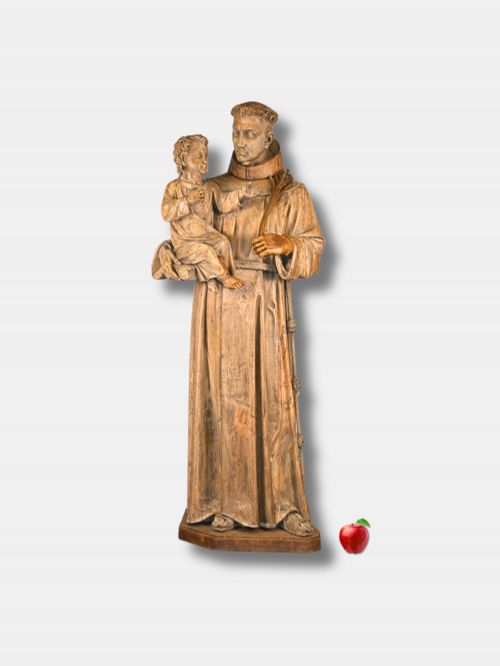
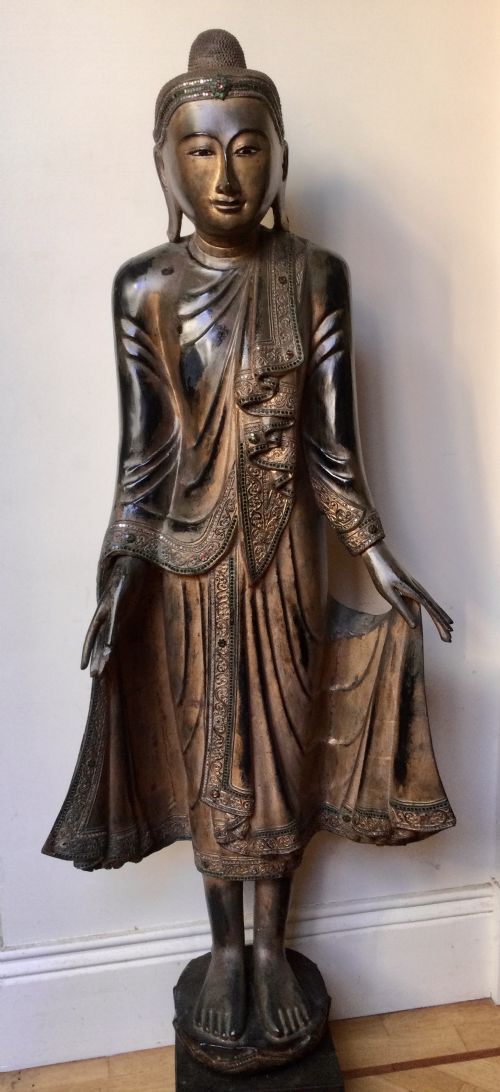
A carved wooden religious icon represents figures of faith from various traditions, appearing as standing statues, framed saints, home altars, and shadowboxes. The selection spans multiple centuries, offering figures such as the Virgin Mary, Saint Anthony, the Goddess Parvati, and various depictions of Christ.
Most examples found here date from the seventeenth and nineteenth centuries, reflecting European, Spanish, and folk art traditions. Buyers encounter everything from life-size French statues to smaller Spanish pietas and German giltwood figures.
Object types range from single carved figures of saints to complex groupings like a mother and child or framed devotional panels. Each piece serves as a physical focal point for prayer or contemplation within historical homes.
Materials and construction methods
Many surfaces received layers of gesso to smooth the wood before receiving polychrome paint or gold leaf applications. This technique created vibrant, lifelike colours and rich gilded highlights that defined the robes and halos of the figures.
St. Roche usually travels with his faithful dog, a sculptural detail that unfailingly greets every viewer with quiet charm.
Evaluating sculptural quality and detail
The sophistication of the hand-carving determines much of the visual impact, separating rigid folk art carvings from more fluid Baroque sculptural work. Drapery folds, facial expressions, and hand gestures reveal the maker's anatomical understanding and skill.
The preservation of original surface treatments, such as polychrome paint and giltwood layers, significantly influences the integrity of each piece. Surviving historic pigments and gilding provide a direct connection to the period of origin.
The Carved Wooden Religious Icon Glossary
- Polychrome
- Decorated in multiple colours. This term describes wooden sculptures painted with historical pigments to render flesh tones and garments realistically.
- Giltwood
- Wood carved and then covered with thin sheets of gold leaf. It creates a luminous, reflective surface often seen on devotional frames and saintly halos.
- Gesso
- A plaster mixture applied to wood surfaces as a base. It prepares the timber for subsequent painting and gilding by creating a smooth, absorbent ground.
- Pieta
- A subject depicting the Virgin Mary holding the dead body of Christ. It is a common sculptural theme in Spanish and European religious art.
- Santos
- A carved wooden saint or religious figure. These statues frequently served a central role in domestic and church shrines.
Carved Wooden Religious Icon: Frequently Asked Questions
How do I display a carved wooden religious icon?
Place these sculptures on stable mantels, tabletops, or inside dedicated display cabinets away from direct heat sources. Ensuring adequate support protects projecting elements like hands or garments from accidental damage.
Framed saints and shadowboxes mount securely to walls using appropriate hardware designed for the weight of dense historic timbers.
What periods do these carvings come from?
The available pieces originate primarily from the sixteenth, seventeenth, eighteenth, and nineteenth centuries. Each era brings distinct stylistic traits, ranging from Gothic Revival elements to Spanish Baroque exuberance.
Folk art interpretations from the nineteenth and early twentieth centuries also appear, showing regional craft traditions.
How should I clean a historic wooden carving?
Dust the surfaces gently with a soft, dry, lint-free cloth or a clean artist's brush. Avoid using water, chemical polishes, or liquid cleaners, as moisture damages aged wood, gesso, and historic paint layers.
Regular, gentle maintenance preserves the delicate polychrome pigments and giltwood finishes without stripping away centuries of patina.
Are these pieces from churches or homes?
These sculptures served both large ecclesiastical settings and private domestic spaces. Home altars and shadowboxes were designed specifically for personal daily devotion within family residences.
Larger statues often originated from institutional or parish settings before entering private collections.