


Carved Wooden Portrait
A carved wooden portrait captures human likeness through the direct interplay of chisel and grain, offering collectors a tactile immediacy missing from flat paint.
Carved Wooden Portrait
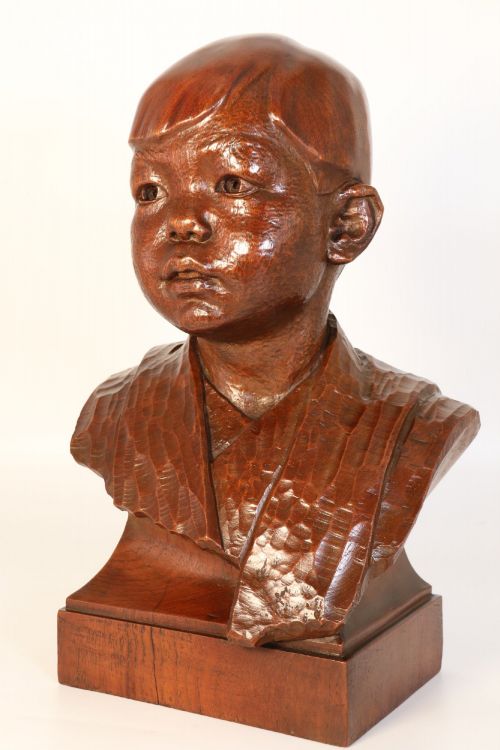
A carved wooden portrait brings three-dimensional presence to historical faces, ranging from lifelike walnut sculpture busts of boys to expressive pear wood heads of older women. Collectors searching for a carved wooden portrait encounter varied interpretations spanning centuries, from Italian polychrome statues and Gothic Revival oak plaques to early twentieth-century folk art milliner heads.
The objects take several distinct forms across different centuries and origins. Examples include nineteenth-century mahogany wall plaques depicting composers, colonial tribal masks, and robust depictions of historical figures like Oliver Cromwell carved from chunky wood.
Makers approach the human countenance with varying degrees of anatomical precision and stylised regional charm. Certain pieces emerge from academic European workshops, while others reflect vernacular folk traditions found across British, continental, and global sources.
Materials and Construction
Carvers select dense hardwoods capable of holding fine micro-detailing under sustained tool pressure. Walnut, mahogany, oak, and pear wood provide the stable cellular structure required for carving intricate hair strands, facial wrinkles, and drapery folds.
Master carvers utilise specialised gouges, chisels, and parting tools to carve directly from solid timber blocks. Surface finishes vary from untreated natural timber and applied polychrome paint to subtle wax polishes that nourish the grain over generations.
Listings feature walnut, oak, mahogany, and pear wood, alongside folk art, Gothic Revival, and Victorian styles spanning the seventeenth to twentieth centuries.
Assessing Quality and Execution
Quality rests upon the carver's command of anatomy and psychological depth. Superior pieces capture personality, tension in the jaw, and liveliness in the gaze, whereas lesser works remain stiff, flat, and mechanically rendered.
The crispness of the tool marks and the sensitivity paid to the natural grain dictate the upper tier of carving. Finer works demonstrate confident undercuts and restrained finishing that allows the organic character of the wood to support the portrait's expression.
George Henry Paulin RBS·Boudewijn Tuerlinckx·V Ramirez Bolivia
The Carved Wooden Portrait Glossary
- Polychrome
- Painted in several colours. This surface treatment appears on historical statues to render skin tones and garments with realistic or decorative effect.
- Plaque
- An ornamental tablet flat on one side for mounting on a wall. These carved wooden portrait pieces often depict historical subjects in low or high relief.
- Bust
- A sculpture depicting a person's head, shoulders, and chest. In wooden portraits, these standalone pieces highlight the subject's posture and facial structure.
- Folk Art
- Art produced from an indigenous culture or peasant society. These pieces show unacademic, direct handling of materials by regional makers.
Carved Wooden Portrait: Frequently Asked Questions
How do I clean a wooden portrait?
Dust gently using a dry, soft bristle brush to protect delicate carved details and prevent moisture damage to aged timber.
Avoid liquid cleaners, polishes, or silicones entirely, as these substances penetrate the grain and darken vulnerable patinas over time.
Where should I display my carving?
Position the piece away from direct sunlight and heat sources to prevent the wood from drying out, shrinking, or splitting.
Stable indoor humidity levels ensure the timber remains secure and prevents stress on historical joints and polychrome surfaces.
How do I date older wooden carvings?
Examine tool marks left behind by the maker, noting whether hand gouges or mechanical saws shaped the reverse and interior.
Compare the subject's clothing, hairstyle, and facial presentation alongside known period styles to narrow down the decade of creation.
Are all wooden portraits signed?
Signatures occur infrequently on older vernacular items, as many historical carvers worked anonymously within regional workshops.
Signed pieces usually emerge from the nineteenth and twentieth centuries, bearing artist incisions directly into the base or rear.