


Antique Wood Statuette
These antique wood statuette examples capture centuries of carving skill, offering characterful figures and animals to enrich any interior space.
Antique Wood Statuette
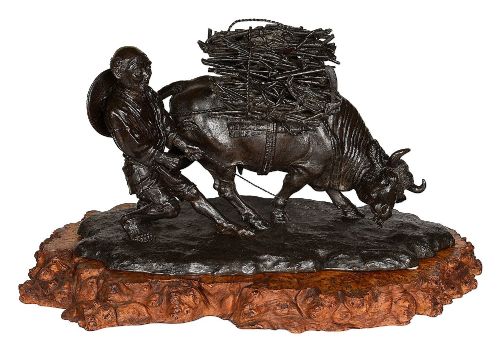
An antique wood statuette encompasses carved figures, animals and decorative sculptures produced across the eighteenth and nineteenth centuries. These pieces range from European Black Forest animal studies to Japanese Meiji period wood netsuke and okimono figures.
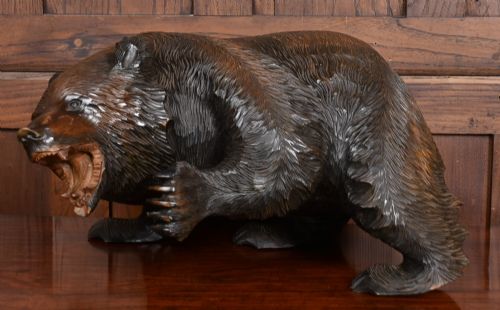
Buyers will encounter diverse regional traditions on this page, including Swiss or German Black Forest carvings, Anglo-Indian hardwood animals, and Georgian or Victorian figures. Forms vary from realistic depictions of wildlife like bears and horses to historical portraits and religious subjects.
The selection reflects both European workshop output and Asian craftsmanship, utilising materials such as walnut, oak, boxwood, and linden wood. Each statuette serves as a standalone decorative sculpture or a detailed study of its subject.
How they were made
Carvers shaped these objects using a variety of woods including walnut, boxwood, oak, linden wood, and ebony, sometimes combining them with bone or bronze elements. Skilled hands utilised specialised chisels and gouges to render fine textures such as fur, plumage, and drapery.
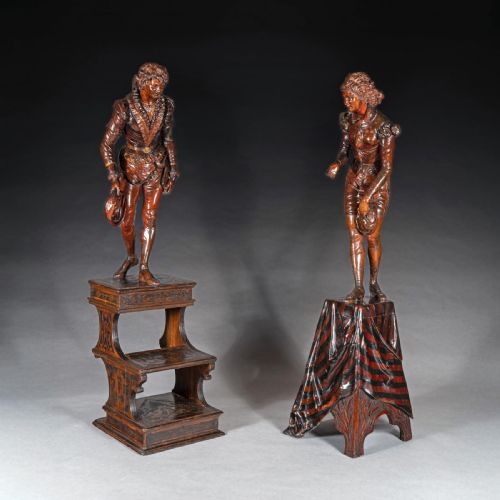
Many European and Japanese works received surface treatments such as polishing, waxing, or polychrome detailing to enhance the natural grain and colour of the timber. Certain Italian pieces incorporate gilt-wood finishes or rest upon dedicated wooden bases.
Several carvings immortalize specific animals, including a Belgian draught horse stallion, a female ibex, and the Pied Piper of Hamelin.
What varies in quality
Quality rests upon the precision of the carving, visible in the anatomical accuracy of animals, the expressiveness of human faces, and the crispness of fine details like fur and clothing folds. Superior pieces demonstrate a confident hand that commands proportion and depth without stiffness.
The choice and preparation of the wood also dictate worth, with dense timbers like boxwood or well-figured walnut allowing for sharper, more enduring sculptural definition. Maker attribution or signature, such as those found on select Japanese okimono or European artist-carved works, further elevates a piece.
Valentino Besarel·Simon Troger·Tomochika
The Antique Wood Statuette Glossary
- Okimono
- A Japanese ornamental carving designed for display, typically depicting animals, figures, or folklore subjects.
- Black Forest
- A style of wood carving originating from the Swiss-German region, renowned for realistic animal studies and woodland themes.
- Netsuke
- A small Japanese toggle carved from wood or other materials, featuring a channel for a cord.
- Polychrome
- Painted or decorated in several colours, adding vibrant surface detail to the carved wooden form.
- Gilt-wood
- Wood that has been coated with a thin layer of gold leaf or gilt, often seen on decorative bases or frames.
Antique Wood Statuette: Frequently Asked Questions
How do I care for wooden sculptures?
Preserve your carvings by keeping them away from direct sunlight and sudden temperature shifts, which can cause the wood to dry out and split. Dust gently with a soft, dry cloth rather than using liquid polishes or chemical cleaners.
Maintaining a stable indoor humidity level ensures the timber remains stable over decades of display.
How are different periods identified?
Period identification relies on examining the tool marks, the choice of timber, the style of clothing or anatomy, and any signature or stamps. European Black Forest pieces often display distinct cross-hatching and naturalistic woodland motifs characteristic of the nineteenth century.
Earlier eighteenth-century works frequently feature denser hardwoods and distinct drapery styles that reflect neoclassical or baroque influences.
Where were these carvings made?
These carvings originate from diverse global workshops, including traditional European centres in Germany, Switzerland, Italy, and Flanders. Other prominent examples hail from Japan during the Meiji period and from British-administered India during the Raj period.
Each region utilised locally available hardwoods and distinct regional iconography to shape their sculptures.