
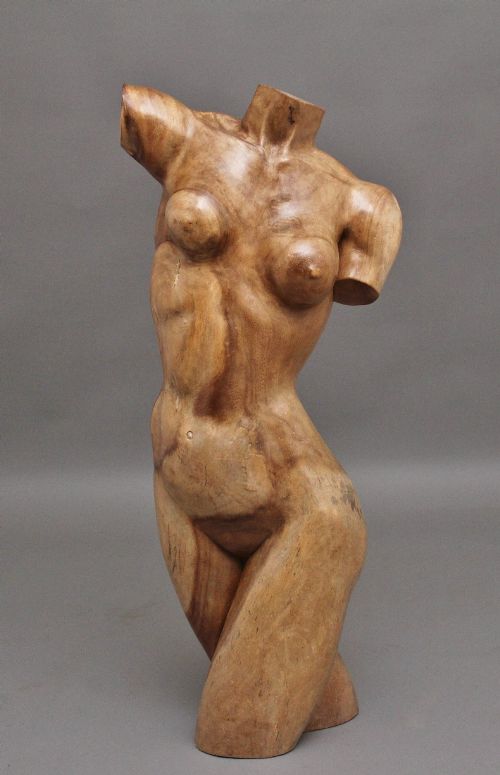
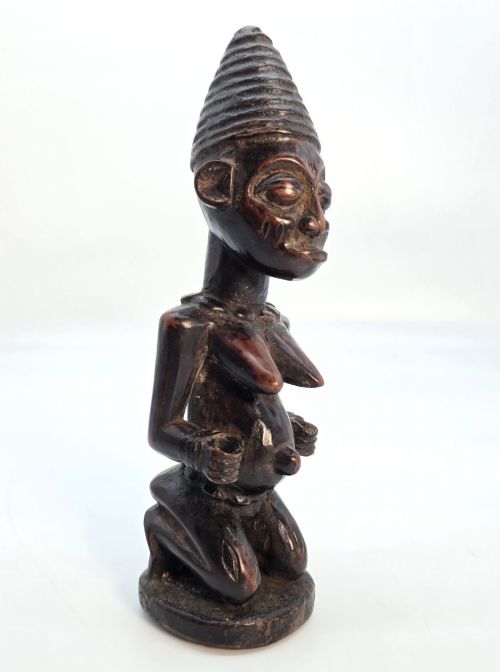
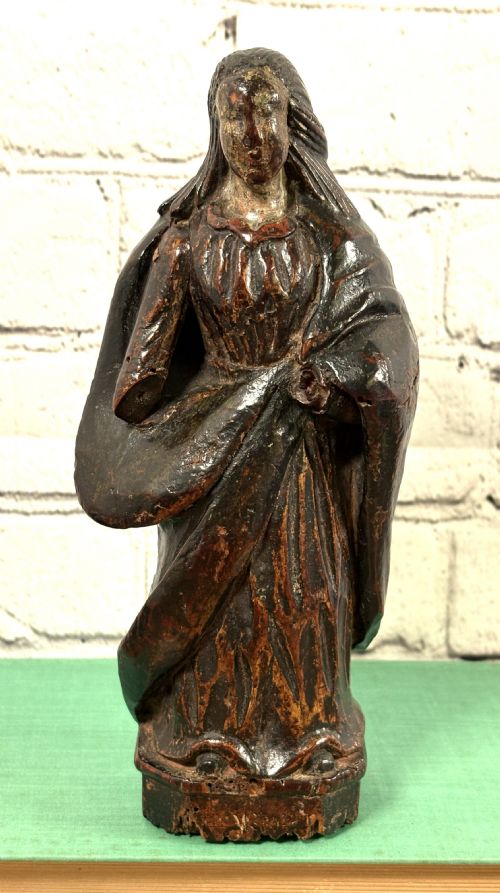


Carved Wooden Female Figure
A carved wooden female figure brings centuries of sculpture, folk art and architectural salvage directly into a room.
Carved Wooden Female Figure
A carved wooden female figure encompasses everything from 17th century limewood saints and Flemish caryatids to 19th century African tribal fertility figures and Victorian Black Forest coat hooks. These objects function variously as freestanding sculptures, architectural elements, candlesticks, and artist lay figures for studios.
The versions most commonly met on this page range from European religious carvings and Grand Tour mythological figures to tribal sculptures from African regions such as Mali and Angola. Forms extend from life size torsos and wall panels to articulated mannequins and detailed portrait busts.
Materials and technique
Carvers shaped these figures predominantly from hardwoods like oak, chestnut, and limewood, utilising traditional hand tools to establish deep relief and intricate detailing. Selected pieces retain remnants of polychrome paint or surface treatments applied directly to the grain.
Articulated examples incorporate metal pins and joints to permit movement, particularly in artist lay figures and mannequins designed for drawing studios. Architectural carvings such as caryatids and herms were integrated directly into structural timber frameworks.
Listings span multiple centuries, ranging from 16th century wooden busts to mid 20th century African tribal sculptures.
The measure of quality
Quality rests upon the anatomical proportion, the sensitivity of the facial expression, and the confidence of the tool marks left by the carver. Masterpieces show a fluid understanding of drapery and muscle structure, whereas lower tiers display stiff posture and perfunctory detailing.
The integrity of the original surface patina heavily dictates the stature of a piece. Retained tool work and untouched aged finishes elevate a sculpture far above examples suffering from excessive over-cleaning or unsympathetic modern repairs.
Hans Müller
The Carved Wooden Female Figure Glossary
- Caryatid
- A carved female figure serving as an architectural support column or pillar. These architectural elements often appear flanking fireplaces or doorways.
- Limewood
- A fine-grained timber favoured by European carvers for intricate detail work. This wood accepts crisp undercutting without splintering.
- Lay figure
- An articulated wooden mannequin used by artists to study drapery and human posture. These joints allowed studios to pose the figure accurately for extended periods.
- Polychrome
- Painted in several colours, often seen on religious figures and folk art carvings. This surface treatment was traditionally applied over a gesso ground.
- Herm
- A carved bust or upper torso surmounting a plain tapering pillar. Originating in classical antiquity, these forms often served as boundary markers or architectural supports.
Carved Wooden Female Figure: Frequently Asked Questions
How were caryatids used in buildings?
Architectural caryatids functioned as structural load-bearing supports disguised as human figures. They stood as columns or pilasters on buildings and furniture.
Over time, many of these architectural elements were salvaged from demolished structures to be displayed as standalone sculptures.
What is an artist lay figure?
An artist lay figure is an articulated wooden mannequin designed to hold specific poses for painters and sculptors. They helped artists render complex drapery and human anatomy accurately in the studio.
These functional workshop tools now survive as sculptural objects in their own right.
How do I care for old wood carvings?
Old wooden sculptures require stable indoor humidity away from direct heat sources and sunlight to prevent the timber from splitting. Dust them gently with a soft dry cloth without applying modern liquid polishes.
Maintaining a consistent environment preserves both the original wood grain and any historic surface patina.
What defines Black Forest carvings?
Black Forest carvings originate from the wooded mountain region of Central Europe during the nineteenth century. Artisans carved domestic items, animals, and figures deeply from local linden and walnut woods.
These pieces are easily recognised by their hyper-realistic textures and naturalistic subjects.