
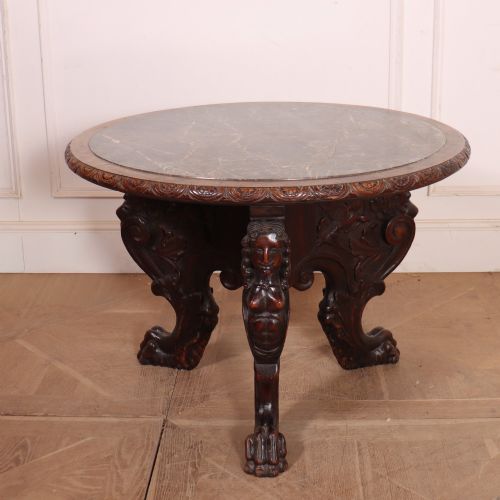


Caryatid Table Lamps
Caryatid table lamps bring classical sculpted figures into domestic lighting, offering sculptural presence alongside illumination.
Caryatid Table Lamps
When you search for caryatid table lamps, you find figurative supports taking the place of standard columns. These pieces appear across the nineteenth century alongside earlier revival iterations.
The selections here span French Neoclassical, Louis XVI, French Empire, Italian Renaissance Revival, and Victorian periods. Forms range from dedicated lamp bases in ormolu and bronze to converted pier tables and occasional tables.
How they were made
Maker workshops utilised cast metals including bronze and gilt brass alongside carved woods such as oak and walnut. Ormolu mounts and painted or parcel gilt surfaces frequently enhance the sculpted figures.
Marble bases and opaline or frosted glass elements appear alongside fabric components in these assembled constructions. Artisans combined cast metalwork with traditional carving techniques to build the supports.
Some figures bear the weight of entire table tops without so much as a flinch.
What varies in quality
Material selection dictates the weight and presence of the object, with dense marbles and heavy cast metals indicating higher grade production. The integration of structural supports with lighting hardware reveals the integrity of the piece.
The Caryatid Table Lamps Glossary
- Caryatid
- A sculpted female figure serving as an architectural support in place of a column or pilaster. These figures carry entablatures or table tops in classical design.
- Ormolu
- Gilded bronze produced by applying a mercury-gilding process to cast brass or bronze. This technique creates a rich gold-coloured surface on decorative objects.
- Gueridon
- A small French table supported by one or more figures or columns. These occasional pieces date from the seventeenth century onwards.
- Parcel gilt
- Wood or metal partially covered with gold leaf or gold paint to highlight specific carved details. This treatment contrasts gilded sections with painted or natural surfaces.
Caryatid Table Lamps: Frequently Asked Questions
How do I date these lamps?
Dating relies on material analysis, manufacturing techniques, and stylistic markers associated with periods like the nineteenth century or Louis XVI style. Examining the construction of the base and metal casting helps establish age.
Stylistic cues such as neoclassical drapery or Renaissance revival motifs provide further clues to the decade of manufacture.
Where were they placed originally?
Such pieces typically stood in principal reception rooms, libraries, or halls of grand residences to provide ambient illumination. They often rested on side tables or piers.
Their dual role as sculpture and lighting made them focal points in formal interiors.
How do I live with them?
Integrate these lamps into rooms with traditional or eclectic decor where their sculptural form can act as a focal point. Place them on sturdy side tables or chests.
Protect the finished surfaces from moisture and handle the heavy bronze, marble, or carved wooden bases with care during cleaning.