
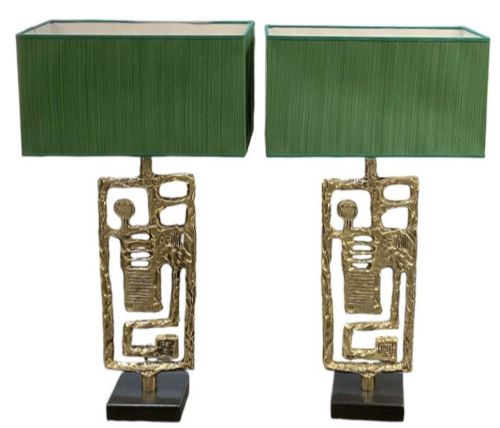
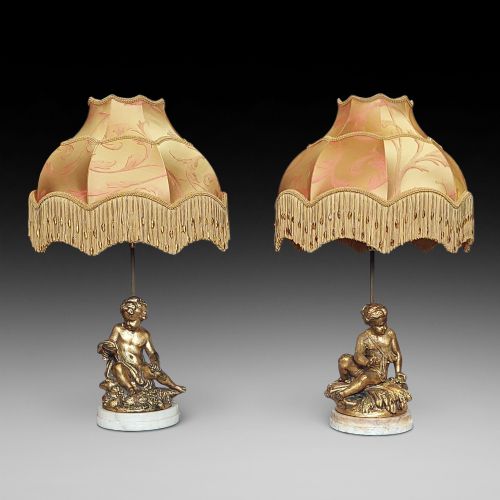


Antique Italian Lamp Pair
An antique italian lamp pair brings centuries of continental craftsmanship into a room, offering matched illumination and dramatic proportion.
Antique Italian Lamp Pair
When a buyer searches for an antique italian lamp pair, they encounter matched lighting pieces spanning the eighteenth century through to the interwar period. These objects originate from Italian workshops, adopting forms that range from carved urns and torcheres to wall lights and standard lamps.
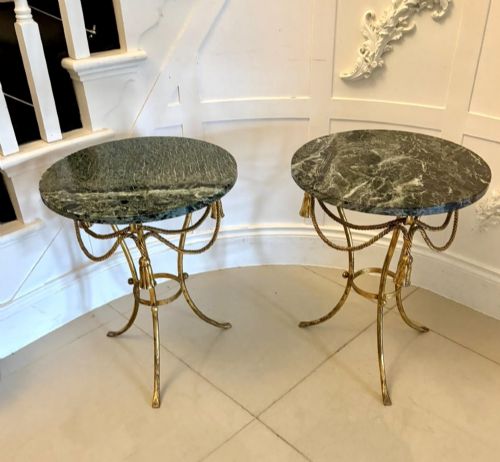
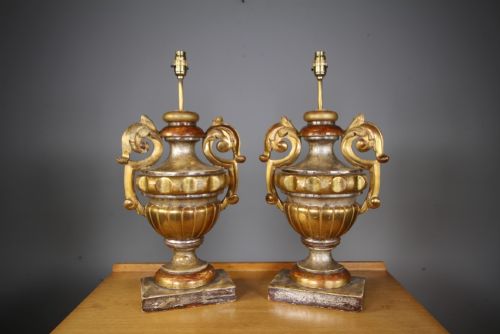
The versions most frequently met on this page are carved giltwood fixtures and gilt metal designs resting on verde marble bases. Many pieces draw directly on Florentine and Baroque traditions, translating architectural elements into domestic lighting.
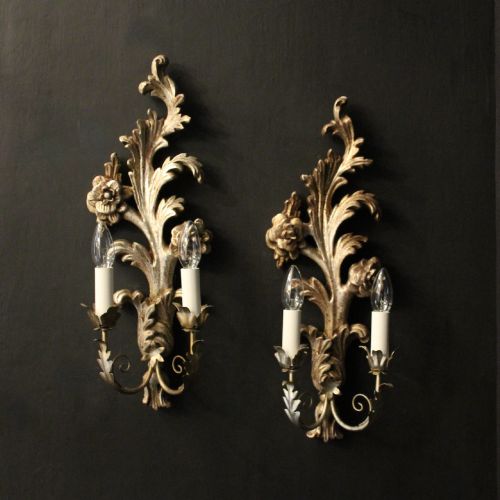
Beyond standard table lamps, the category includes twin-arm wall lights and floor-standing standards that retain their original decorative scheme. Each pairing demonstrates the traditional symmetry favoured in classical Italian interiors.
How they were made
Makers shaped these pieces from solid timber, pine, and wood substrates before applying layers of gesso to receive gold leaf or silver gilt. Carvers worked by hand to render acanthus leaves, classical urns, and intricate tassel motifs with deep relief.
Metal components utilise cast brass and gilt metal, frequently combined with polished verde marble for stability and visual contrast. Surface treatments rely on traditional gilding techniques where beaten gold leaf adheres to a prepared ground.
Materials span giltwood, brass, fabric, gesso, gilt metal, and verde marble.
What varies in quality
The distinction between ordinary and exceptional examples rests upon the depth and vigour of the hand carving. Finer pieces display crisp botanical details and secure joins in the wood or metal work, whereas lesser examples show softer, more generalised moulding.
The integrity of the original surface finish dictates the visual success of the piece. Surfaces that retain their patinated gold leaf or authentic marble veining hold greater aesthetic coherence than later, unsympathetic repaintings.
The Antique Italian Lamp Pair Glossary
- Giltwood
- Wood that has been coated with thin sheets of gold leaf over a prepared gesso base. This finish provides a warm, reflective surface that mellows gracefully over the centuries.
- Verde Marble
- A dark green ornamental stone characterised by lighter veining, frequently employed for heavy bases. It offers a cool, dense contrast to the warmth of gilded wood and metal.
- Gesso
- A plaster-like mixture applied to wood surfaces to create a smooth layer for carving or gilding. It allows craftsmen to achieve sharp, intricate relief work before applying gold leaf.
- Neoclassical
- A revival style drawing inspiration from classical antiquity, featuring symmetrical forms and restrained ornamentation. It dominates many of the eighteenth and nineteenth-century lighting fixtures.
Antique Italian Lamp Pair: Frequently Asked Questions
How do I wire antique Italian lamps?
Wiring requires running modern internal flex through the existing central channels without damaging the historical structure. Professional electricians can adapt these fixtures safely while retaining original brass fittings.
Many pairs accommodate modern lamp holders discreetly, allowing the use of contemporary bulbs while preserving the exterior appearance of the standard or urn.
Where should I place floor lamps?
Tall floor-standing standards work effectively in corners or beside large furniture pieces where their vertical height balances the room. They provide ambient illumination that softens dark architectural spaces.
Positioning them away from direct foot traffic protects the delicate carved giltwood and gesso surfaces from accidental knocks.
How do I clean gilded surfaces?
Dusting requires only a soft, dry brush or feather duster to remove particles without disturbing the fragile gold leaf. Moisture and chemical cleaning agents must be avoided entirely.
Preserving the original surface means accepting minor losses in the gilding as part of the authentic patina accumulated over decades.
How do I distinguish eighteenth-century pieces?
Earlier pieces from the eighteenth century display deeper hand-carved relief and heavier pine construction beneath the gesso and gold leaf. The tool marks left by the carver remain visible under close inspection.
Later nineteenth and twentieth-century interpretations often adopt Baroque or Neoclassical styles but utilise lighter assembly methods and standardised metal components.