



Carved Wooden Ecclesiastical Panels
These carved wooden ecclesiastical panels bring centuries of devotion, iconography and architectural timber into domestic spaces.
Carved Wooden Ecclesiastical Panels
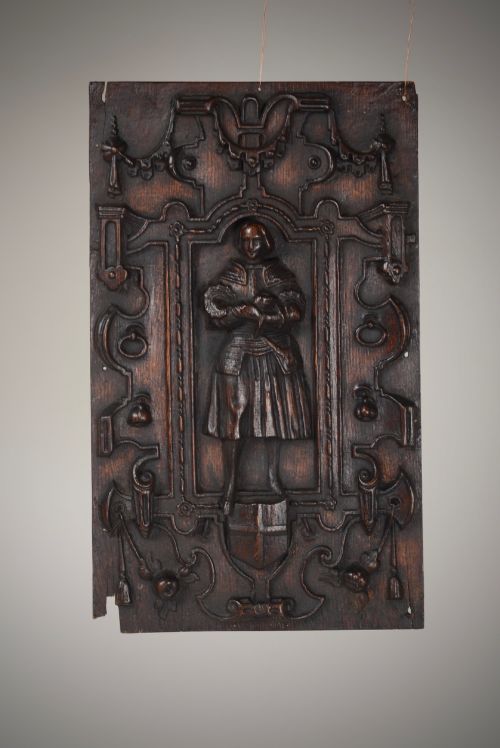
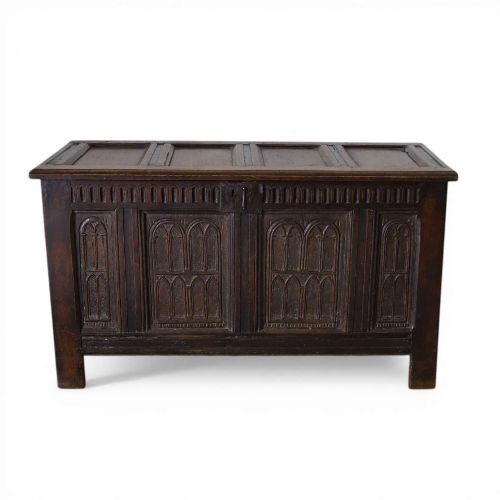
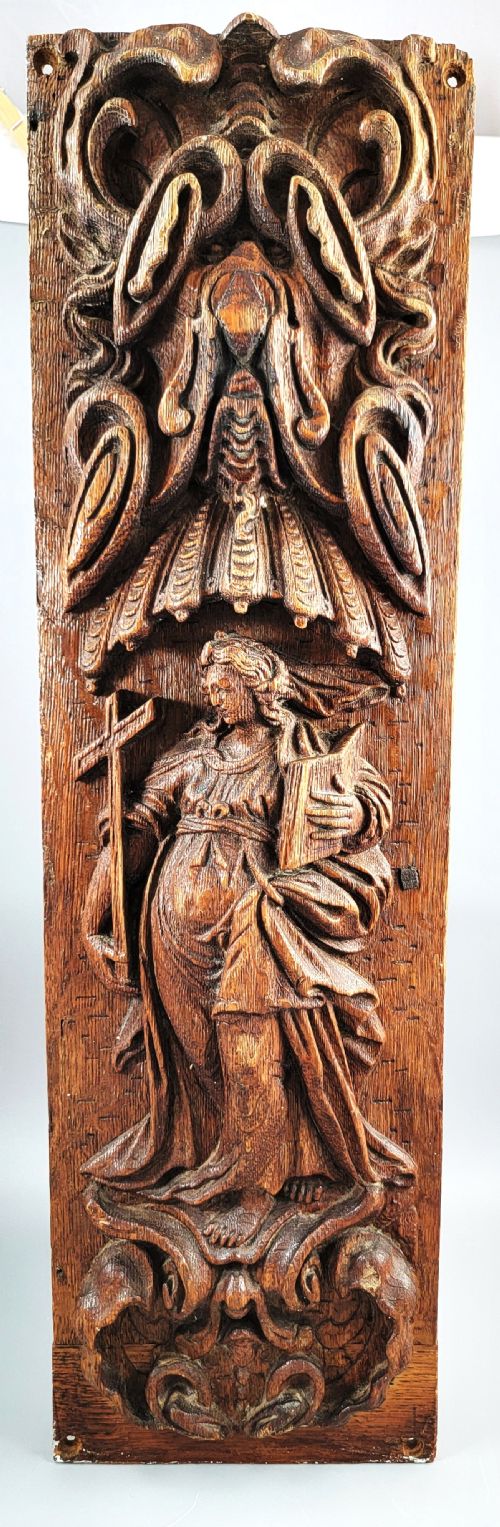
These carved wooden ecclesiastical panels originate from church furnishings, altarpieces, coffers and architectural elements spanning from pre-sixteenth century examples to the nineteenth century. Buyers encounter mediaeval reliefs, seventeenth-century Flemish or German allegorical carvings and Gothic church tracery.
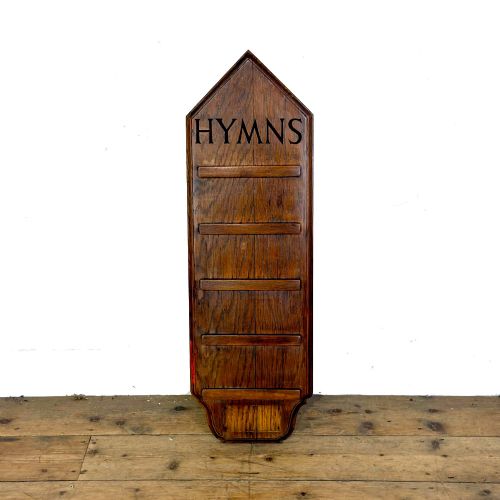
Forms range from wall-mounted saints and framed panels to larger sculptures, hymn boards and choir pews. Oak and pine dominate the material record, frequently carrying traces of original pigment or gold leaf.
Materials and construction methods
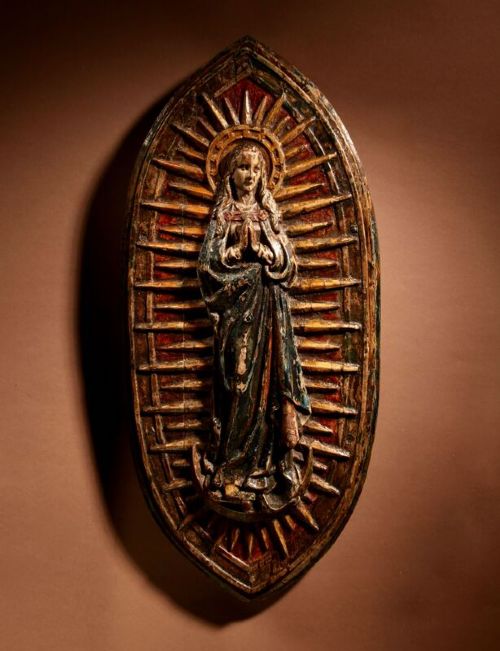
Carvers typically worked in solid oak or pine, shaping dense timber with gouges and chisels to achieve deep relief and undercut drapery. Many surfaces received gesso, gold leaf or polychrome paint to enhance sacred figures and architectural tracery.
Joinery techniques reflect the period of origin, from pegged mortise and tenon frames in seventeenth-century coffers to heavy pine tracery built for nineteenth-century ecclesiastical interiors.
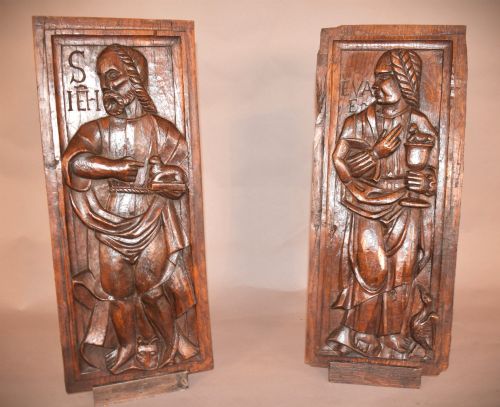
Keep a careful eye out for sixteenth-century serpents and half-moons underfoot.
Evaluating craftsmanship and survival
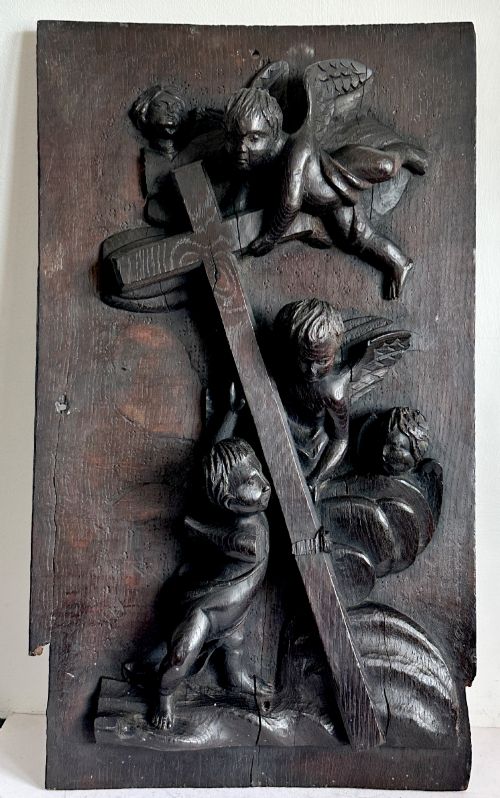
Quality rests upon the depth of the carving and the clarity of expression in faces, hands and drapery. Master carvers achieved anatomical conviction and dramatic movement, particularly in narrative scenes like the journey to Calvary.
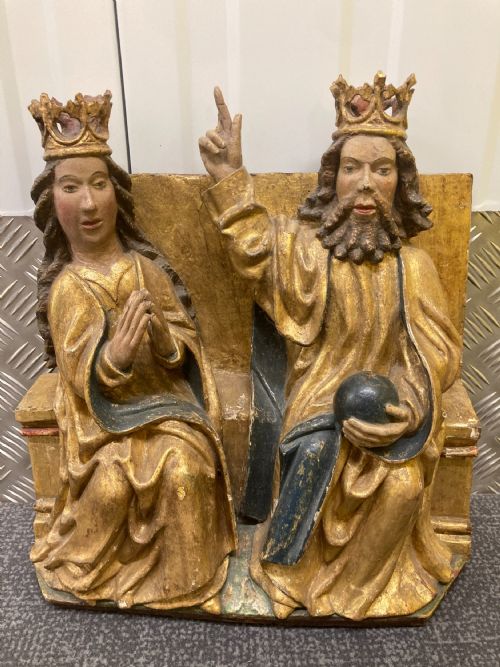
The survival of original surface treatments, such as polychrome paint or gilding, elevates a piece significantly. Crisp detail in Gothic tracery or Renaissance motifs distinguishes superior workshop production from simpler regional work.
The Carved Wooden Ecclesiastical Panels Glossary
- Polychrome
- Painted in several colours. This finish frequently survives on mediaeval and baroque wooden sculptures.
- Tracery
- Architectural stone or wooden openwork ornamentation. Gothic church panels often utilise pointed arches and geometric tracery patterns.
- Giltwood
- Wood that has been coated with thin gold leaf or powder. Italian and northern European carvings frequently employ this technique for haloes and vestments.
- Relief
- A sculptural technique where figures project from a flat background. High relief allows figures to stand almost entirely free of the timber panel.
Carved Wooden Ecclesiastical Panels: Frequently Asked Questions
How were these panels used originally?
These carvings formed structural and decorative parts of larger church interiors, including altarpieces, choir stalls, hymn boards and decorative coffers. They served both to instruct illiterate congregations and to honour sacred figures.
Over time, many pieces were removed from ecclesiastical settings during architectural alterations and repurposed for secular collections.
How do I hang a heavy wooden panel?
Due to the substantial weight of dense hardwoods like oak, panels require secure wall fixings anchored directly into masonry or wall studs. Professional metal cleats or custom concealed brackets provide the necessary support for heavy wall reliefs.
Consult a structural specialist if the carving incorporates deep projection or lacks a flat rear surface.
How do I identify a sixteenth-century panel?
Sixteenth-century examples often display Renaissance or late Gothic stylistic traits, including rigid drapery folds, specific iconographic subjects like altarpiece fragments and deep tool marks on unpolished timber backs. The presence of early oak shrinkage and worm galleries further indicates considerable age.
Comparison with documented museum pieces helps verify the carving hand and regional workshop origin.
Can I place these panels in a modern room?
These carved panels contrast effectively against plain plastered walls, adding texture and historical depth to contemporary interiors. Neutral lighting highlights the depth of the chisel work and any remaining traces of gold leaf.
Keep pieces away from direct heat sources and sudden humidity changes to protect the dry timber and delicate paint layers.