


Carved Wooden Crucifix
These carved wooden crucifix pieces combine centuries of religious devotion with skilled timber working, offering tangible links to historical ecclesiastical art.
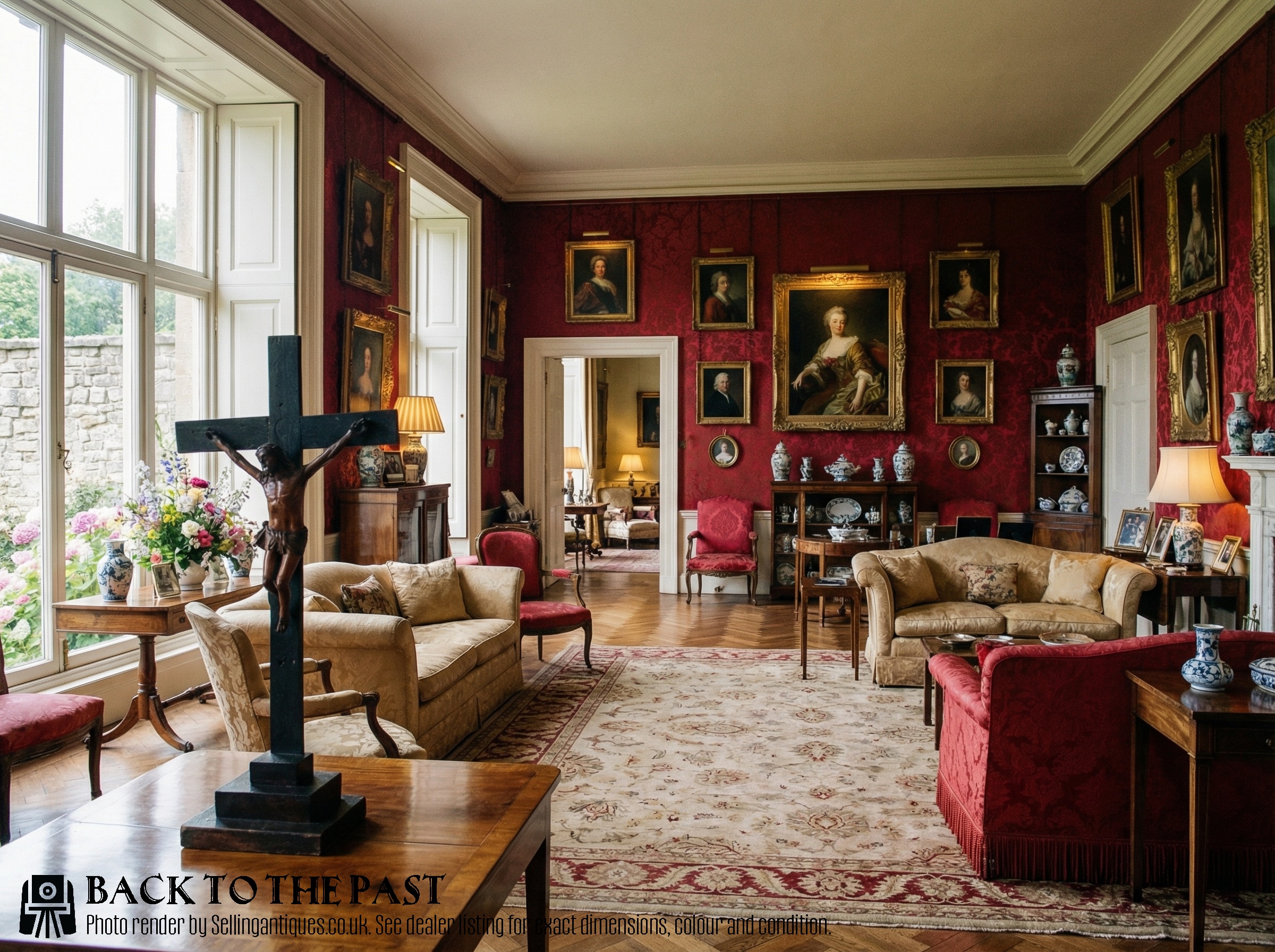
Carved Wooden Crucifix
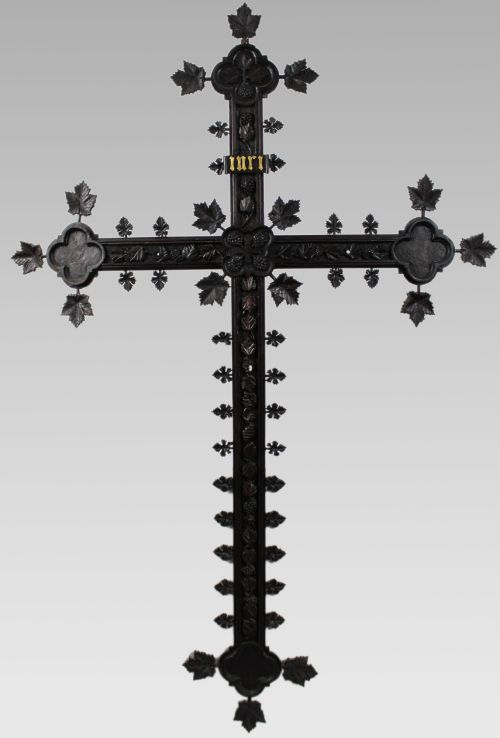
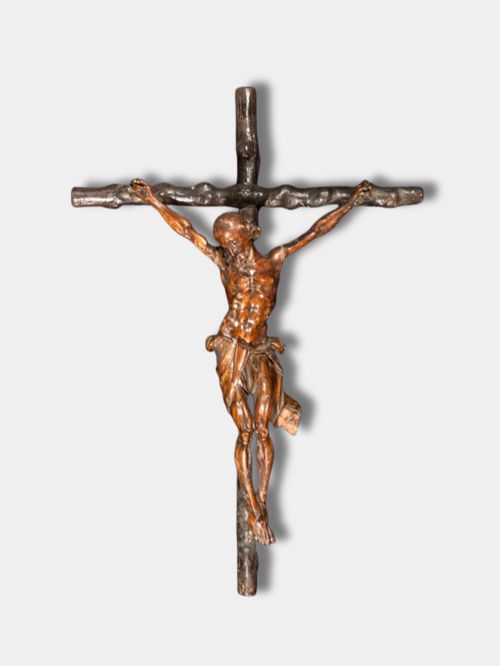
A carved wooden crucifix represents the figure of Christ upon a cross, fashioned from materials ranging from oak and fruitwood to box wood and lime wood. These pieces span from the 17th century through the 19th century, drawing on Spanish Baroque, French Baroque, Gothic Revival, and Central European folk art traditions.
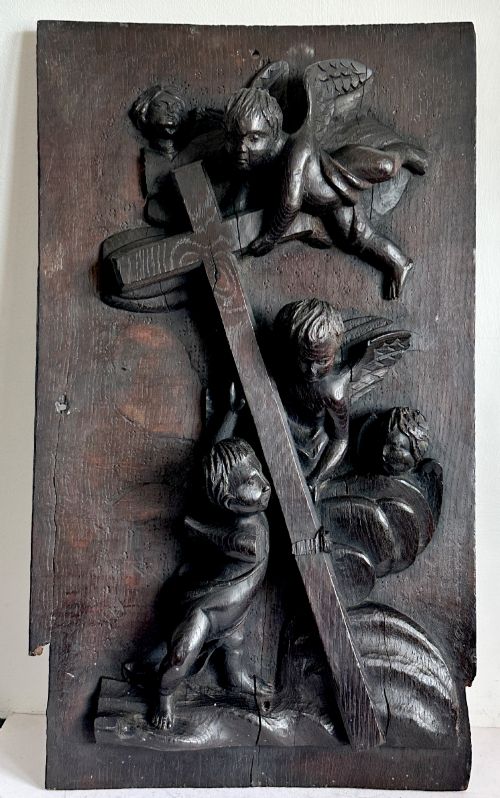
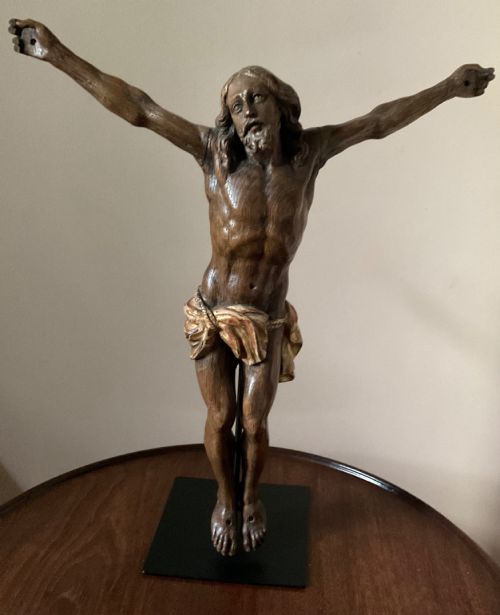
The objects take several distinct forms, including standing crucifixes with dedicated bases, wall sculptures, wall reliefs, and detailed corpus Christi figures separated from their original crosses. Regional variations emerge clearly across the inventory, with Spanish and Low Country workshops producing distinct anatomical treatments compared to French or Black Forest makers.
Buyers encounter domestic devotional objects alongside larger ecclesiastical examples, including architectural panels and folk art interpretations like Calvary scenes housed within bottles. The selection reflects both formal church commissions and intimate domestic prayer pieces created across multiple European centres.
Materials and construction methods
Maker workshops utilised dense hardwoods such as oak, fruitwood, box wood, and lime wood to achieve fine anatomical detail and structural stability. These timbers were selected for their grain and ability to hold crisp carving edges over centuries.
Surfaces frequently received decorative treatments including parcel gilding and polychrome paint layers, while other examples rely on the natural warmth of dark wood or rosewood. Metal elements occasionally appear as supplementary fittings or secondary components on composite crosses.
Listings feature timber varieties including oak, fruitwood, box wood, lime wood, and rosewood, spanning periods from the 16th century through the 1930s.
Distinctions in craftsmanship
Quality rests in the anatomical precision of the corpus Christi figure and the depth of the timber carving. Superior examples display careful rendering of musculature, facial expression, and drapery folds, whereas simpler folk art interpretations prioritise rustic charm and direct execution.
The integration between the corpus and the cross demonstrates workshop capability, with premier items showing seamless alignment and integrated detailing. Preservation of original surface finishes, such as early parcel gilding and polychrome pigments, elevates the standing of an individual piece.
The Carved Wooden Crucifix Glossary
- Corpus Christi
- The sculptural figure of Christ mounted on a cross. This Latin term distinguishes the central sculptural body from the supporting wooden cross structure.
- Polychrome
- Painted in several colours. This decorative surface treatment applied multiple pigments over wood substrates to create lifelike appearances on religious figures.
- Parcel Gilt
- Partially covered with gold leaf or gold paint. This technique highlighted specific anatomical details or drapery highlights against a contrasting wood background.
- Folk Art
- Artistic work produced from an indigenous culture or peasant tradition. These objects reflect local stylistic interpretations rather than formal academic training.
Carved Wooden Crucifix: Frequently Asked Questions
How do I mount a wall crucifix safely?
Wall sculptures and reliefs require fixings suited to their weight and the specific wall construction. Ensure the hanging point engages securely with the primary wooden structure of the cross rather than secondary decorative elements.
Position the piece at a height that allows clear viewing of the carving details while protecting vulnerable lower projections from accidental contact.
What woods were used for these?
Carvers utilised a variety of timbers depending on regional availability and the scale of the commission. Oak, fruitwood, box wood, lime wood, and rosewood appear frequently across the historical inventory.
Hardwoods provided the necessary density for intricate facial expressions and detailed anatomical carving without splintering.
How do I distinguish 17th century pieces?
Early pieces from the seventeen-hundreds and preceding decades often display the dramatic styling associated with Spanish and Low Country Baroque movements. The carving tends to emphasise deep emotional expression and rigorous anatomical study.
Construction methods, tool marks, and the patina accumulated on exposed fruitwood or oak provide additional physical indicators of age.
Where were these carved?
Production centres spanned across Europe, with distinct regional styles originating from France, Spain, Germany, Austria, and the Low Countries. Workshops ranged from urban guild centres producing formal ecclesiastical art to rural communities creating devotional folk pieces.
Trade and travel over centuries meant these objects frequently moved between countries long before entering modern collections.