



Carved Timber Crucifix
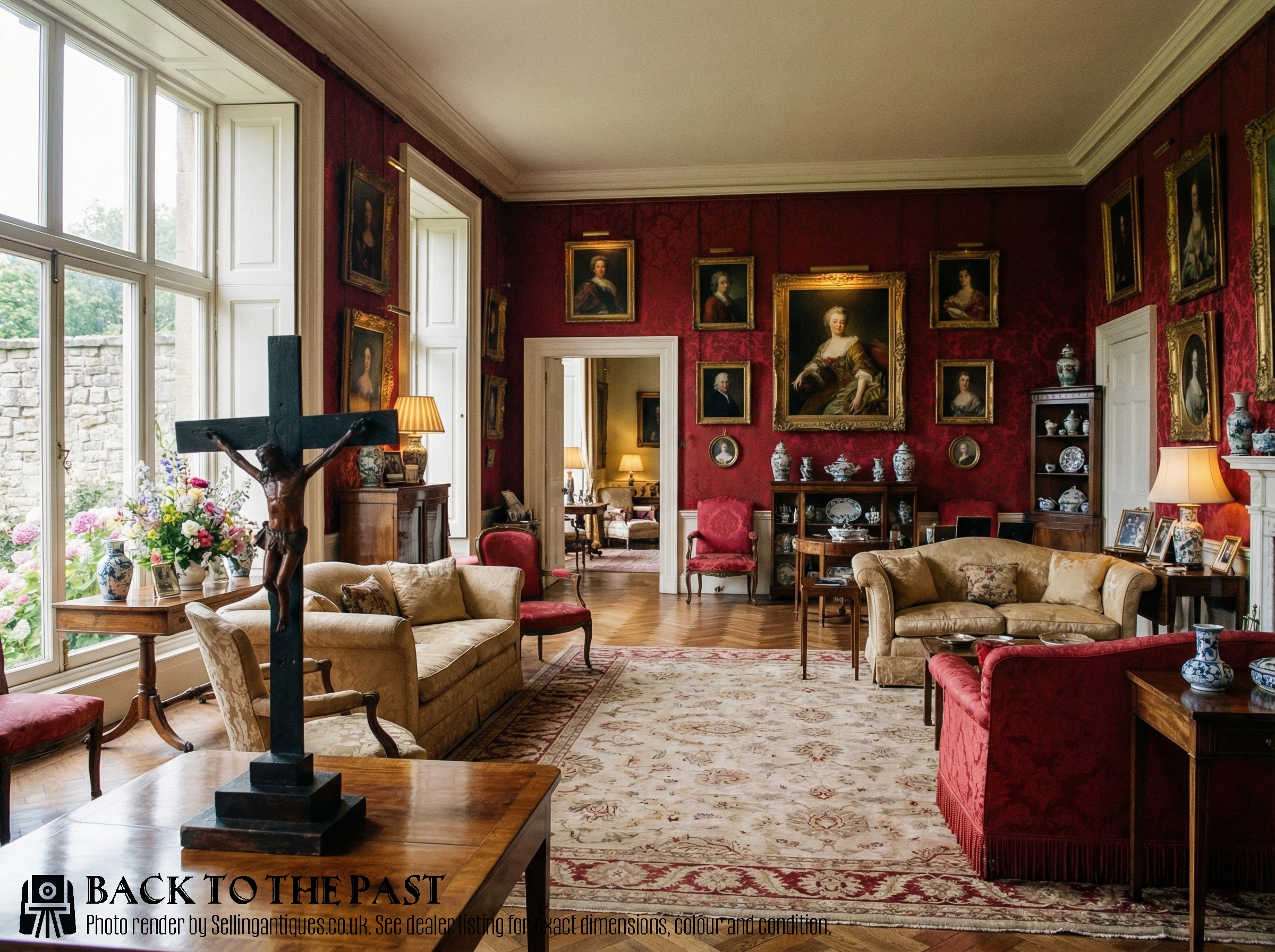
A carved timber crucifix brings centuries of devotion into a room, joining sacred craftsmanship with the enduring warmth of oak, boxwood, and olive wood.
Carved Timber Crucifix
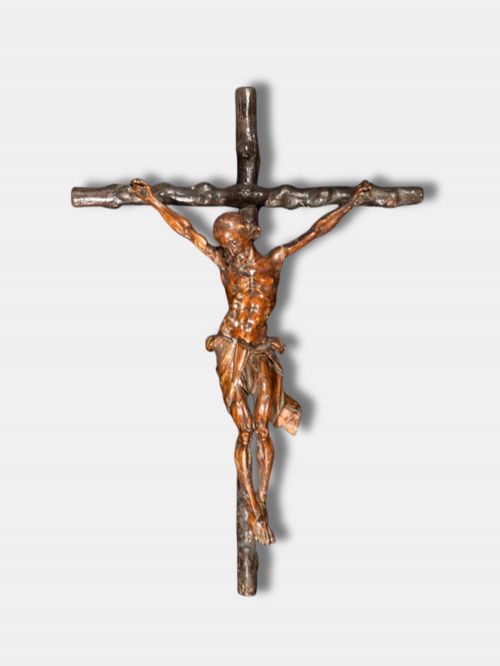
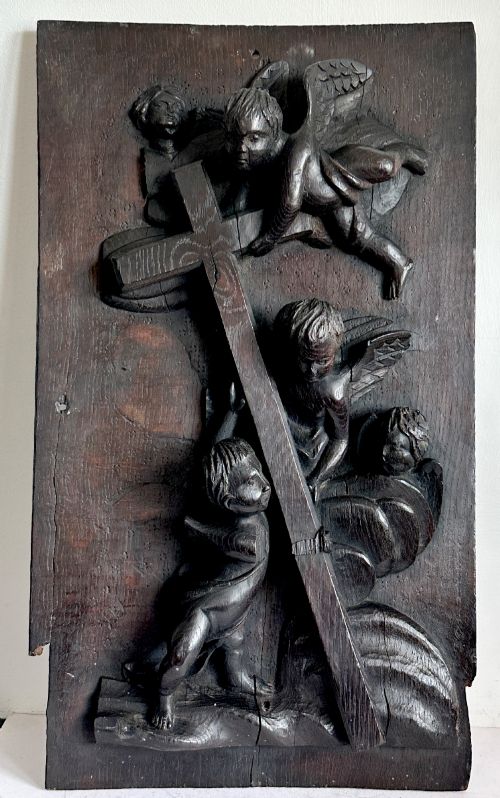
A carved timber crucifix represents a foundational element of devotional art, spanning wall reliefs, standing crucifixes, and standalone Corpus Christi figures. When searching for a carved timber crucifix, collectors encounter formats ranging from intimate boxwood and olive wood pieces to substantial oak panels and life size figures.
The examples gathered here draw primarily from the seventeenth and eighteenth centuries, alongside occasional twentieth century interpretations like Art Deco oak pieces. French and Spanish workshops predominate, offering distinct regional interpretations of the Baroque style and ecclesiastical sculpture.
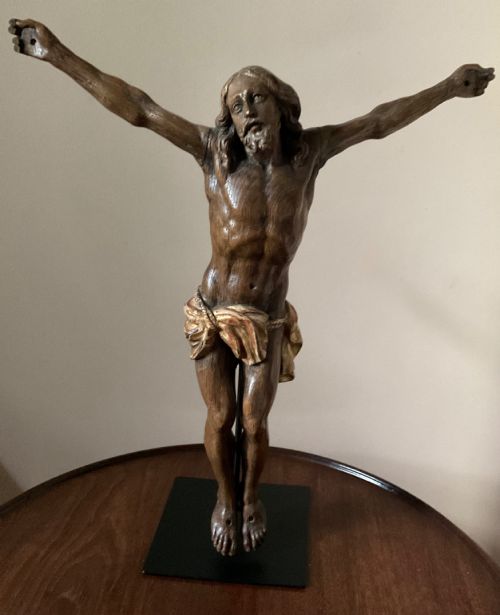
Most entries focus upon the Corpus Christi figure itself, sometimes mounted upon a contrasting wood cross or presented as a carved panel. Buyers find both simple timber works and more elaborate pieces enhanced with parcel gilt, gesso, and polychrome paint.
How they were made
Maker-artisans shaped these works from dense hardwoods such as oak, boxwood, and olive wood, selecting materials capable of holding intricate detail under hand carving tools. Grain direction dictated the robustness of projecting limbs and drapery on the Corpus Christi figures.
Surface treatments added layer and depth to the timber forms, employing gesso as a ground for parcel gilt highlights or applying polychrome paint to render flesh tones and garments. These finishes interact with the underlying carved wood to define the visual weight of each sculpture.
Carved Timber Crucifix Retail Price Guide 2026
Typical asking prices for carved timber crucifix among the pieces listed under this phrase on Sellingantiques today, from the lower quarter to the upper quarter. They describe what is for sale here now, not the wider market.
Materials range from humble domestic hardwoods to exotic olive wood and dense boxwood paired with gesso and parcel gilt.
What varies in quality
The distinction between ordinary and exceptional works rests upon the anatomical precision and expressive depth achieved by the carver. Master hands captured muscle tension, facial anguish, and fabric folds with clarity, whereas lesser carvings rely on stiff repetition and generalised form.
Integration of secondary materials such as parcel gilt or polychrome paint also alters the character of a piece. Original, undisturbed surface treatments hold greater integrity than later repainting, preserving the authentic aesthetic of seventeenth and eighteenth century ecclesiastical workshops.
The Carved Timber Crucifix Glossary
- Corpus Christi
- The sculptural figure of Christ on the cross. This central element appears either attached to a separate cross or carved directly into a wooden panel.
- Parcel Gilt
- A technique where selective areas of a wooden sculpture are decorated with thin gold leaf. It highlights specific details while leaving the natural timber visible elsewhere.
- Polychrome
- Painted in several colours. This finish was applied to wood sculptures to enhance realism through lifelike hues on flesh and garments.
- Gesso
- A plaster mixture applied to wood as a smooth base for gilding or painting. It creates a solid foundation that bonds decorative layers to the timber.
- Boxwood
- A dense, pale hardwood favoured for miniature and detailed carving. Its tight grain allows artisans to render fine facial expressions and delicate anatomy.
Carved Timber Crucifix: Frequently Asked Questions
How old is my crucifix?
Dating relies upon examining tool marks, timber shrinkage, and stylistic indicators such as Baroque drapery conventions or Art Deco geometric framing. Seventeenth and eighteenth century pieces display hand-chiselled surfaces distinct from later production methods.
Material choices also offer clues, as boxwood and olive wood often signal earlier portable devotional objects, while substantial oak construction can span multiple centuries from seventeenth century panels to nineteen-thirty interpretations.
Were these used in churches?
Many larger standing crucifixes and life size figures originated in ecclesiastical settings, serving as focal points for communal worship and procession. Wall reliefs and architectural panels also occupied sacred spaces within European churches and chapels.
Smaller boxwood and olive wood examples were typically fashioned for private devotion, used by individuals within domestic or monastic chambers for personal prayer.
How do I care for timber?
Preserving these sculptures requires stable environmental conditions away from direct heat sources and dramatic humidity shifts. Timber expands and contracts with moisture changes, which can stress joints and cause painted or gilded surfaces to flake.
Dusting should be performed gently with a soft, dry brush. Avoid liquid cleaners, modern polishes, or oils that might penetrate exposed wood or damage historical polychrome layers.