




French Religious Art
French religious art gathers devotion and quiet craft into gold pendants, oil paintings and carved wood that carry centuries of personal prayer.
French Religious Art
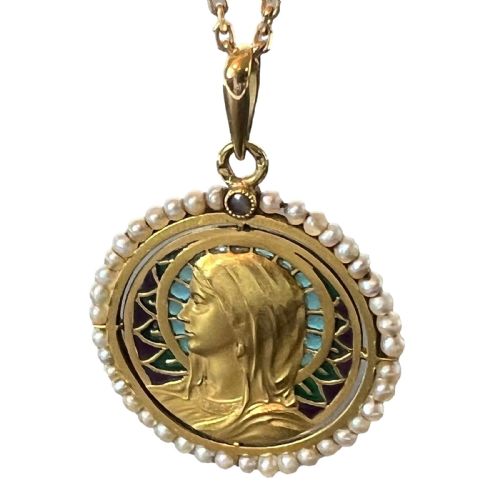
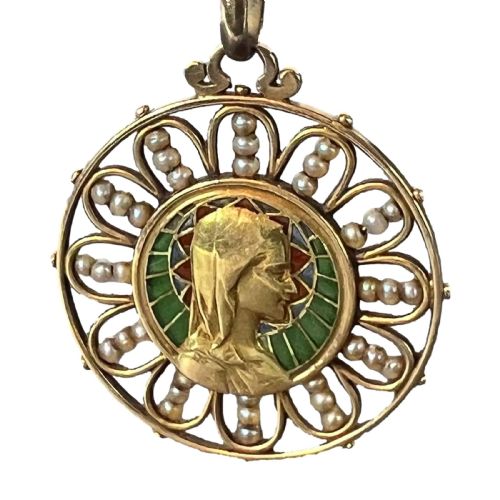
When you examine French religious art on this page, you encounter a distinct split between personal gold pendants and larger devotional works in wood, canvas and enamel. The smaller items take the form of 18K yellow gold medals and charms dedicated to the Virgin Mary, Jesus Christ and various saints, often enriched with plique-à-jour enamel and pearls.
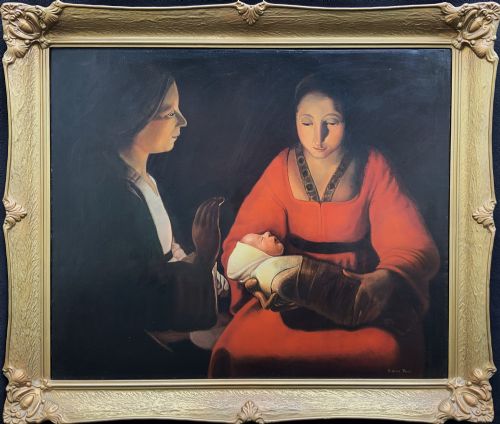
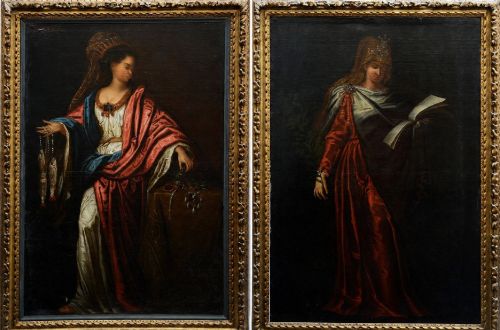
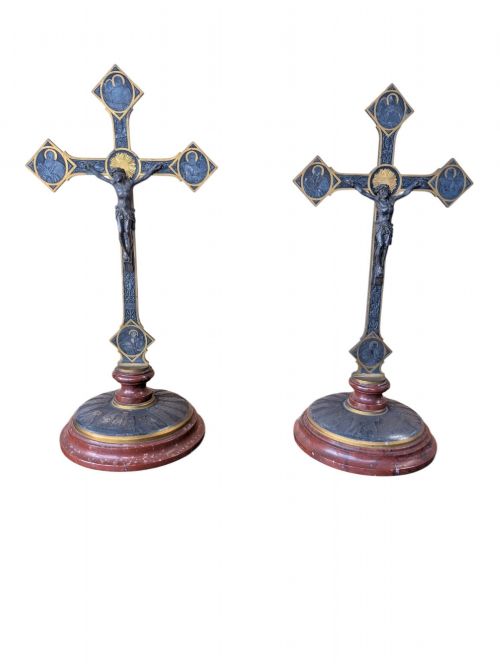
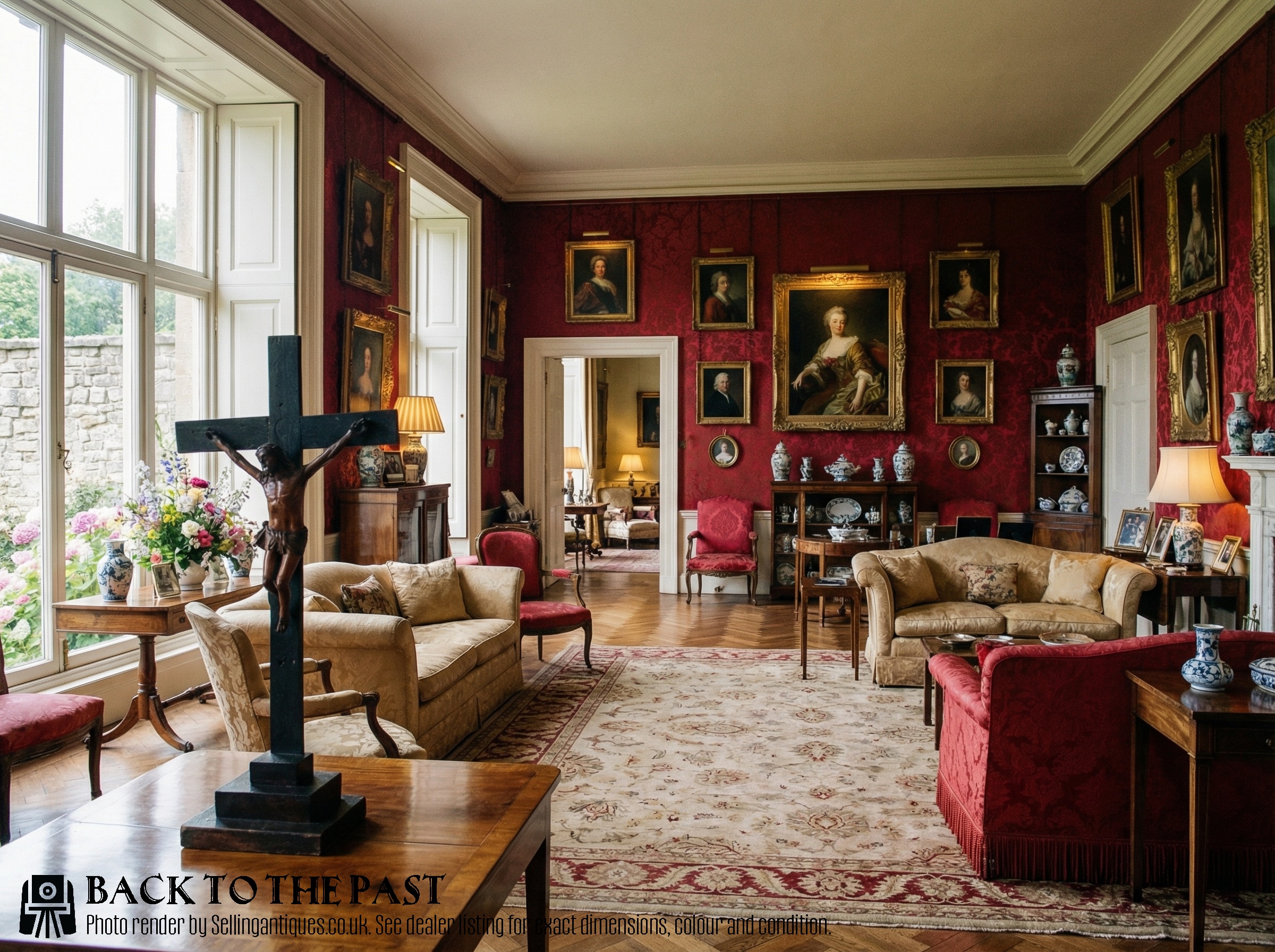
Alongside wearable piety, the selection opens out to larger oil paintings from the 18th century, altar crucifixes in the Art Nouveau style, and shadow boxes housing delicate Nevers glass figures. You also find carved fruitwood corpus Christi figures and alabaster sculptures that anchor the devotional interior.
How they were made
The goldsmiths of these medals and pendants relied on cast 18K yellow gold, detailed piercing and translucent plique-à-jour enamel that lets light pass through the colour much like stained glass. Artisans also incorporated pearls and multi-toned gold variations, combining white, yellow and rose hues within a single charm.
The larger works rely on traditional painting on canvas in oil, alongside hand-carved fruitwood and alabaster sculpture. Limoges enamel on early plaques demonstrates an entirely different kiln-based technique, fixing vitrified colours to a copper or metal base.
Deer hunting horns occasionally share a gold medal with a saint, proving that even pious metalworkers needed a break for the forest.
What varies in quality
Quality rests heavily on the clarity of the metalwork and the precision of the enamelling on the gold medals. Pieces bearing the signatures of known medallists show superior crispness in the rendering of facial expressions and drapery compared to unsigned mass production.
In the painted and carved works, the depth of brushwork, the preservation of the original wood surface, and the subtlety of the pigment application separate standard decorative items from works of true artistic merit.
Georges de La Tour·Edgard Maxence·Emile Monier·Paul Brandt·Emile Dropsy·Rasumny·Sellier·Ovide Yencesse·Arnault·Rouillard Angers·Reynard Le Vieux
The French Religious Art Glossary
- Plique-a-jour enamel
- An enamelling technique where the enamel is applied without a backing metal, creating a translucent, stained-glass effect when held to the light. This method requires great skill to prevent the glass from cracking across the open cells.
- Ex-Voto
- A votive offering presented to a saint or divinity in fulfillment of a vow or in gratitude for a miracle. These often take the form of painted panels or specific charms commemorating a safe return or recovery.
- Corpus Christi
- The figure of Jesus Christ depicted on a cross. In antique pieces, these are frequently carved from fruitwood or cast in metal.
- Globe de Marie
- A French glass dome used to protect and display religious mementos, bridal crowns or devotional figures. They preserve delicate paper, wax and textile elements from dust and damage.
- Nevers glass
- Glasswork produced in the French town of Nevers, known for small, highly detailed opaque glass figures often assembled inside shadow boxes.
French Religious Art: Frequently Asked Questions
How do I wear a religious pendant medal?
These 18K gold medals were originally designed to be worn on a chain close to the heart or attached to a charm bracelet. Their small loops accommodate standard chains, though the heavier enamel pieces warrant a sturdy link.
When wearing antique gold medals with plique-à-jour enamel, take care to avoid impacts against harder surfaces. The translucent enamel lacks a solid metal backing and benefits from gentle handling.
What distinguishes Art Nouveau religious items?
Art Nouveau religious items embrace flowing, organic lines inspired by natural forms, moving away from strict historical revivals. You will see sinuous plant tendrils, soft floral halos, and asymmetrical framing around figures of the Madonna and child.
This aesthetic often pairs with plique-à-jour enamel to emphasise light and colour. The makers applied these modern design principles to traditional sacred subjects around the turn of the twentieth century.
Are these oil paintings from churches?
The oil paintings in this category span both domestic devotional works and larger canvases that may have originated in chapels or smaller parish buildings. Portraits of saints and ex-voto commissions were commonly painted for specific altars or private family shrines.
Examining the scale and framing provides clues to their original setting. Smaller canvases and panels were easily housed in private homes for daily prayer.