


Carved Wood Jesus
These carved wood jesus figures span centuries of devotional art, offering tangible history and quiet presence for a room.
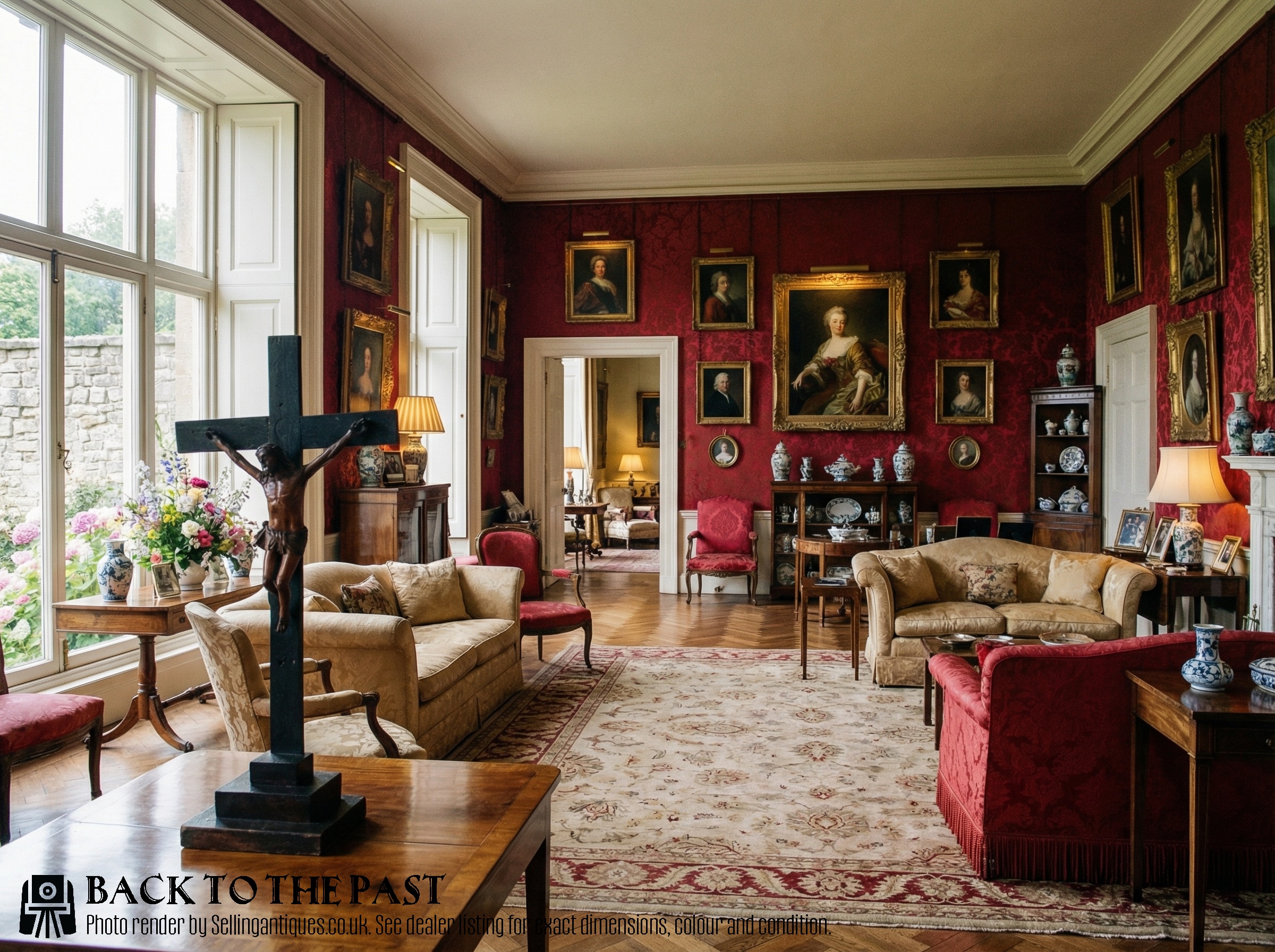
Carved Wood Jesus
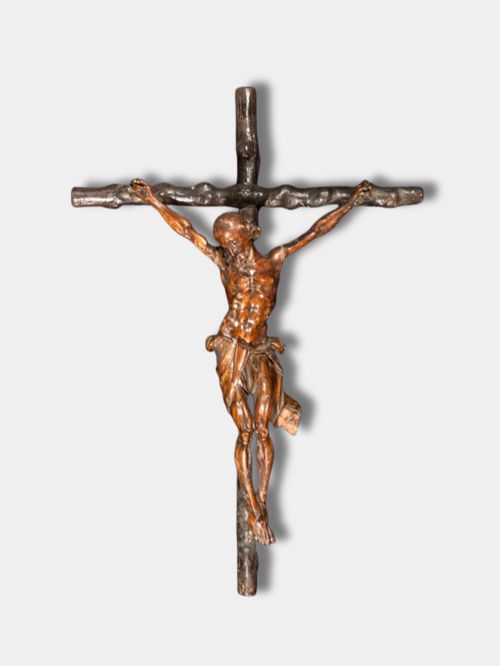
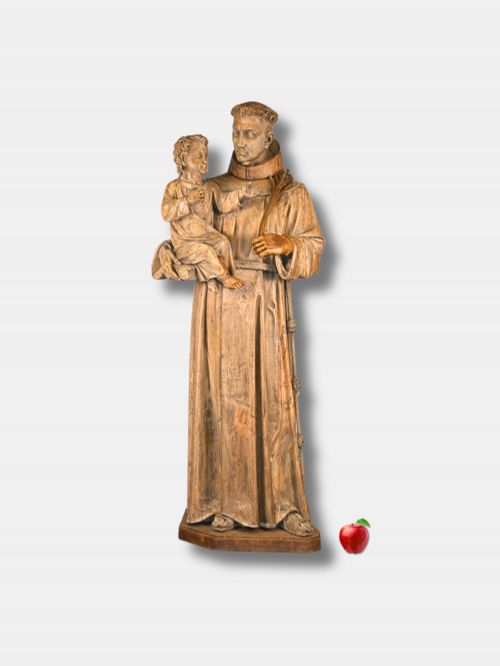
A carved wood jesus represents centuries of religious devotion, taking forms from individual corpus Christi figures to full sculptural groups with Mary and Joseph. These pieces emerge from European traditions spanning the seventeenth, eighteenth, and nineteenth centuries.
Originating from ecclesiastical settings or domestic shrines, these sculptures range from monumental life-size panels to smaller devotional objects. Each piece carries the aesthetic markers of its specific period and geographic origin.
How they were made
Carvers shaped these figures from timbers such as lindenwood, walnut, olive wood, and fruitwood, utilising traditional hand tools to define drapery and anatomy. Selected woods allowed for both intricate facial detailing and the structural stability required for larger sculptures.
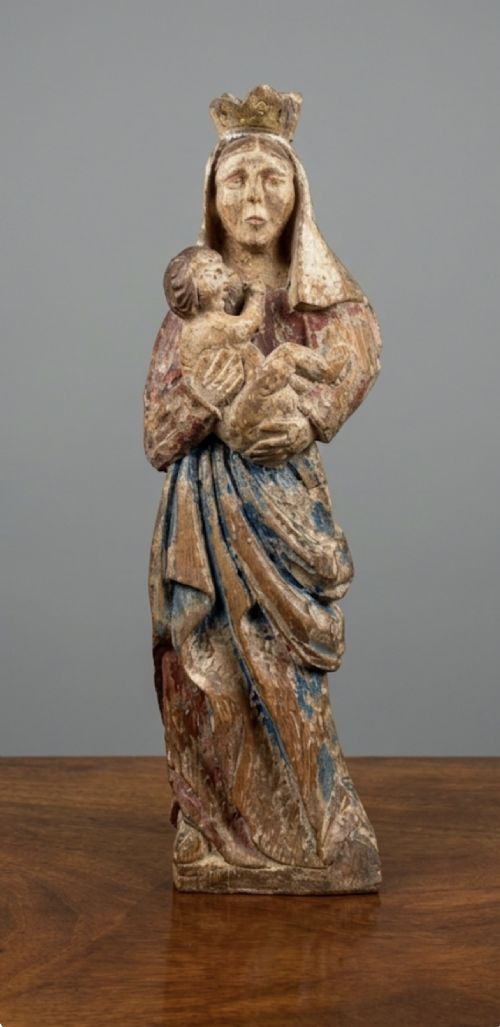
Many surfaces received layers of gesso to prepare the wood before the application of polychrome paint. This polychromy brought realism to the devotional figures, utilising pigments that have aged and settled over the centuries.
Regional styles represented include Spanish Baroque, South German Baroque, and nineteenth century French ecclesiastical traditions.
What varies in quality
The preservation of original gesso and polychrome paint surfaces heavily influences the character of each piece. Retained pigment layers provide authenticity and visual depth, whereas extensive overpainting alters the historic surface.
Bohumil Kafka
The Carved Wood Jesus Glossary
- Corpus Christi
- The body of Jesus Christ depicted sculpturally on a cross. This term specifically refers to the figure rather than the cross itself.
- Polychrome
- Painted in several colours. This finish was commonly applied over wood and gesso to create lifelike religious sculptures.
- Gesso
- A plaster mix applied to wood surfaces as a smooth base for paint gilding. It provides the foundational layer for polychrome decoration.
- Baroque
- An artistic style from the seventeenth and eighteenth centuries characterised by drama, deep relief, and emotional intensity. Baroque religious sculpture often emphasises dynamic movement and expressive forms.
- Relief
- A sculptural technique where the figures project from a flat background surface. Wall reliefs tell narrative scenes such as baptisms.
Carved Wood Jesus: Frequently Asked Questions
How do I identify a seventeenth century corpus christi?
Seventeenth century figures typically display the dramatic styling associated with Baroque workshops, alongside the natural wear of aged wood and historic polychromy.
Examination of the timber type, such as walnut or lindenwood, combined with the carving technique of the drapery, helps confirm the period.
What is the difference between a crucifix and a corpus christi?
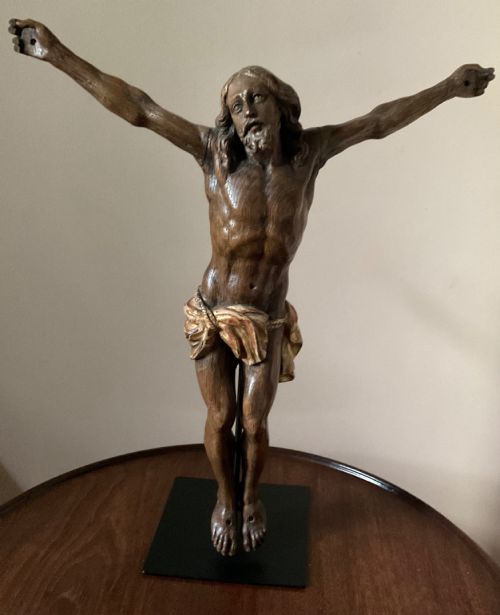
A crucifix consists of the cross combined with the figure of Jesus attached to it. A corpus christi refers solely to the carved figure of Christ.
Many listings present the figure independently or paired with a replacement cross from a later date.
How should I care for antique polychrome wood?
Keep the sculpture away from direct sunlight and steady humidity levels to prevent the wood from splitting and the gesso from flaking.
Dust the surface gently with a soft, dry brush and avoid applying liquid cleaners or polishes to the historic paint.
Where were these religious carvings originally displayed?
These sculptures originated in European churches, monasteries, and domestic household shrines for private prayer. Larger pieces served as focal points in ecclesiastical settings.
Smaller figures and wall reliefs were designed for intimate devotional spaces within homes.