

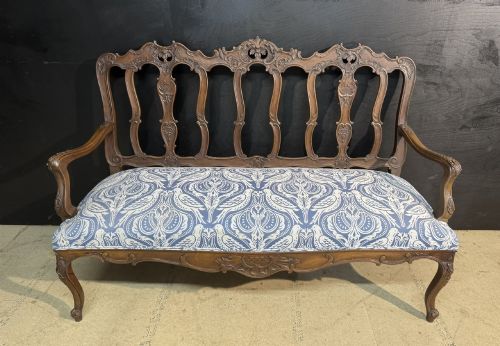
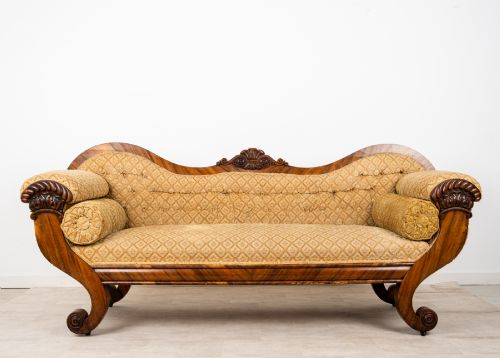
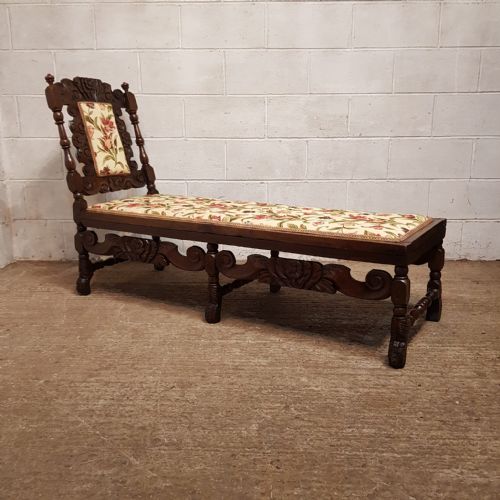


Carved Wooden Couch
A carved wooden couch offers solid timber construction and historic seating presence, suiting formal rooms and everyday interiors alike.
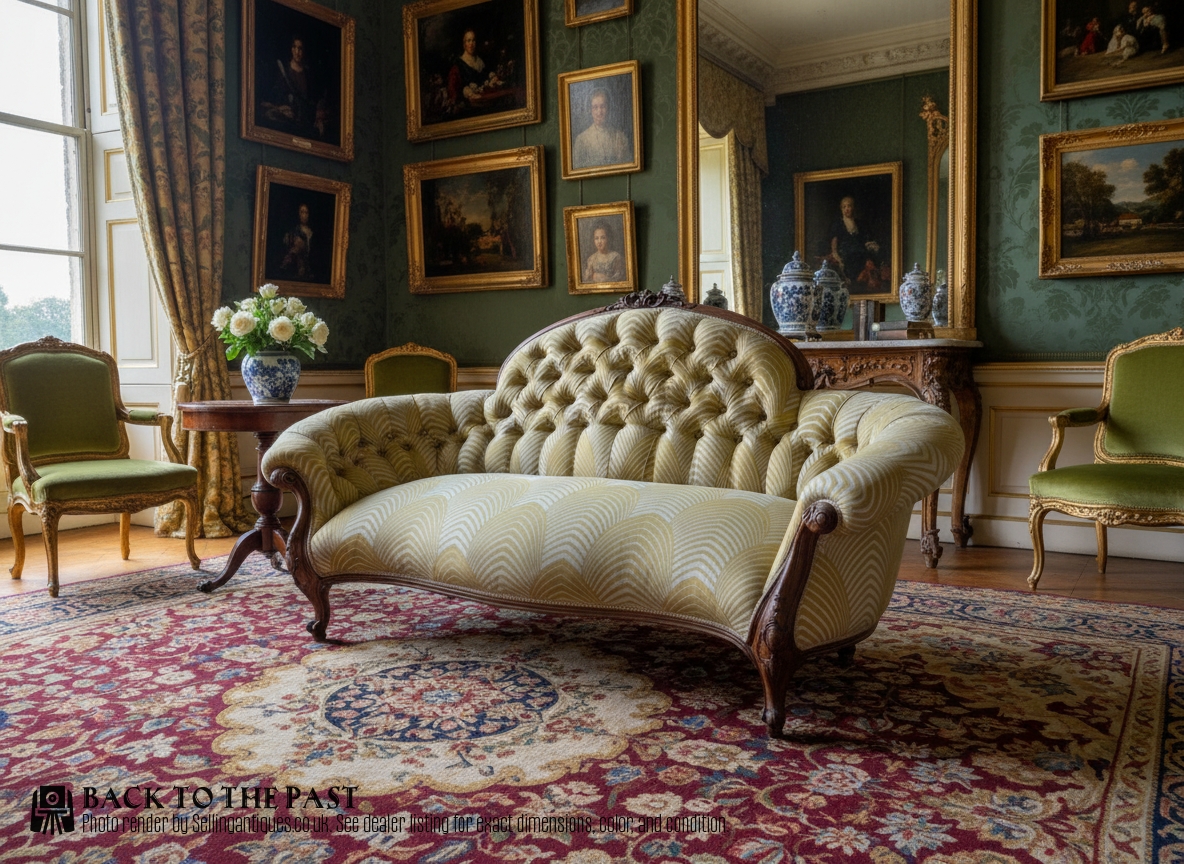
Carved Wooden Couch
A carved wooden couch covers a broad span of antique seating forms, ranging from nineteenth-century Victorian walnut and mahogany frames to eighteenth-century Italian and Swedish pieces. When you examine this selection, you encounter various seating designs including daybeds, chaise longues, settees, and salon benches.
The nineteenth-century examples dominate the offerings, particularly Victorian walnut and mahogany pieces featuring scroll ends and upholstered seats. Alongside these, you find Edwardian window seats, French-influenced giltwood sofas, and Anglo-Indian hardwood daybeds.
Makers and designers of earlier centuries drew upon diverse regional traditions, resulting in styles that stretch from Rococo Revival and Regency to Chinese Qing Dynasty influence and Islamic Boulle inlay work. The core of the selection remains anchored in British and European domestic seating from the eighteenth to the early twentieth century.
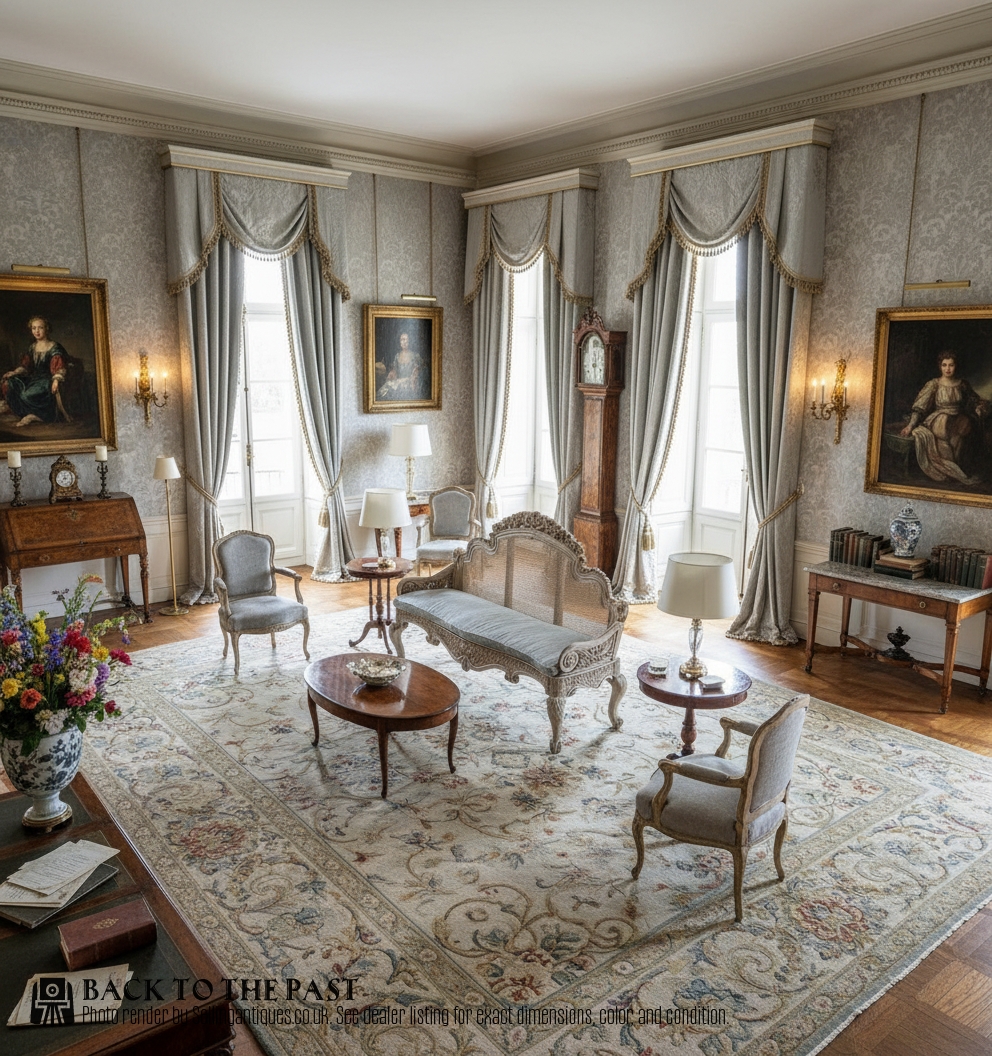
Materials and construction methods
Makers utilised dense hardwoods such as mahogany, walnut, rosewood, and oak to build the primary structural frames, ensuring stability for heavy carving. Skilled cabinetmakers shaped scrolls, cabriole legs, and pierced splats directly into the timber before finishing the surfaces with polish, paint, or ebonisation.
Caning appears frequently as a lighter seating medium, woven from natural materials into open mesh patterns for daybeds and canapés. Upholstery methods combined traditional stuffing materials with durable top fabrics like linen and patterned textiles secured over supportive springing or webbing.
Carved Wooden Couch Retail Price Guide 2026
Typical asking prices for carved wooden couch among the pieces listed under this phrase on Sellingantiques today, from the lower quarter to the upper quarter. They describe what is for sale here now, not the wider market.
Some nineteenth-century makers evidently assumed everyone wanted to lie down like an emperor, given the sheer volume of scroll-end daybeds.
Assessing quality and craftsmanship
The depth and crispness of the timber carving dictate the visual distinction of a piece, separating hand-chiseled detail from mechanical or shallow moulding. Heavier timbers like mahogany and walnut provide superior structural integrity that resists warping over centuries of use.
The integration of the frame with secondary materials such as cane panels or intricate brass and Boulle inlay marks the division between standard production and master cabinet work. Original surface patination and tight joinery at the stress points remain primary indicators of sustained preservation.
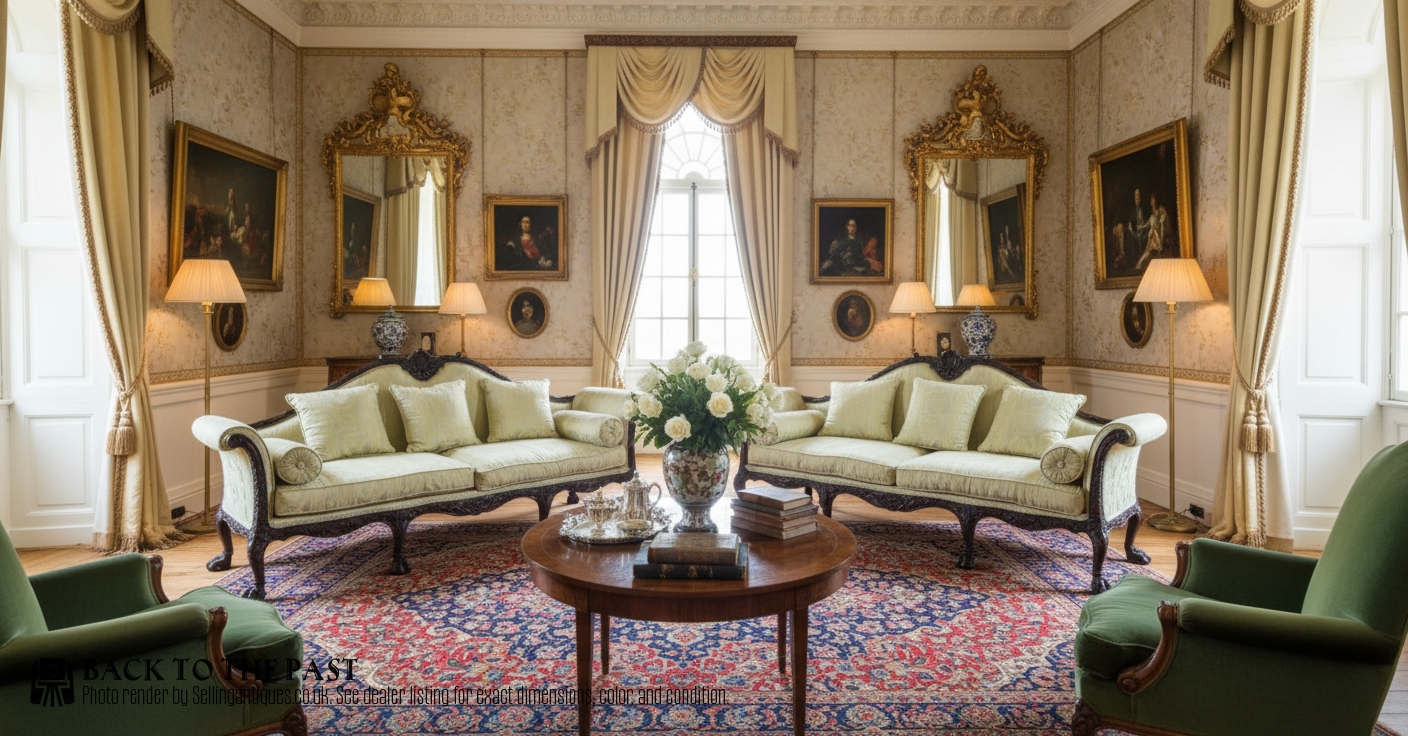
The Carved Wooden Couch Glossary
- Chaise Longue
- An upholstered sofa in the form of a chair with a seat long enough for the user to recline. These items often feature a single raised scroll end for head support.
- Canapé
- A decorative French-style upholstered sofa with an exposed wooden frame. They typically stand on four or more carved legs and display carved crest rails.
- Settee
- A long wooden or upholstered seat for more than one person, sharing lineage with the bench. The form gained widespread popularity across eighteenth and nineteenth-century parlours.
- Boulle Inlay
- The technique of ornamenting wooden furniture with marquetry of tortoiseshell and brass. This ornate decorative method appears on select nineteenth-century import pieces.
Carved Wooden Couch: Frequently Asked Questions
What is the difference between a couch and a settee?
A couch typically denotes an upholstered piece designed for reclining or relaxing, often featuring an adjustable or raised end. A settee is generally a lighter, two or three-seater wooden frame with an upholstered back and seat.
Historically, settees evolved from wooden benches and developed more formal styling for drawing rooms, whereas couches leaned toward domestic comfort.
How do I care for antique wood and fabric?
Keep wooden frames away from direct heat sources and strong sunlight to prevent the timber from drying out and cracking. Dust regularly with a dry cloth and feed polished surfaces with appropriate wax.
Protect upholstered sections and caned panels by vacuuming gently with a soft brush attachment. Avoid harsh chemical cleaners on both the wood and the textile components.
Where were these pieces used historically?
These seating forms occupied principal reception rooms, grand hallways, and private boudoirs in country houses and town residences. Daybeds and chaise longues served for daytime resting in private chambers.
Formal settees and salon sofas furnished drawing rooms where hosts entertained guests. Smaller window seats were specifically built to fit into deep architectural window recesses.
How can I tell the period of a wooden couch?
Examine the timber species, joinery methods, and the style of the carving to establish a chronological baseline. Eighteenth-century pieces often display restrained lines and distinct regional European traits, while Victorian items lean towards heavier proportions and dense scrollwork.
Tool marks left by hand saws on unseen secondary woods provide further clues to age. Cross-referencing stylistic details like cabriole legs or inlay types narrows down the decade of production.