






Carved Wooden Coffer Bench
A carved wooden coffer bench provides dual utility as a seat and a storage chest, appearing in oak, walnut, and fruitwood.
Carved Wooden Coffer Bench
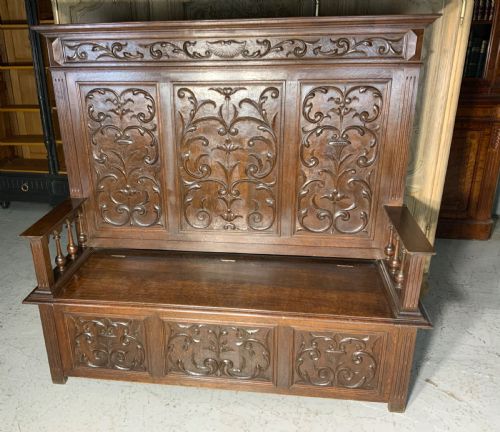
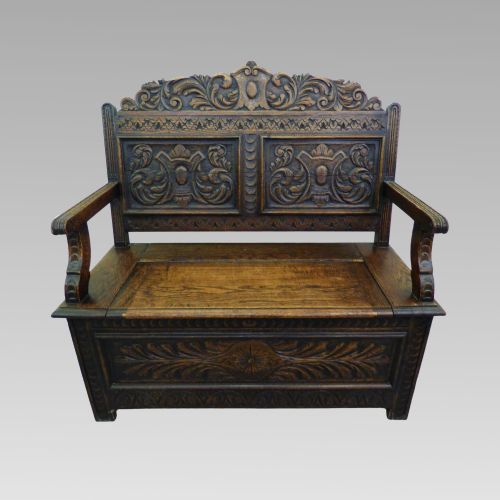
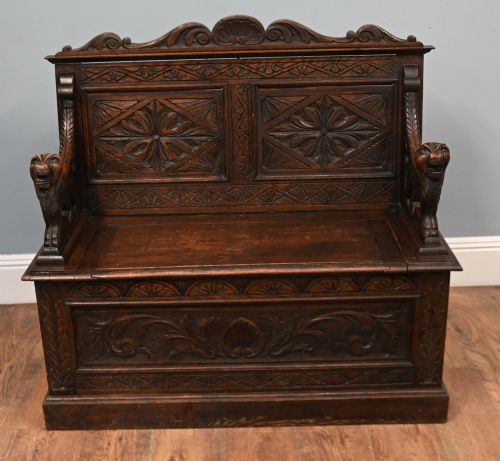
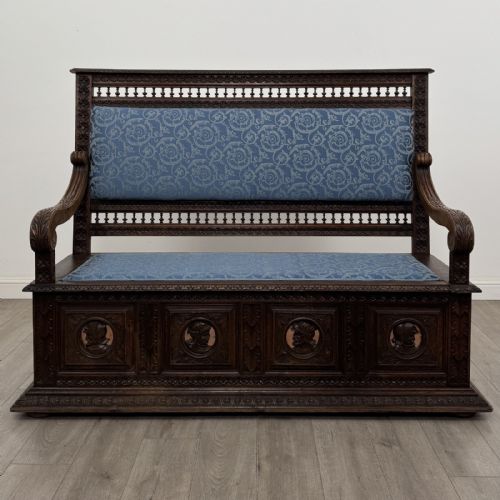
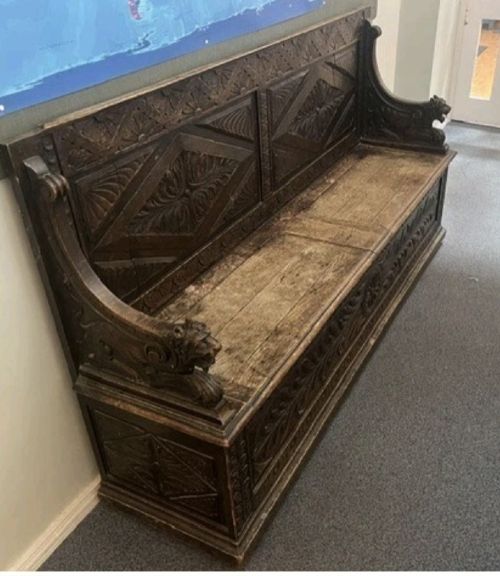
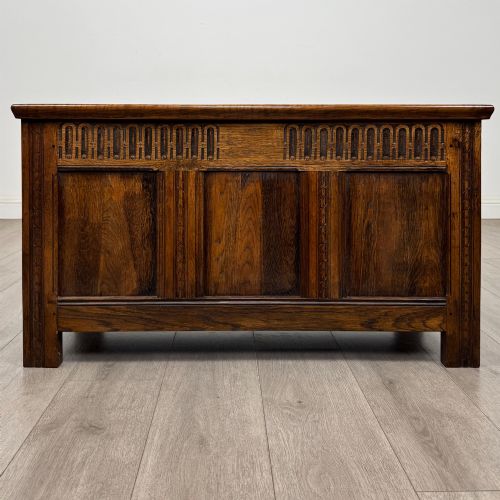
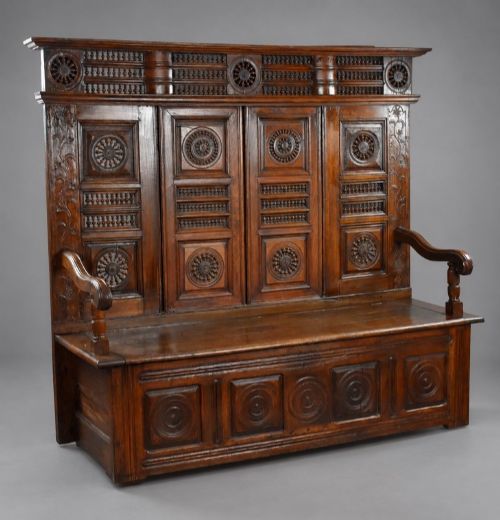
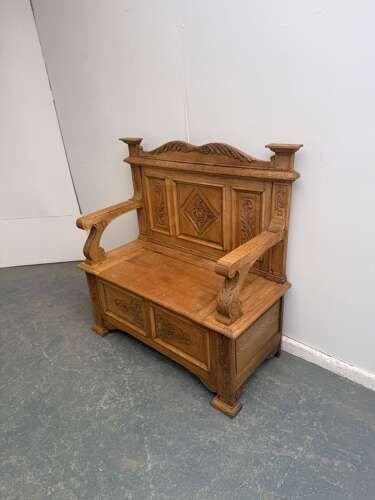
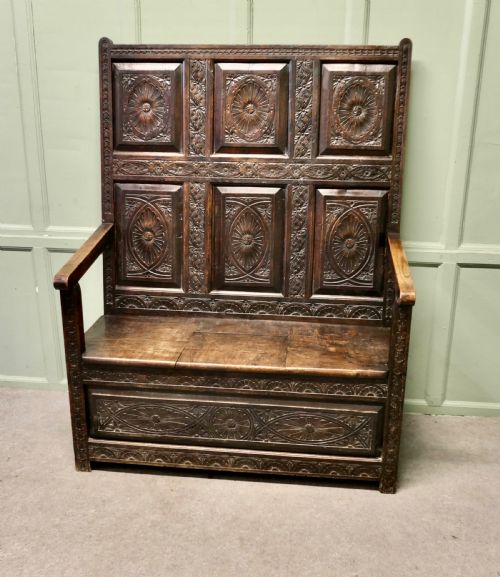
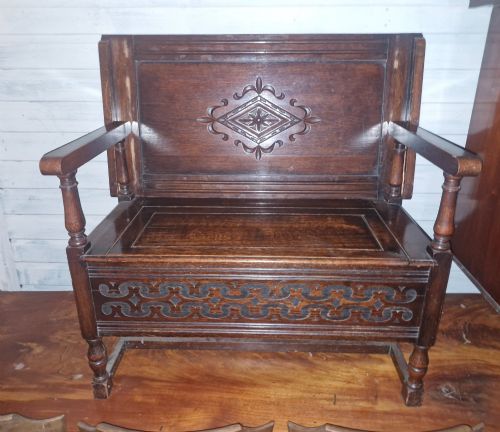
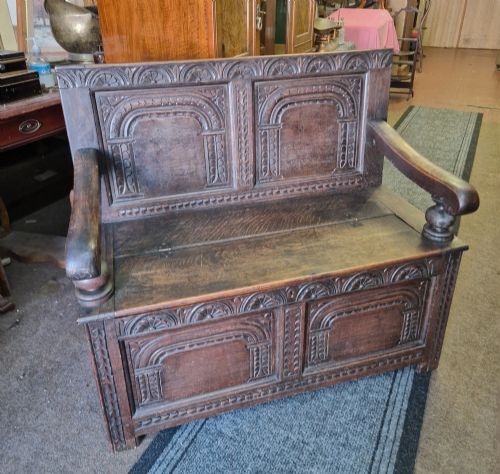
A carved wooden coffer bench combines a seating form with a lidded storage compartment beneath, functioning traditionally as a settle or monks bench in hallways and reception rooms. The pieces encountered here span centuries, from the seventeenth through the twentieth, taking forms such as high-back settles, panelled hall benches, and mule chests with integral seats.
Oak dominates the selection, though examples also appear in walnut, mahogany, pine, and fruitwood. Makers drew upon various stylistic traditions, including Jacobean, Renaissance Revival, Arts and Crafts, and Chinese Export designs, resulting in both vernacular country pieces and formal baronial seating.
How they were made
Construction relies heavily on solid timber, predominantly oak, assembled using traditional panelled framing techniques for the backrests and box bases. Joinery often incorporates pegged mortise and tenon joints to withstand the structural demands placed on dual-purpose seating.
Carving serves as the primary ornamentation, applied directly to the solid wood panels in relief, depicting motifs such as linenfold, geometric strapwork, and figurative carvings including Green Man masks.
Carved Wooden Coffer Bench Retail Price Guide 2026
Typical asking prices for carved wooden coffer bench among the pieces listed under this phrase on Sellingantiques today, from the lower quarter to the upper quarter. They describe what is for sale here now, not the wider market.
The inventory records regional English, French, Italian, and Chinese Export origins for these lidded seats.
What varies in quality
The degree of hand-carved detail distinguishes standard utility pieces from higher-status commissions, with crisp relief work and well-proportioned framing marking superior examples. Timber selection also dictates grade, where dense, quarter-sawn oak with prominent medullary rays contrasts with plain pine or secondary softwoods.
Structural integrity depends on the original retention of components, such as lift-up lids, hinges, and arm supports, where later replacements or alterations alter the integrity of the piece.
The Carved Wooden Coffer Bench Glossary
- Settle
- A wooden bench with a high back, solid arms, and a box seat used to block draughts in older homes. This form provides enclosed storage beneath the squab or wooden seat.
- Monks bench
- A convertible piece of furniture functioning as a table with a fold-over top or as a hall seat with a panelled back. The top tilts to form a backrest when used as a bench.
- Mule chest
- A chest featuring a drawer or compartment beneath the main storage well, often fitted with a back and arms to serve as a seat. These pieces combine blanket storage with domestic seating.
- Jacobean Revival
- A nineteenth-century stylistic movement replicating seventeenth-century English furniture characteristics. Pieces in this style utilise heavy oak, geometric mouldings, and deep relief carving.
- Green Man
- A sculptural motif depicting a human face entwined with foliage, branches, or vines. This ornamental detail frequently appears carved into the woodwork of Victorian revival seating.
Carved Wooden Coffer Bench: Frequently Asked Questions
How do I use a coffer bench in a hallway?
A carved wooden coffer bench functions primarily as a seating option for putting on shoes while concealing hats, scarves, or boots within the internal storage box. The high back offers a substantial architectural element against a hallway wall.
Positioning the bench near an entrance provides an immediate drop zone for everyday items. The enclosed base keeps clutter out of sight whilst maintaining a formal appearance.
What is the difference between a settle and a monks bench?
A settle maintains a fixed high back and solid armrests designed to shield the sitter from draughts in large rooms. The storage compartment sits permanently beneath the seat.
A monks bench incorporates a hinged top that folds forward to create a table surface or backward to form a chair back. This dual-purpose mechanism allows the furniture to serve two distinct functions within a compact footprint.
How do I date an antique oak bench?
Dating relies upon examining the construction methods, tool marks, and stylistic motifs present in the woodwork. Seventeenth-century examples typically display hand-split panels, pegged joints, and simpler strapwork carving.
Later Victorian revivals incorporate machine-sawn timber, standardised fixings, and heavier, more theatrical ornamentation like Green Man masks. Comparing the patination and wear patterns on the seat helps confirm the age of the timber.
Are these benches comfortable to sit on?
These wooden seats feature rigid timber bases designed for durability and storage rather than ergonomic lounging. Many historical users added loose squab cushions or fabric pads to soften the wooden surface.
Placing a custom textile pad on the seat allows for extended sitting while protecting the original antique wood underneath. The upright backrest encourages an erect posture suited to hallways and reception areas.