
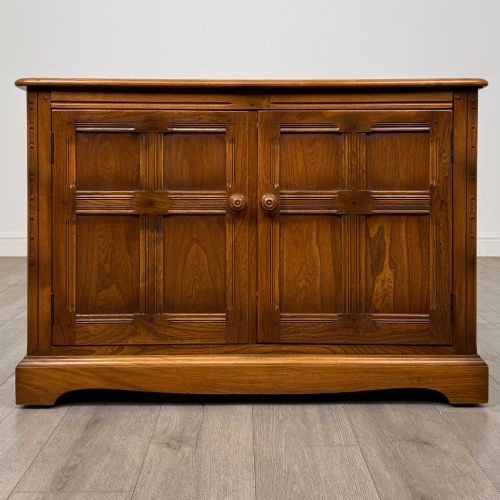
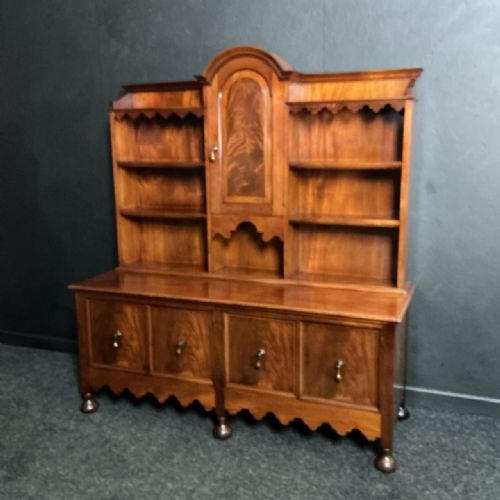
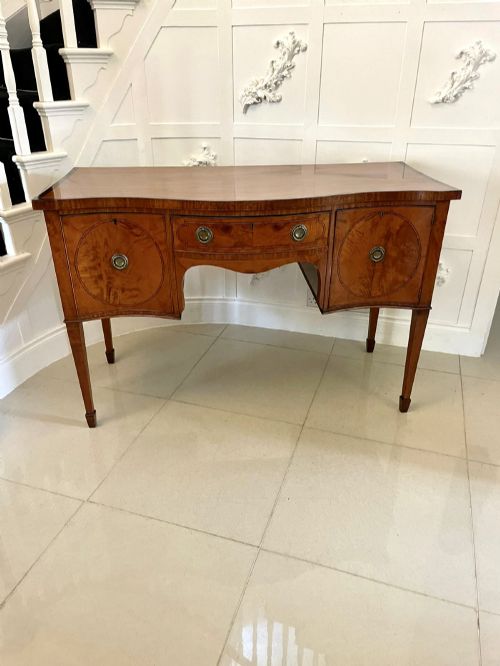
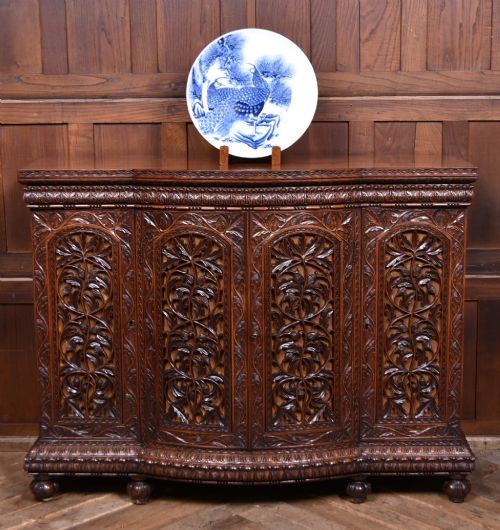
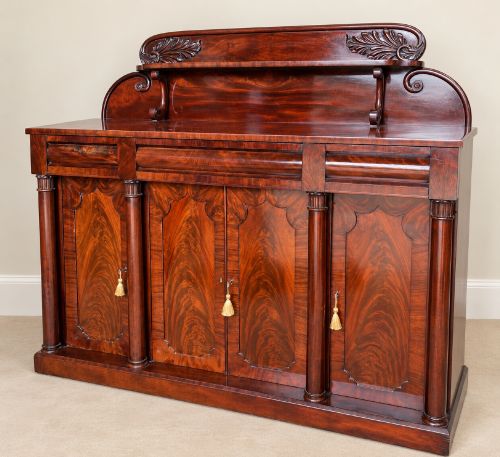
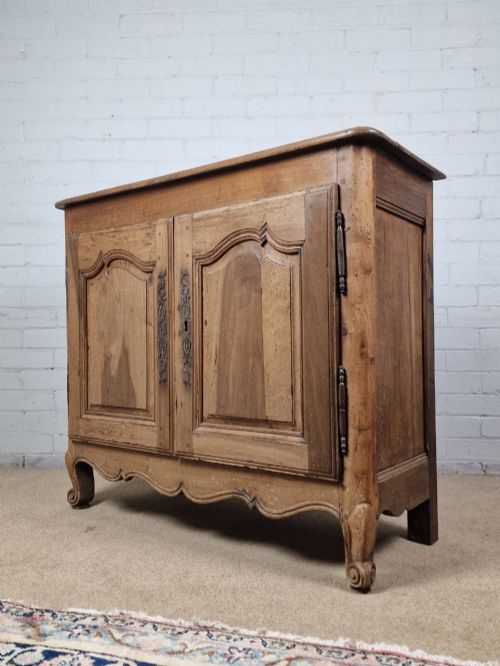
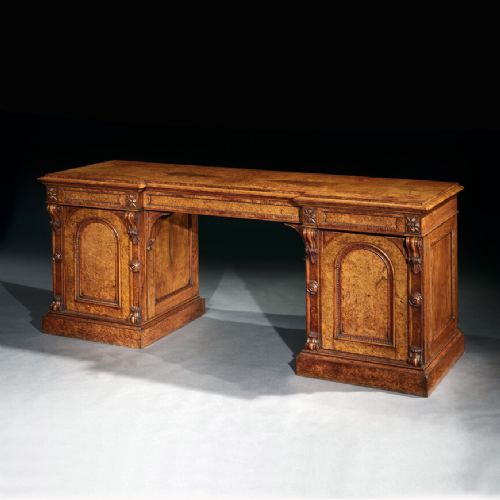
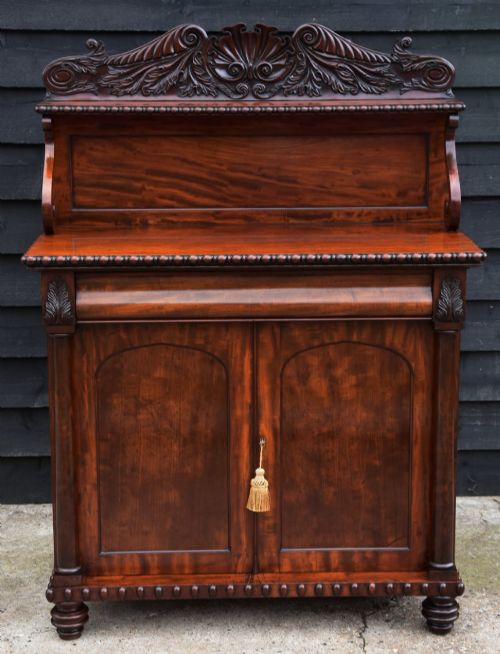
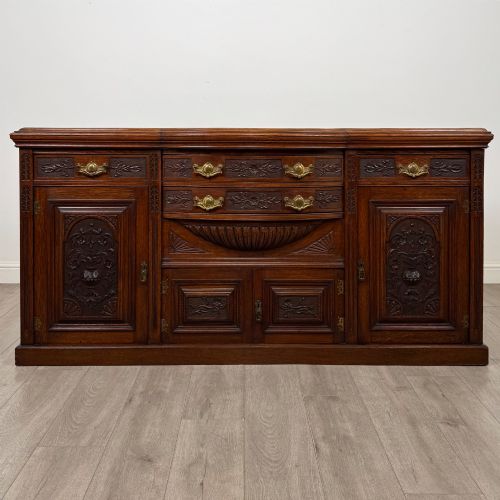
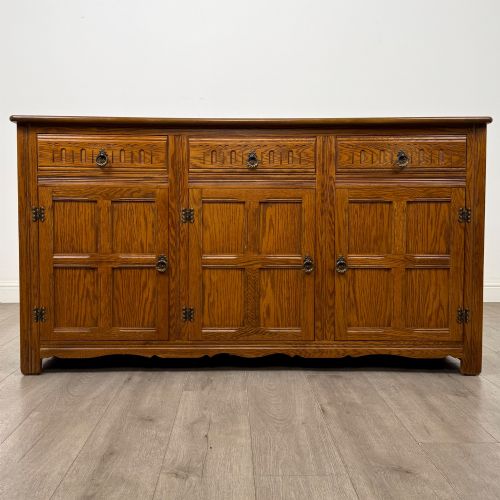
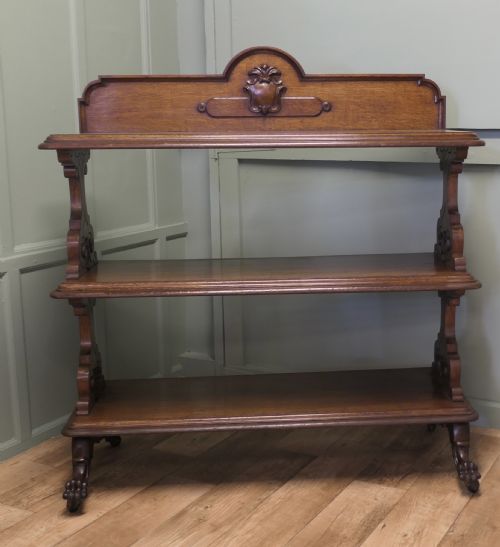
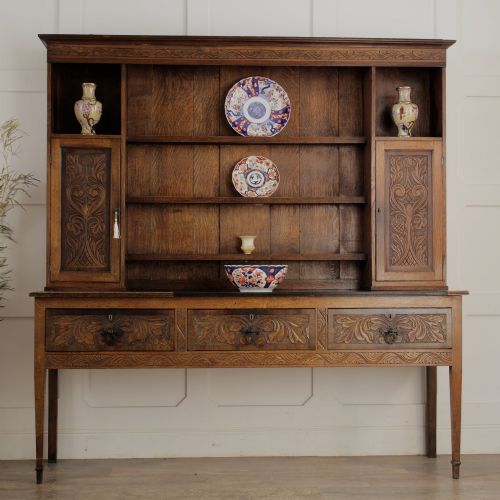
Carved Wooden Buffet
A carved wooden buffet brings weight and storage to a dining room, offering substantial timber surfaces shaped by Victorian, Edwardian, and earlier hands.
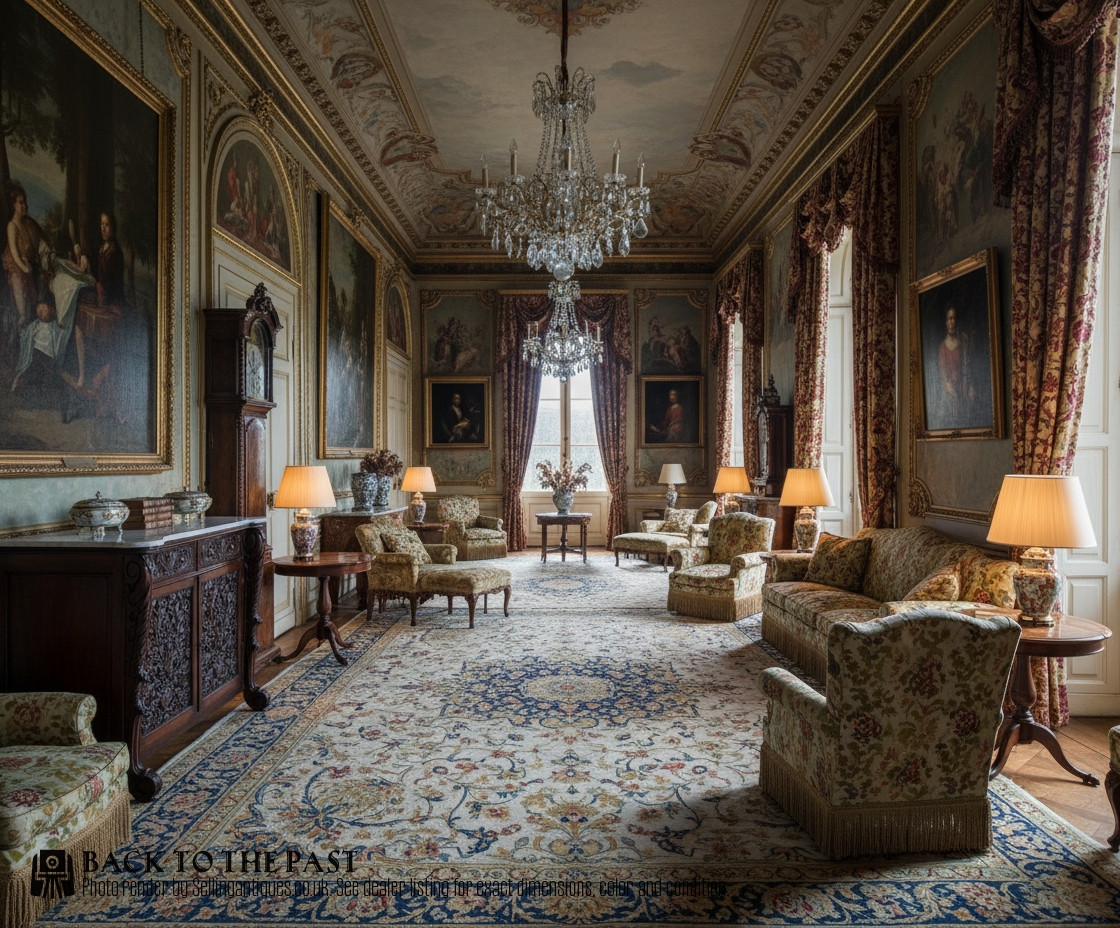
Carved Wooden Buffet
When searching for a carved wooden buffet, buyers encounter large dining furniture spanning the 18th, 19th, and 20th centuries. These substantial pieces function primarily for serving food and storing tableware.
The versions most common on this page emerge from Victorian and Edwardian workshops. They frequently appear alongside related forms like sideboards, servers, and console tables.
Origin details reveal English, French, and Scottish origins. Makers utilised domestic and imported timber to construct these heavy dining room staples.
Materials and construction
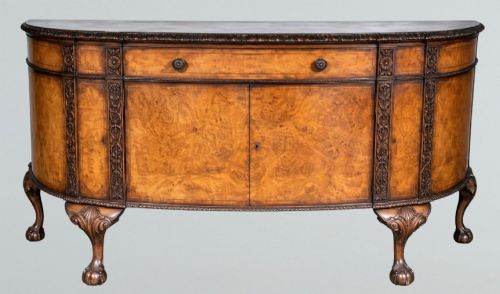
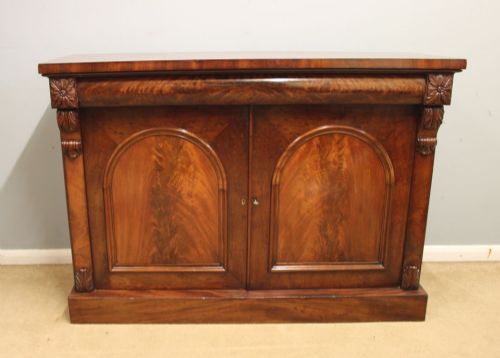
Makers built these pieces predominantly from solid oak and mahogany. Cabinetmakers selected figured grain patterns, flame mahogany, and burr walnut for prominent display surfaces.
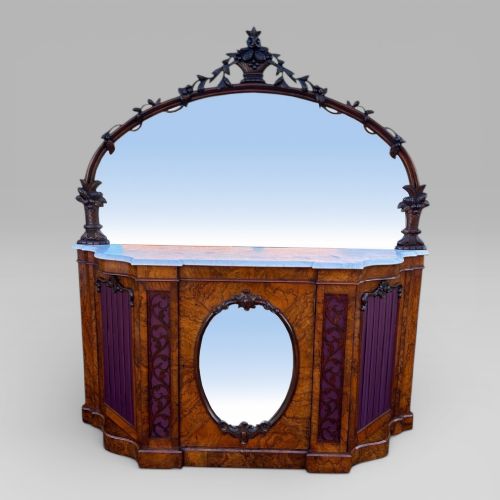
Secondary structural components incorporated brass hardware, iron fittings, and occasional marble tops. Joinery relied on traditional methods suited to heavy daily use.
Listings span multiple centuries, ranging from 18th-century English serving tables to Edwardian golden oak cupboards.
Assessing quality and depth
The standard of carving distinguishes superior examples from standard workshop production. Crisp, deep relief work executed by skilled hands elevates the visual weight of the timber.
Selection of timber defines the upper tier of pieces. Uniform grain patterns, book-matched veneers, and substantial solid boards separate finer commissions from utility furniture.
M. D. Miller & Sons
The Carved Wooden Buffet Glossary
- Chiffonier
- A compact sideboard equipped with enclosed shelving below. 19th-century versions frequently incorporated small upper mirrors or galleries.
- Flame mahogany
- A veneer cut from the fork of the mahogany tree. This technique creates a distinctive flickering flame pattern across wide drawer fronts and doors.
- Serpentine
- A front profile shaped with a convex centre flanked by concave curves. This undulating line requires advanced woodworking skill to execute properly.
- Pedestal sideboard
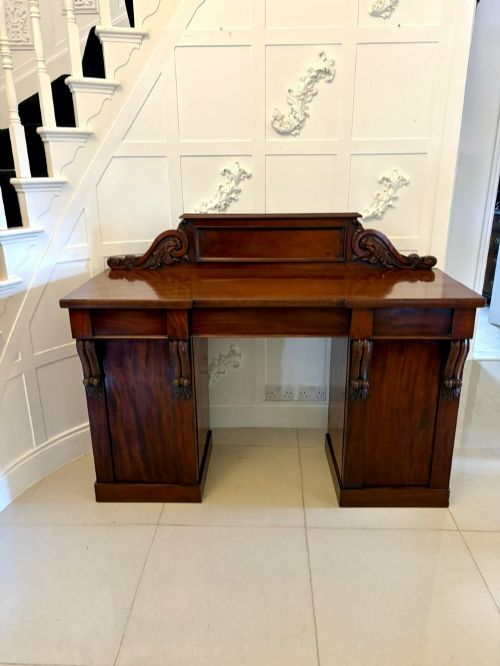
- A heavy dining room piece featuring two distinct side cabinets supporting a central console. These designs grew popular during the Regency period.
Carved Wooden Buffet: Frequently Asked Questions
Where did people use a carved wooden buffet?
These pieces traditionally stood in dining rooms against interior walls. Households utilised the top surface for serving dishes during meals while storing linens and cutlery in the lower cupboards and drawers.
Today, they serve similar functional purposes in modern dining spaces and large kitchens. Their substantial proportions provide significant storage capacity for heavy tableware.
How do I tell Victorian from Edwardian pieces?
Victorian examples generally display heavier proportions, darker finishes, and dense, elaborate carving. They frequently incorporate mirrors or heavy marble tops into the upper superstructure.
Edwardian pieces often lighten in tone, utilising golden oak or lighter mahogany. Their carving tends to be more restrained and geometric, reflecting Arts and Crafts or revival influences.
What is the difference between a buffet and a sideboard?
Historical terminology often overlaps between these serving pieces. Generally, a buffet emphasises lower cupboard storage for food service, whereas a sideboard evolved to display plate and silver.
In marketplace listings, makers and sellers frequently interchange these terms. Construction materials and stylistic periods offer clearer distinctions than the names assigned to them.
How do I care for antique wood surfaces?
Maintain timber surfaces by applying natural beeswax periodically to nourish the grain. Avoid placing pieces near direct heat sources or strong sunlight, which can dry out old wood and crack veneers.
Dust regularly with a dry, soft cloth. Prevent moisture damage by using coasters and mats beneath any objects placed on the top boards.