




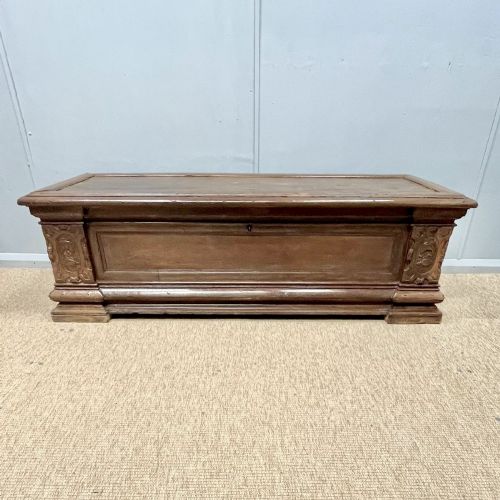
Carved Wooden Box
A carved wooden box brings tangible history to a room, offering tactile surface detail and practical storage grounded in centuries of joinery.

Carved Wooden Box
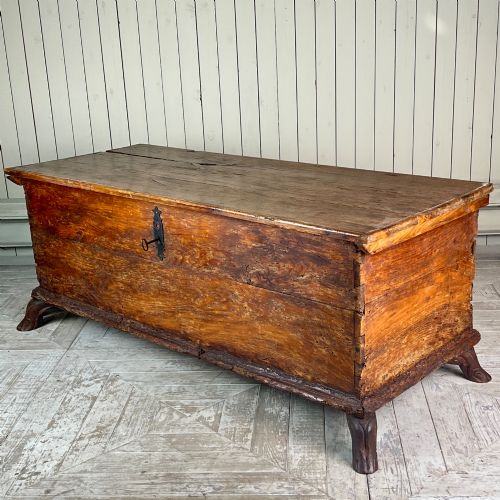
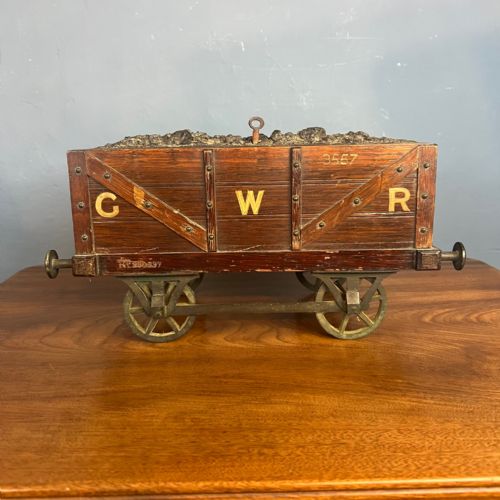
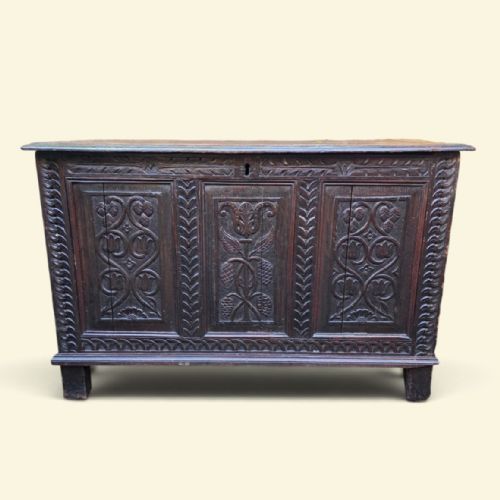
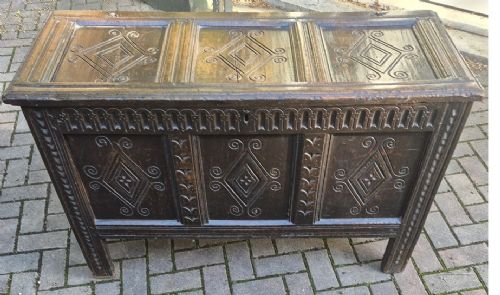
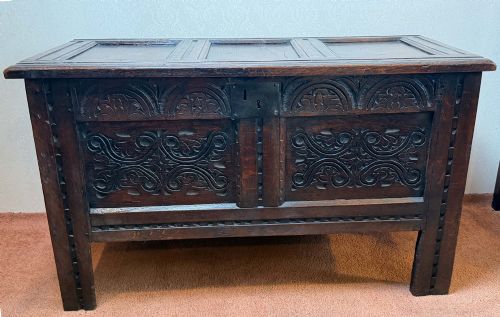
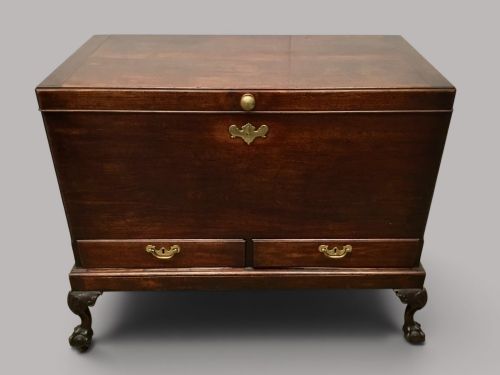
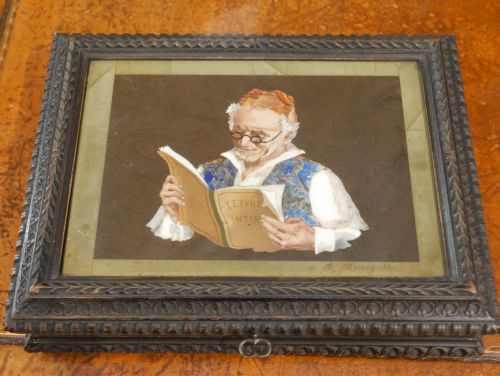
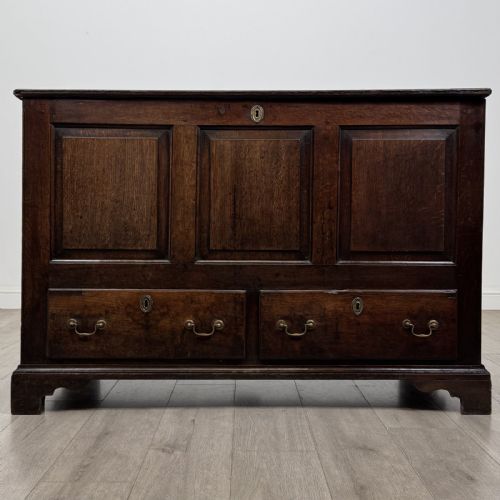
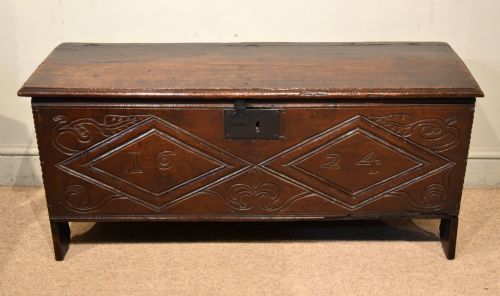
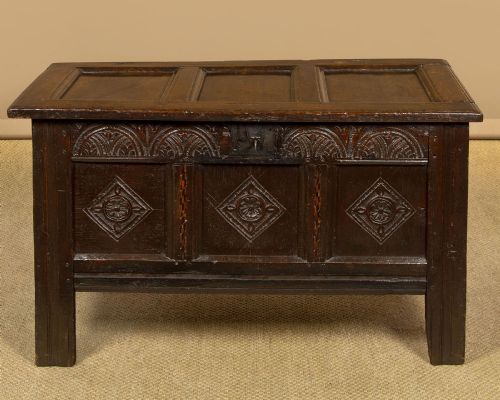
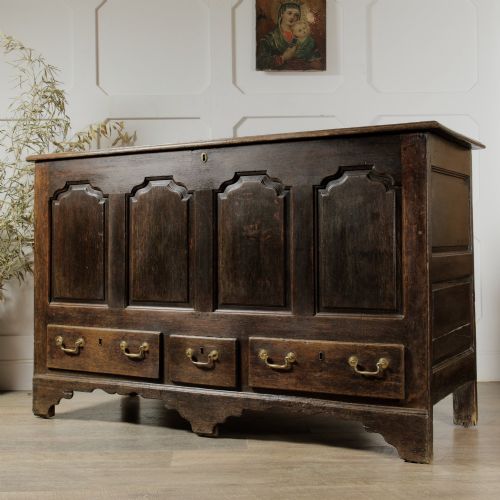
A carved wooden box encompasses diverse forms from small document caskets to large joined coffers and blanket chests. The selection here leans heavily toward seventeenth-century oak coffers alongside nineteenth-century walnut and mahogany sewing or correspondence boxes.
Buyers encounter regional vernacular pieces alongside formal revival styles spanning the sixteenth century through the early twentieth century. These objects served domestic needs for safekeeping valuables, linens, and personal documents before fitted furniture became standard.
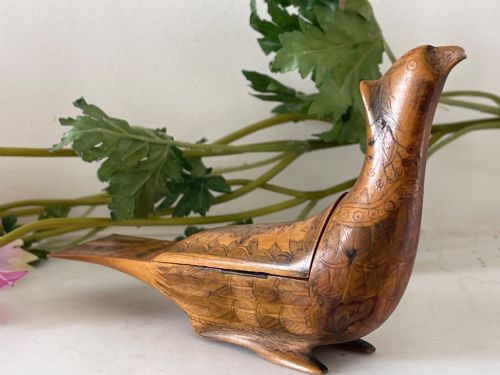
The term bridges utilitarian storage vessels and decorative folk art objects, including smaller tabletop snuff boxes, bird boxes, and card caskets. Each piece reflects the functional requirements and aesthetic preferences of its specific period of origin.
Materials and construction methods
Solid oak dominates the earlier centuries, joined using traditional pegged mortise and tenon frames around carved recessed panels. Later nineteenth-century examples introduce walnut, mahogany, and burr walnut, sometimes utilising applied mouldings and brass hardware.
Carving techniques range from geometric chip carving and shallow strapwork on seventeenth-century panels to detailed figural work on Black Forest pieces and mother of pearl inlay on Middle Eastern trunks. Secondary materials like iron hinges, locks, and brass details provide structural reinforcement and closure.
Carved Wooden Box Retail Price Guide 2026
Typical asking prices for carved wooden box among the pieces listed under this phrase on Sellingantiques today, from the lower quarter to the upper quarter. They describe what is for sale here now, not the wider market.
Listings feature timbers including solid oak, mahogany, walnut, burr walnut, and imported hardwoods alongside iron and brass hardware.
Distinctions in craftsmanship and survival
Quality rests in the crispness of the hand-carved detail and the integrity of the original construction timbers. Pieces retain higher merit when structural elements, panel joints, and surface patination remain undisturbed by heavy modern intervention.
Proportion and scale dictate desirability, with smaller diminutive proportions and dated examples commanding greater attention from collectors. The depth of the carver's relief and the harmony of the overall design separate standard utility pieces from exceptional works of regional art.
Christopher Dresser
The Carved Wooden Box Glossary
- Coffer
- A large wooden chest used historically for storing valuables, documents, or clothes. These sturdy containers often feature heavy panel construction and iron locking mechanisms.
- Mule chest
- A traditional storage chest distinguished by one or more drawers fitted beneath the main internal compartment. They bridge the design gap between simple coffers and fully developed drawer chests.
- Cellarette
- A lockable container designed to hold bottles of wine or spirits safely. They frequently appear in mahogany during the Georgian and Victorian periods.
- Marquetry
- The art of applying decorative pieces of veneer to a structural structure to form intricate patterns or pictures. This technique adds ornamental surface interest to lids and panels.
- Treen
- Small handmade wooden domestic objects produced prior to the widespread adoption of plastics. Collectors prize these items for their tactile appeal and functional utility.
Carved Wooden Box: Frequently Asked Questions
What were early wooden boxes used for?
These boxes provided secure storage for documents, textiles, and precious items in domestic settings.
Their robust construction protected contents from dampness and theft before fitted wardrobes and desks became common.
How do I date an oak coffer?
Dating relies upon examining construction methods, tool marks, hinge types, and stylistic carving motifs.
Seventeenth-century examples typically show joined frame-and-panel construction with hand-split peg fasteners rather than machine-cut screws.
Where should I place a heavy chest?
Heavy coffers suit hallways, living spaces, or bedrooms where they double as seating surfaces or display tables.
Keep them away from direct heat sources and strong sunlight to prevent the timber from drying out or splitting.
What is the difference between a coffer and a box?
A coffer is a large, heavy chest traditionally used for major storage, while a box generally refers to smaller tabletop items.
Document boxes and tea caskets were designed for portable or desktop use rather than floor placement.