





Carved Wooden Bookshelf
A carved wooden bookshelf brings warmth and structured display to a room, housing volumes while adding architectural presence.
Carved Wooden Bookshelf
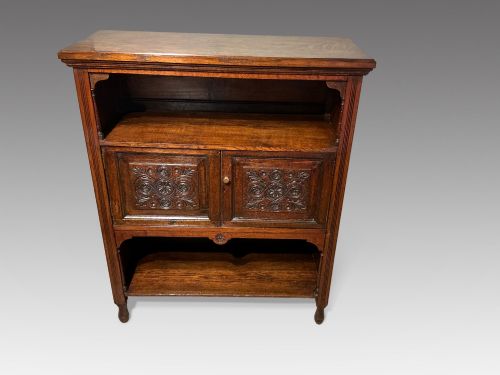
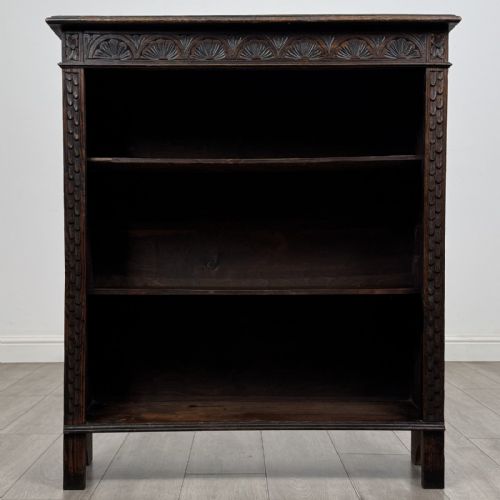
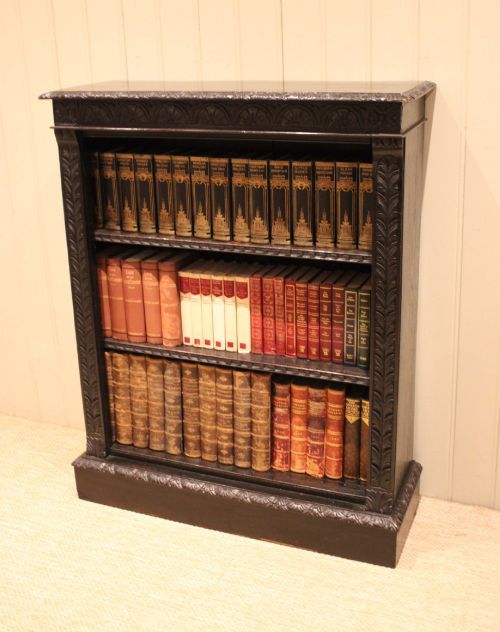
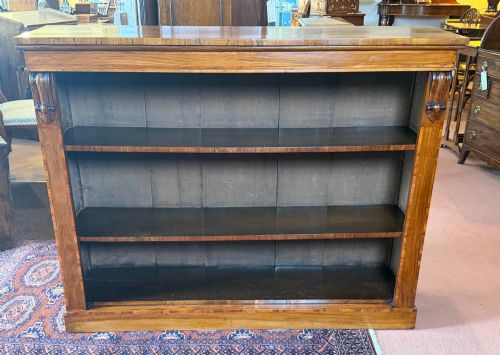
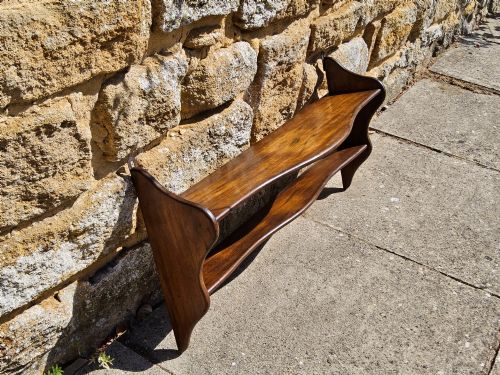
A carved wooden bookshelf typically appears as an open bookcase, wall shelf, or whatnot dating from the nineteenth and early twentieth centuries. These pieces encompass Victorian, Edwardian, and Regency forms designed to hold personal libraries and display objects.
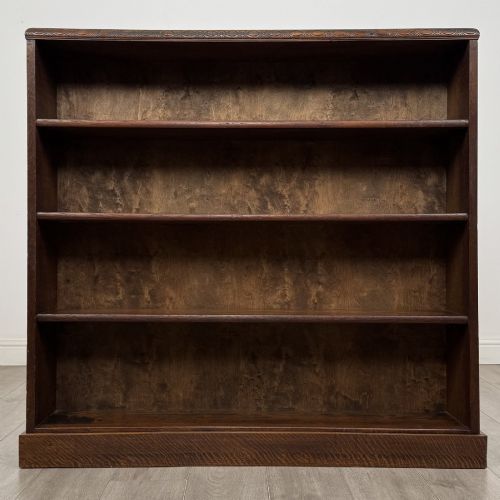
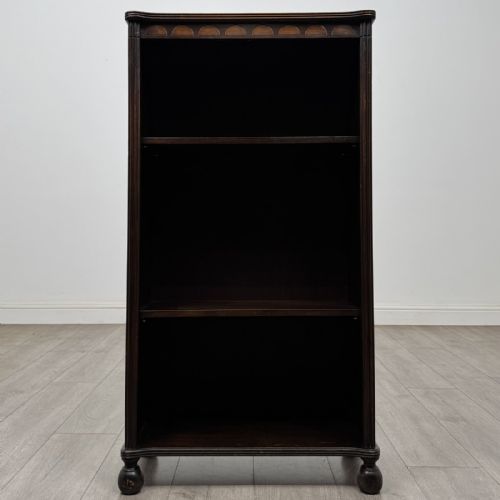
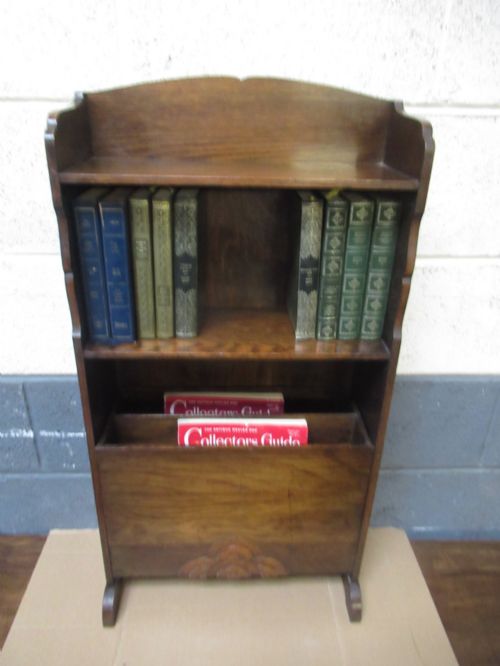
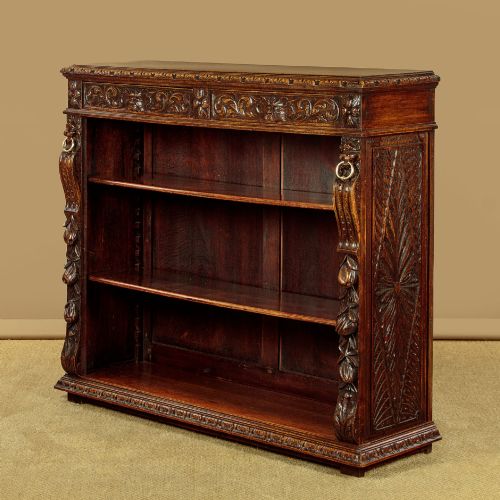
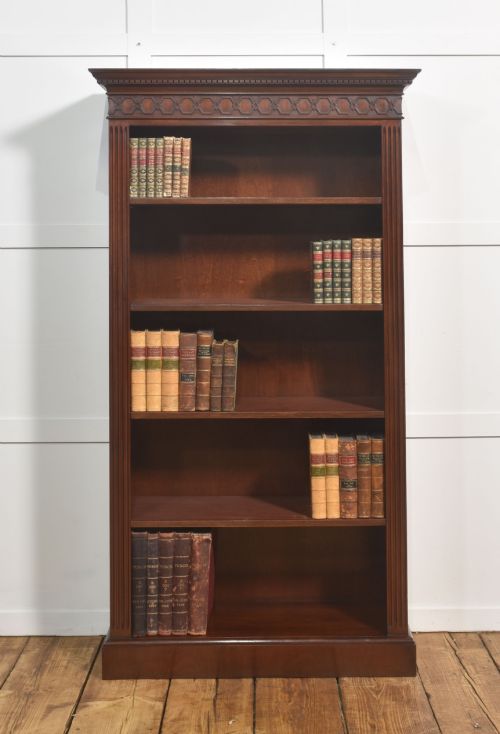
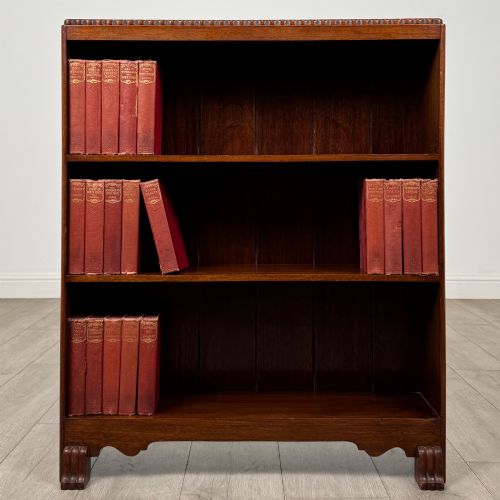
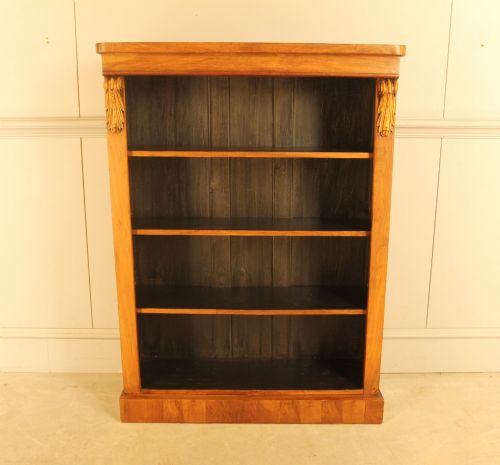
The most common versions met on this page are open bookcases and wall shelves constructed from oak, walnut, and mahogany. Makers built these items with fixed or adjustable shelves, often incorporating carved corbels, mouldings, and panel details characteristic of their period.
Examples range from compact small open bookcases in oak to large breakfront library bookcases and multi-tiered whatnots. They serve functional storage roles while reflecting the prevailing decorative styles of the nineteenth and early twentieth centuries.
Assessing quality in construction and material
Quality rests in the selection of timber figures, such as burr walnut or figured mahogany, and the crispness of the hand carving on corbels and mouldings. Superior pieces display thoughtful proportions and substantial timber thickness rather than thin veneers over secondary woods.
The integration of functional elements like adjustable shelving systems and sturdy backboards distinguishes finer workshop production from standard utility items. Cabinetmakers who paid attention to joint stability and timber matching produced pieces that endure structurally.
Carved Wooden Bookshelf Retail Price Guide 2026
Typical asking prices for carved wooden bookshelf among the pieces listed under this phrase on Sellingantiques today, from the lower quarter to the upper quarter. They describe what is for sale here now, not the wider market.
Current listings feature items from the 19th Century, Victorian, Edwardian, Regency, and 1930s periods, constructed in oak, walnut, mahogany, and rosewood.
The Carved Wooden Bookshelf Glossary
- Open bookcase
- A piece of furniture designed for storing books without glass doors enclosing the front. This form allows immediate access to volumes and displays the book bindings.
- Whatnot
- A multi-tiered piece of freestanding furniture used for displaying ornaments, books, or small objects. These often feature slender upright supports and decorative pierced or carved galleries.
- Corbel
- A structural bracket projecting from a wall or upright to support a shelf or weight above. In these pieces, corbels frequently feature carved foliage or scrollwork.
- Breakfront
- A cabinet or bookcase design where the central section projects forward from the flanking wings. This architectural arrangement creates depth and shadow across the front elevation.
Carved Wooden Bookshelf: Frequently Asked Questions
Are these shelves strong enough for heavy books?
Most period bookcases utilise solid hardwoods like oak, walnut, and mahogany capable of supporting standard library volumes. Pieces equipped with adjustable shelves offer flexibility for arranging different book heights.
Larger library bookcases and country house models are engineered to bear substantial weight across wide spans, though checking shelf thickness remains prudent for very dense collections.
What is the difference between a whatnot and an étagère?
A whatnot is typically a tiered wooden stand used for books and ornaments, often featuring corner or freestanding rectangular configurations with shelves of descending or uniform size. Étagères share a similar tiered display purpose but historically emphasise decorative display over book storage.
Both forms utilise upright supports and sometimes incorporate mirrors or small drawers, as seen in Victorian examples.
Where should I place wall shelves?
Wall shelves suit spaces where floor area is limited, providing vertical storage for books and decorative items above desks or seating areas. Securing them firmly to wall studs ensures they safely bear the weight of timber and volumes.
Pairing them with related period furniture helps integrate the piece into the room's overall layout.