




Carved Wood Window Bench
A carved wood window bench provides a low seat designed for alcoves, combining structural timber with upholstered textile surfaces.
Carved Wood Window Bench
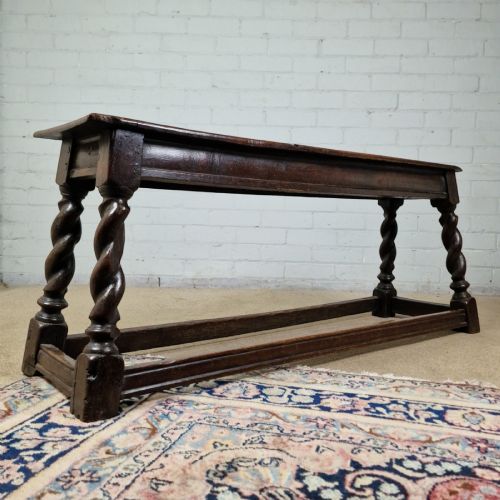
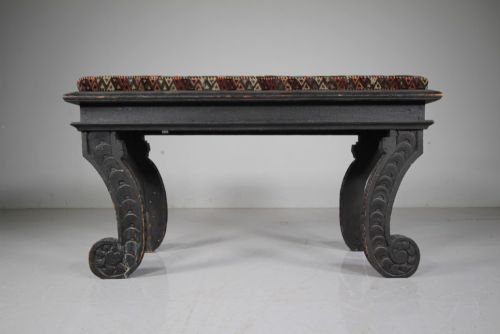
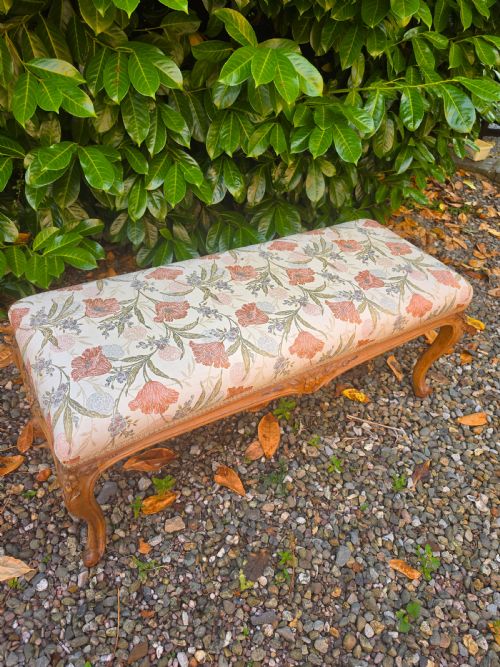
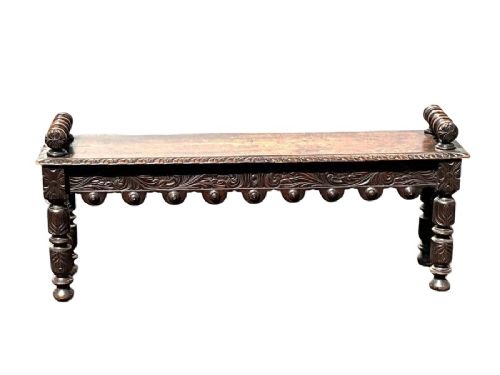
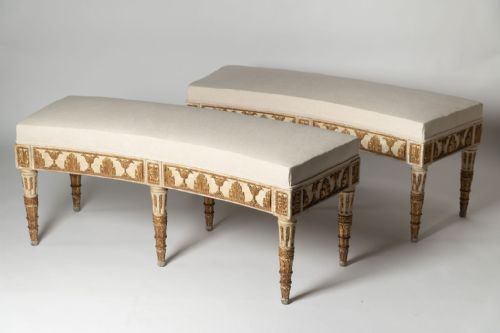
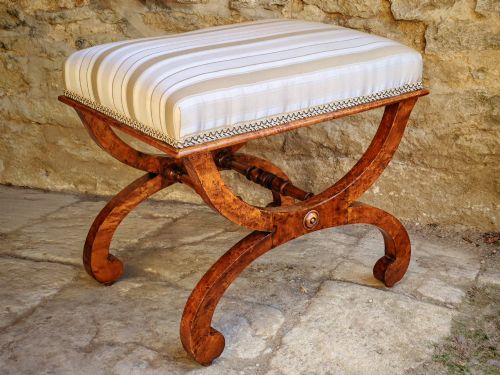
A carved wood window bench offers a low seating option suited to domestic alcoves and halls, appearing across nineteenth and early twentieth century periods. These forms include long stools, ottomans, hall benches, and curule seats designed for interior placement.
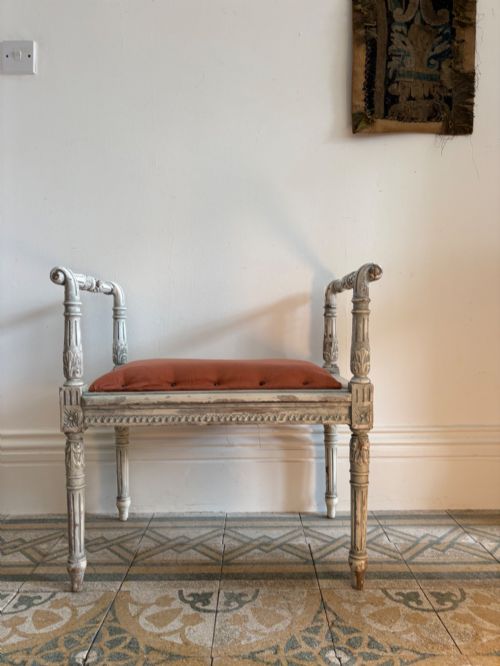
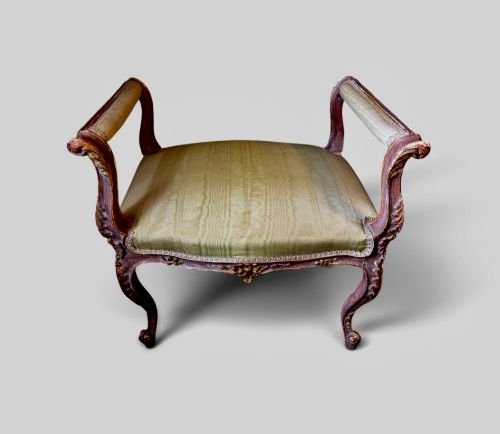
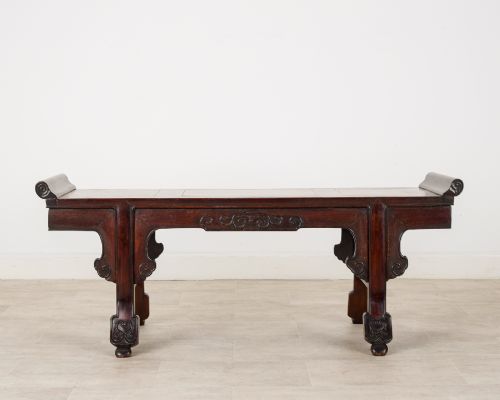
The materials span mahogany, oak, walnut, giltwood, and painted pine, often paired with fabric, silk, velvet, or tapestry upholstery. Surviving examples reflect diverse stylistic influences, ranging from Regency and Victorian to Italian Neoclassical, French Régence, and Chinese Qing Dynasty.
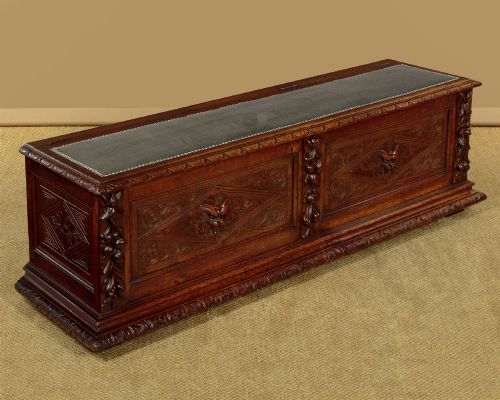
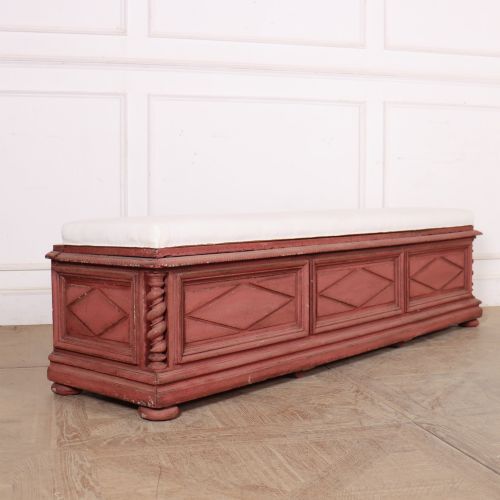
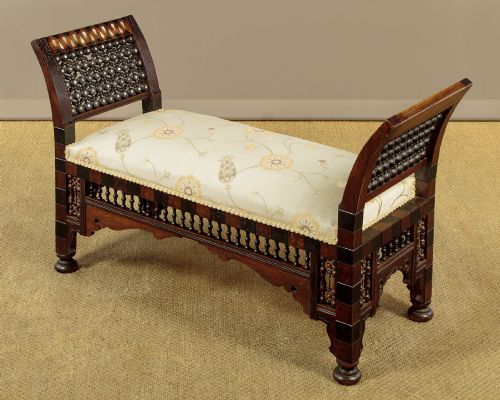
Makers adapted these low seats for specific architectural settings, incorporating hinged storage boxes, pearl inlay, or carved figurative details like elephants. Buyers encounter both English timber frames and continental European or Asian variants.
What varies in quality
The crispness of the hand carving dictates the visual distinction of the frame, where deep, sharply defined motifs show greater artisan skill than shallow or softened detailing. Timber selection also separates standard production from superior pieces, particularly with figured grains like burr maple or dense old-growth mahogany.
The integrity of the frame construction and the preservation of original gilding, paint, or patination determine the overall standard. Pieces retaining period textiles or traditional upholstery foundations demonstrate higher authenticity compared to modern re-coverings.
Listings feature eighteenth-century oak and nineteenth-century mahogany, alongside twentieth-century painted and giltwood variants from diverse regions.
The Carved Wood Window Bench Glossary
- Curule stool
- An ancient Roman magistrate's seat form revived in later neoclassical furniture design, featuring opposing curved legs that cross in an X shape. These frames often appear in giltwood or mahogany.
- Giltwood
- Timber coated with a thin layer of gold leaf applied over a prepared gesso and bole base. This surface treatment was common on formal European window seats.
- Huali
- A fragrant Chinese hardwood utilised for classical furniture production, valued for its rich grain patterns. Pieces made from this material date to dynasties such as the Qing.
- Gesso
- A plaster mixture applied to wooden frames as a smooth base for subsequent gilding or painting. It allows intricate relief work to be formed prior to finishing.
- Ottoman
- An upholstered seat or bench lacking arms and a back, occasionally incorporating a hinged lid for interior storage. Examples range from Moorish designs to nineteenth-century European forms.
Carved Wood Window Bench: Frequently Asked Questions
Where were window benches placed?
These seats were designed for placement beneath low window ledges, in hallways, or at the foot of beds within period rooms.
Their shallow depth allowed them to fit narrow architectural spaces without blocking natural light or passage.
How do I identify a Regency window seat?
Regency examples typically display classical architectural motifs, sabre legs, and dark mahogany timbers dating from the early nineteenth century.
They often incorporate rolled armrests or scrolled ends inspired by ancient Greek and Roman furniture.
Are these benches comfortable for daily use?
Most pieces feature padded textile upholstery filled with period materials, providing a firm seat suited for short periods of sitting.
Because they were built for specific formal interiors, daily comfort depends on the thickness of the cushion and the underlying webbing.
Can I use an ottoman window bench for storage?
Certain nineteenth-century variants include hinged tops that open to reveal a compartment inside the wooden box frame.
These lidded designs were historically utilised for linens or household items within private chambers.
What is the difference between a stool and a bench?
Stools generally offer compact, backless seating for one person, while benches provide extended spans designed to accommodate multiple sitters.
Both forms share similar leg structures and decorative carving styles within the available inventory.