
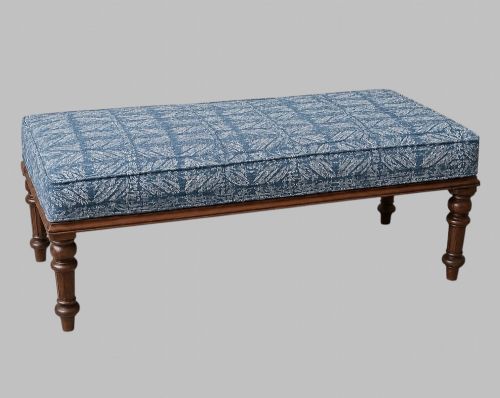

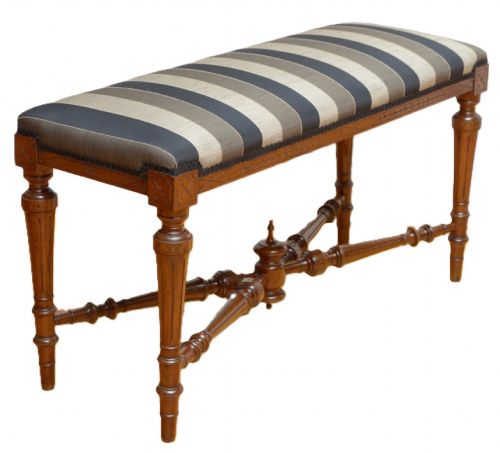


Antique Bedroom Bench Stool
An antique bedroom bench stool provides practical seating or luggage placement, spanning Victorian, Edwardian, and Art Deco periods in mahogany, walnut, and giltwood.
Antique Bedroom Bench Stool
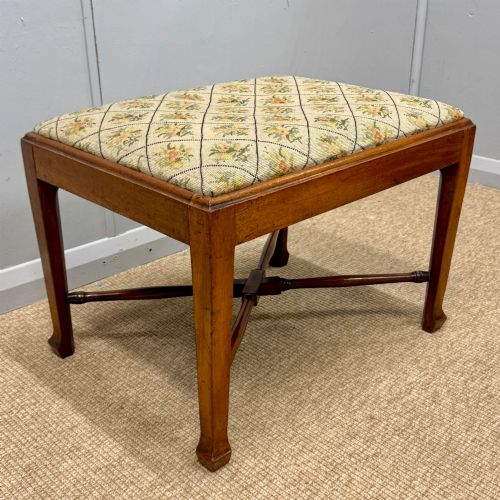
An antique bedroom bench stool covers dressing table seats, window seats, and luggage racks designed for domestic chambers. Pieces date from the nineteenth century through the early twentieth century, encompassing Victorian, Edwardian, and Art Deco eras.
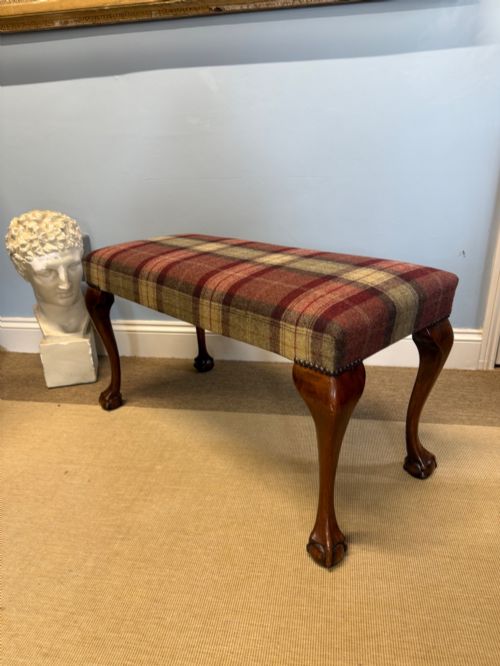
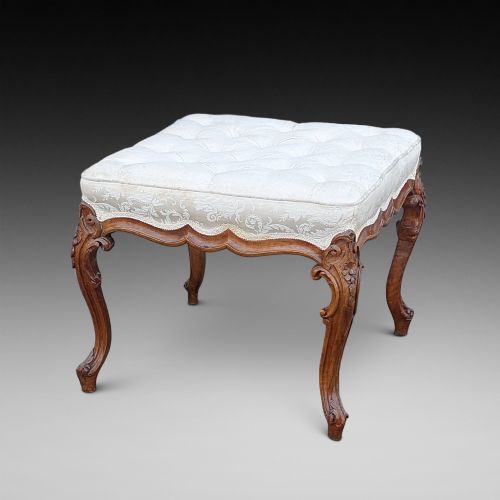
Mahogany and walnut frame woods predominate, often shaped into cabriole legs, twisted rope supports, or cross stretchers. Upholstery ranges from plain linen and velvet to specific textile covers like Robert Kime.
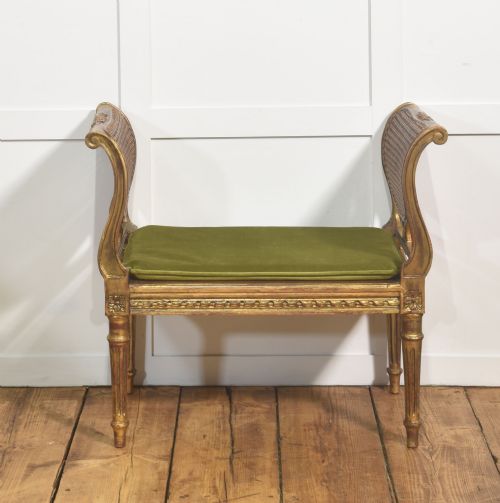
Window seats and duet piano stools appear alongside compact dressing stools and folding or rigid luggage stands. Swedish birch, satin birch, oak, and giltwood versions offer alternative regional and stylistic choices.
Materials and Construction
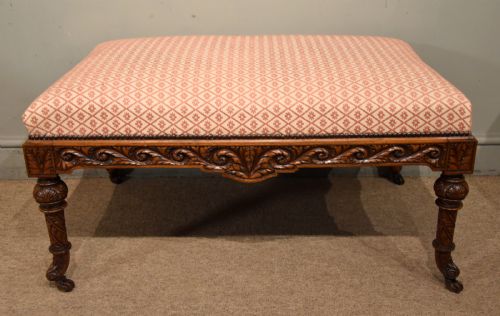
Frames rely on solid hardwoods such as mahogany, walnut, oak, and rosewood, joined with traditional cabinetmaking methods. Carved details, fluted legs, and ball and claw motifs shape the exposed woodwork.
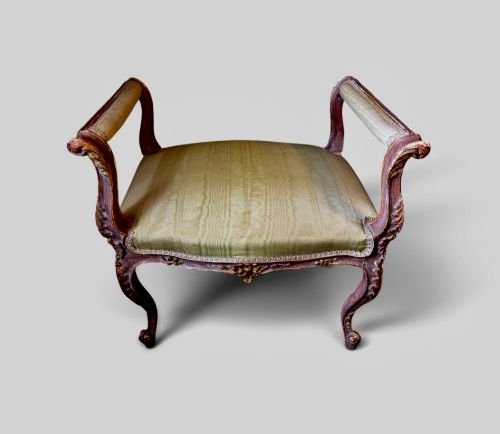
Upholstery incorporates fabric, velvet, needlepoint, cane, and specialised textiles stretched over padding. Giltwood and ebonised finishes provide decorative surface treatments on French and English frames.
Craftsmanship and Proportion
Quality rests in the crispness of carved woodwork and the structural integrity of joints, especially on load-bearing luggage racks and duet stools. Superior examples balance sturdy timber frames with refined leg turnings or cabriole shaping.
The standard of upholstery and the authenticity of period finishing distinguish ordinary pieces from exceptional ones. Refurbished pieces depend on the sensitivity of the restoration to maintain original proportions and character.
James Shoolbred
The Antique Bedroom Bench Stool Glossary
- Cabriole leg
- A furniture leg that curves outward at the knee and tapers inward to an ankle, often ending in a pad or claw foot. This design originated in antiquity and recurred in various revival styles.
- Duet stool
- An elongated seat designed to accommodate two people, commonly used at a piano or dressing table. These provide greater length than standard single stools.
- Luggage rack
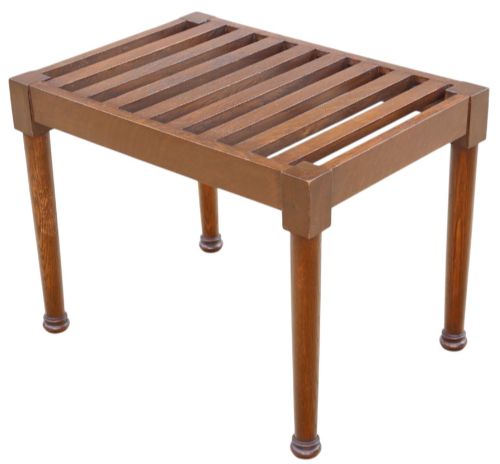
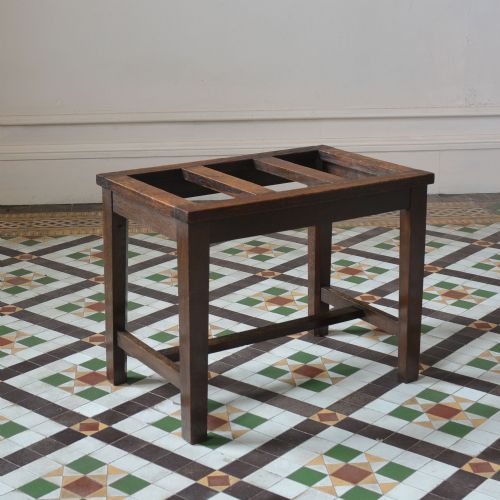
- A low bench frame with wooden slats or straps, built to hold suitcases at the end of a bed. Many include lower shelves for shoes or additional storage.
- Window seat
- An upholstered bench sized to fit into a window recess, featuring armrests or low backs. They bridge the function of a chair and a small settee.
- X-frame
- A structural base formed by intersecting diagonal members that create an X shape from the side profile. This supportive geometry appears on stools and benches.
Antique Bedroom Bench Stool: Frequently Asked Questions
How were luggage racks used in period bedrooms?
Luggage racks stood at the foot of a bed to hold visitor trunks and suitcases off the floor. The slatted top supported heavy leather or canvas bags during unpacking.
Many examples include lower rungs or shelves for holding shoes overnight.
How do I identify a Victorian walnut stool?
Victorian walnut stools frequently display deep brown grain, cabriole legs, or turned supports characteristic of nineteenth-century revival tastes. Upholstery methods and padding materials underneath often point to this era.
Checking the underside reveals traditional joinery and unmachined timber surfaces consistent with the period.
Are Edwardian bedroom benches different from Victorian ones?
Edwardian benches often lean toward lighter proportions, inlaid wood decoration, and simpler lines than heavier Victorian seating. They reflect a turn-of-the-century shift toward brighter, less ornate domestic interiors.
Mahogany and oak frames from this time frequently display restrained inlay rather than heavy carving.